

Version: Digital retail review code provided by the distributor
Independence & Ethics
Region Free is reader-supported and maintains full editorial independence. For more on my scoring and standards, see the Review Guide.
I received a retail key of Crimson Desert from Pearl Abyss for review that unlocked on launch day. Since then, the game has received two major patches and multiple hotfixes. More are incoming, according to the developer. Critics who received the game in advance have noted that numerous issues from the review copies were fixed, while other, equally notable, issues appeared from these patches.
During my time with the game, I've gone back and forth between immense disappointment, great amusement, and often huge swaths of boredom. I've restarted this review multiple times, some with the heading "first disappointment of the year", some with "it's really not as bad as others say."
In many ways, Crimson Desert is an Early Access title masquerading as a finished game. It is a single-player game built like an MMO, packed with every game design element lifted from every major AAA title from the past decade. It doesn't respect my time in the least, and it makes zero effort to be accessible to anyone with disabilities.
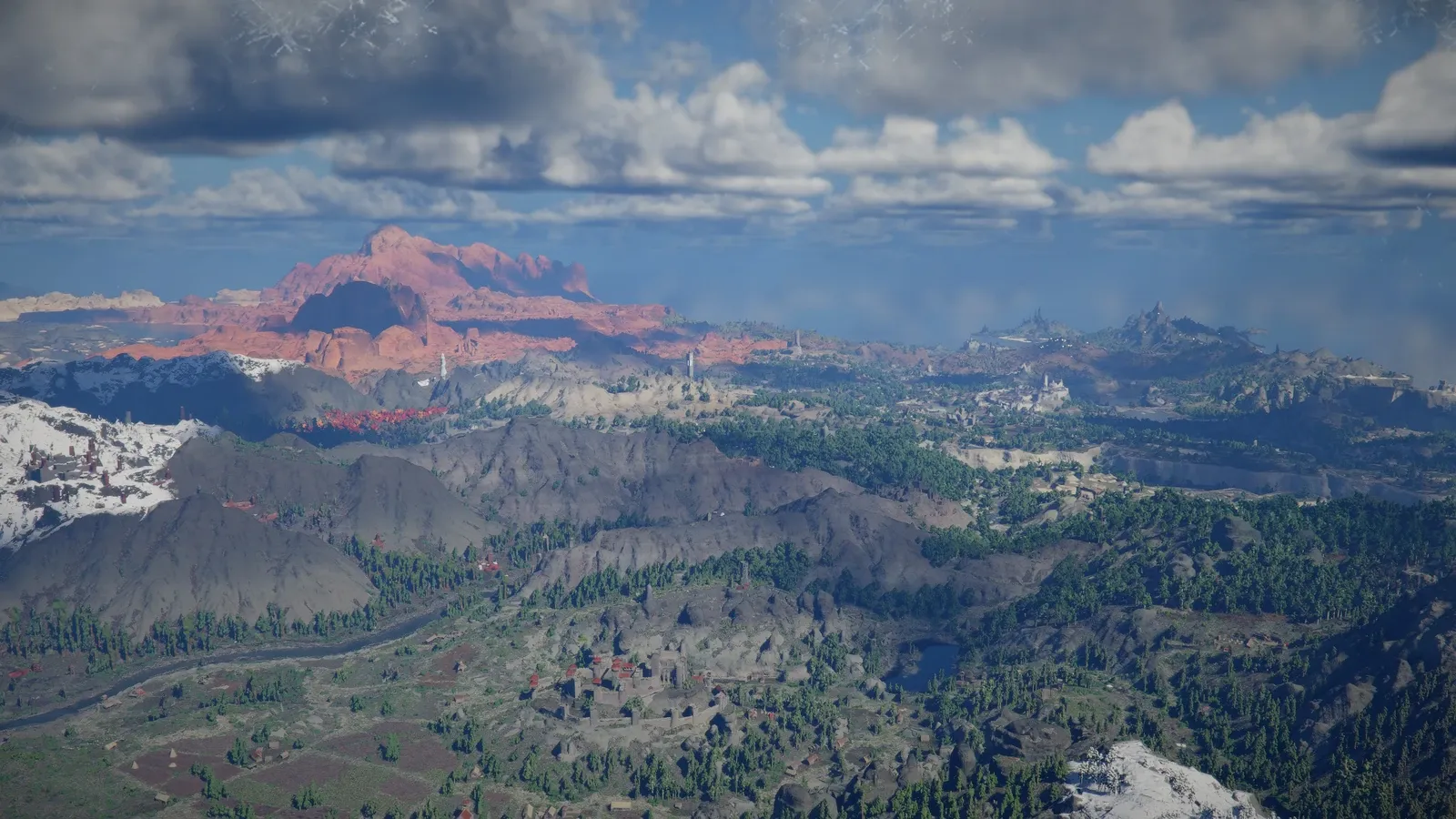
If it weren't so gosh-darn pretty, it would be easy to write off entirely. For the first ten hours or so, it's easy to get lost in the technical wonders that Crimson Desert provides. If you love taking pictures of digital landscapes, Crimson Desert provides immense, gorgeous vistas to marvel at for hundreds of hours. On top of that, the soundtrack is one of the most grandiose and beautiful I've heard in years.
At times, it is simply a pleasure to exist in the world of Pywel just for the audiovisual experience. That's not nothing.
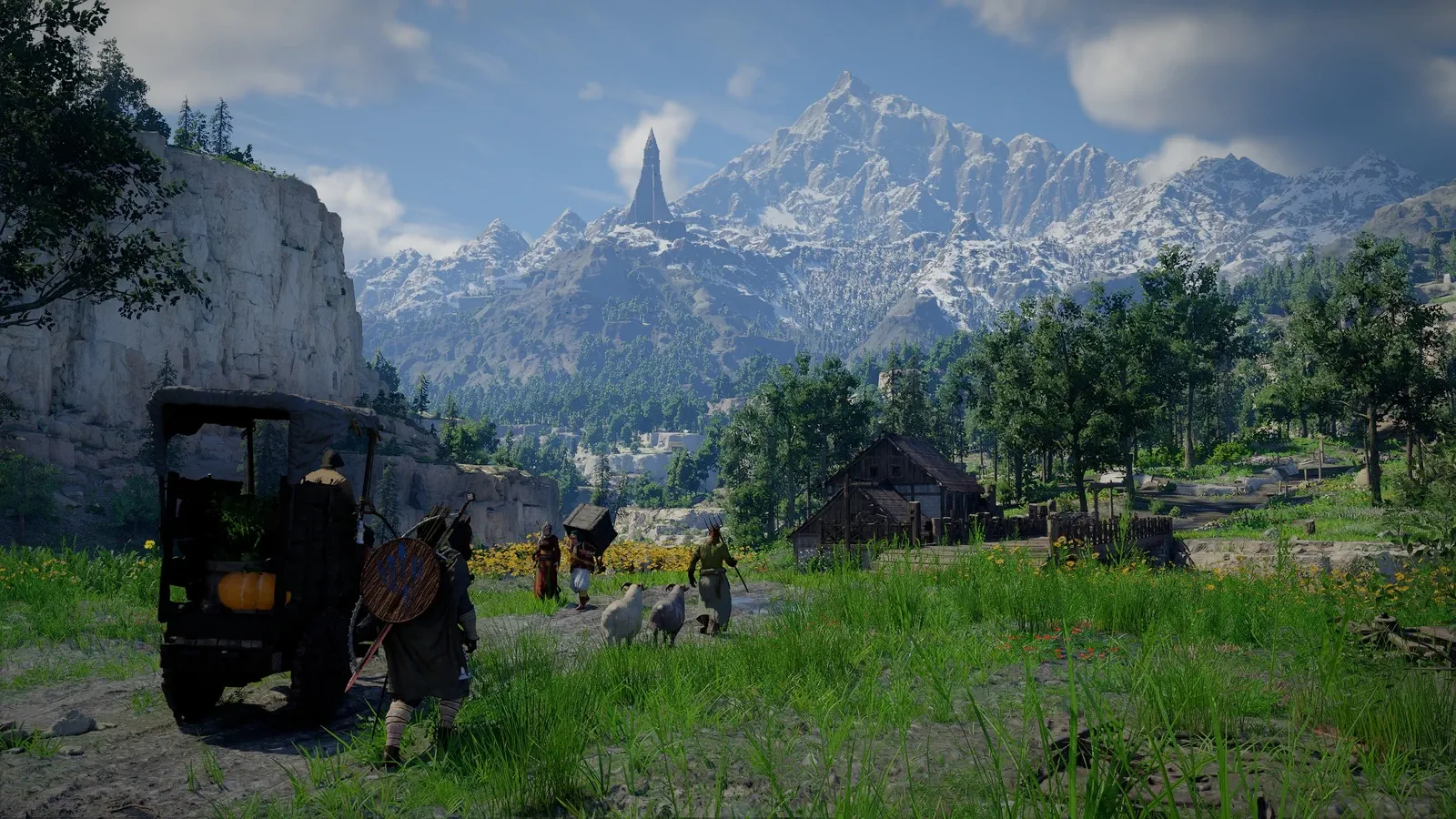
Considering the amount of mechanics and things to do in Crimson Desert, it's astounding how barebones and forgettable the story turns out to be. If, at any point, you told me there actually isn't a narrative, I would believe you. Even when the game introduces three protagonists, multiple factions and kingdoms, and entire continents to the mix.
A slight narrative wouldn't be an issue if Crimson Desert were more tightly paced, but it isn't. In the past, games like Just Cause and Saints Row have gotten away with flimsy stories thanks to their vibrant sandbox playgrounds that have a constant sense of forward momentum. Pywel, the world of Crimson Desert, is bigger than either of those franchises combined, but also remarkably shallow. Most of its mechanics are all surface without anything underneath the admittedly gorgeous visuals.
Progression is often restricted by arbitrary limits and real-world waiting. Early on, after completing the first of many tutorials, you're tasked with sending out your Graymanes, the clan you're putting back together, and the game tells you that it will take a set amount of time for them to complete their mission. During that time, you can do sidequests or wait, but you can't fast-forward or complete the mission with them.
It's a maddening, completely superfluous addition that feels like a remnant of mid-2000s MMO design, not something that should ever be included in a sprawling single-player adventure title like this. It is also only the first of many similar blockades and slowdowns inserted into the game.
Crimson Desert also does a terrible job of explaining what it actually wants from you. It refuses to elaborate on mechanics, and most of its challenges were, until a recent update, behind convoluted riddles that told nothing about what was expected from the player.
At times, it will introduce a mechanic, then promptly forget about it for hours at a time, only to bring it back without warning or a reminder of how it works. If there were just a handful of ideas, this could still probably work, even if it was frustrating. But Crimson Desert has yet to meet a gameplay implementation it didn't want to lift wholesale.
During my time with the game, I've encountered systems for: fishing, mining, cooking, farming, building, gambling, archery, market economics, dyeing clothing, smithing, knitting, ranching, and even flying. Some of these are handled better than others. All of them are remarkably shallow. Others, like the mini-games involving arm wrestling, are an accessibility nightmare and often completely unplayable if you have any kind of physical or neurological impairment. But we'll get to that later.
Crimson Desert wants to be every single game out there. It openly borrows from Rockstar, Nintendo, and Square Enix at every turn. Red Dead Redemption is the biggest influence, with the UI, map, and control mechanics covered with great affection. This, of course, is both a blessing and a curse. They're beloved for a myriad of reasons, and veterans of the genre will easily parse through several elements on muscle memory alone.
But Rockstar has always struggled with poor controls, and their later games, Red Dead Redemption 2 in particular, have stifled gameplay in favor of strictly linear mission design in expansive environments. These issues translate to Crimson Desert wholesale and make the experience less enjoyable. Combat, for example, dips between divine and terrible based entirely on the enemy you're fighting. The slower, the better. Faster enemies, especially magical ones with the ability to teleport at will, are a crapshoot whether you hit them or not.
Traversing the massive open world is far more of a chore than it should be, especially in the first dozens of hours. Much, much later in the game, you'll open up skills and mounts that make the experience a more joyous and absurd one, but that's far more of a detriment than it is a promise. No game lives on a compliment that it gets good if you just give it anywhere between 50 and 100 hours of your time first.
Similarly, it takes a long time to unlock enough skills for the combat to truly click. This does happen much earlier than the traversal mechanics, but we're still talking about at least 10 hours or more. The entire first act of the game, which is a patchwork of awful dialogue and even worse storytelling, is practically an elaborate tutorial. Although it must be said, you'll still end up uncovering new systems well into the narrative, another dozen hours later.
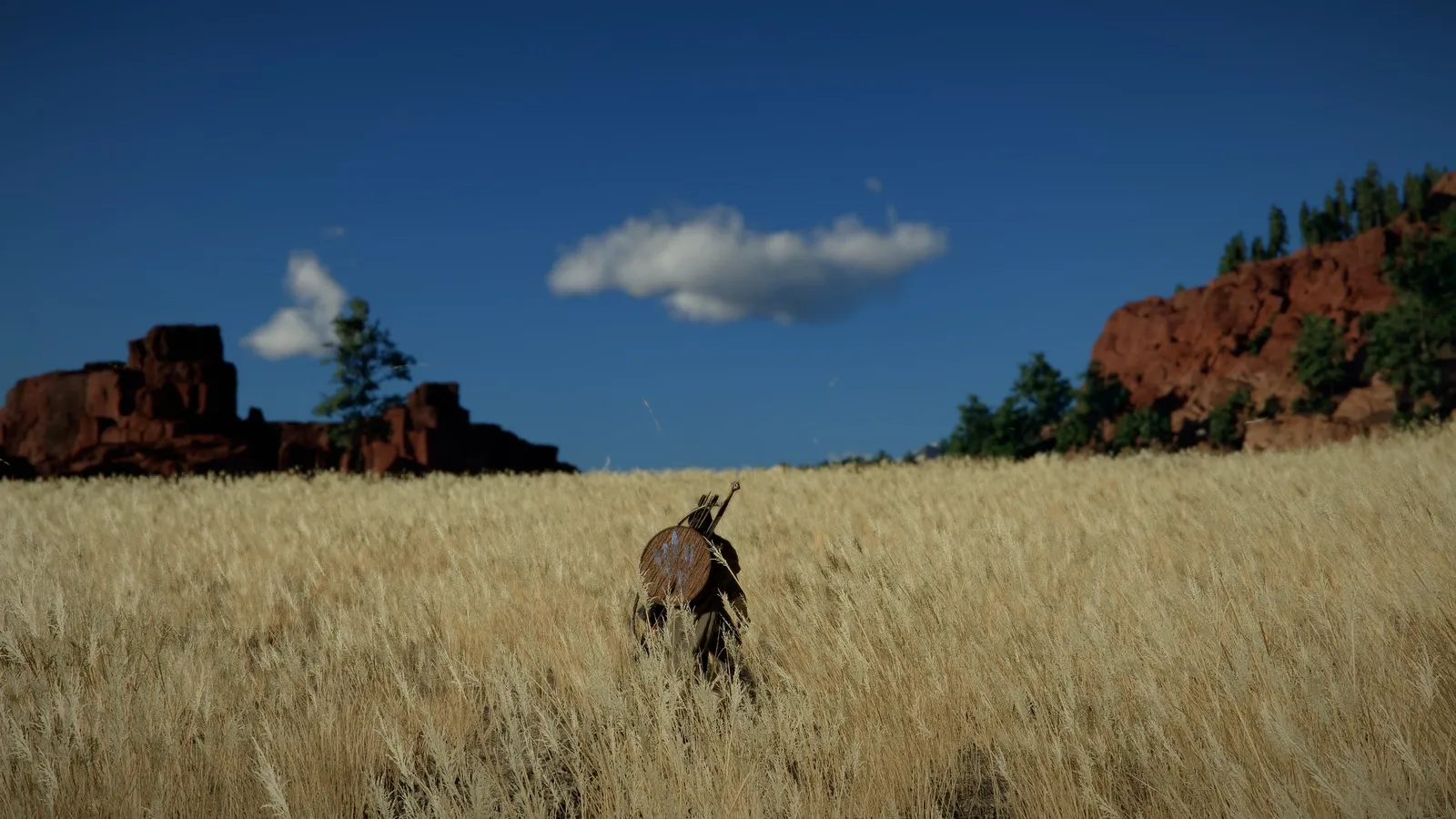
Another area where Crimson Desert struggles is in consistency. At times, it feels like a chore because it is easy, but tedious.
A very early mission chain progression goes as follows: Kliff, our hero, enters a city because he was told to go there. A marker tells him to enter a tavern to find information. There, he has to arm wrestle a random person. When he wins, he receives a key. Then, the progression marker tells him to speak with a homeless person outside the tavern. Once he's done that, the homeless person disappears, only to reveal a grate to the sewers. Inside, Kliff will rescue a lost woman, who also disappears. At this point, the map tells Kliff to help a local couple clean their chimney.
It's an astoundingly poor sequence of events, and only the first of many that you'll encounter. So many things in Crimson Desert exist on a conceptual plane that nobody has refined or polished to a level that they make sense for outsiders.
Much later, I bumped into a random passerby, whom the game instructed me to capture. I didn't know why, but I followed the instructions and was rewarded with a bounty. At no point did any of this feel organic or as if I had experienced a living world in action. Instead, I felt a distinct sense that someone, at some point, just forgot to tell me what the game was doing.
Another area that highlights these issues is the control mechanics. I reviewed Crimson Desert on a PC, but played for the most part with an Xbox controller. To say the menus and interfaces are an accessibility nightmare is an understatement. Some things, like picking up items, require numerous button prompts and might still fail. At worst, the game requires you to use the object manipulation power lifted from Breath of the Wild during a fierce boss battle, which proves remarkably fiddly.
Even something as simple as saving the game is a frustration. To do so, you'll have to open the pause menu, navigate between top menus with the L and R shoulder buttons, then go through the sub-menus with the L and R triggers, and finally use the directional buttons for the sub-sub-menus to find the Save/Load prompt. No, they're not separate.
To open any menu, you press the A button. Once inside the Save/Load menu, A suddenly becomes the prompt to load a file, while Y is the designated button to save. At the time of writing, Crimson Desert does not automatically choose an empty slot for saving.
Sometimes you have to press and hold buttons to activate something, at others, a single press will do. There's very little rhyme or reason why any of this works or doesn't work this way. In-game, numerous quick-time events require impeccable precision, otherwise resulting in fail-states or death. There is no way to make these easier or more accessible for those who struggle with motor functions or cognitive disabilities.
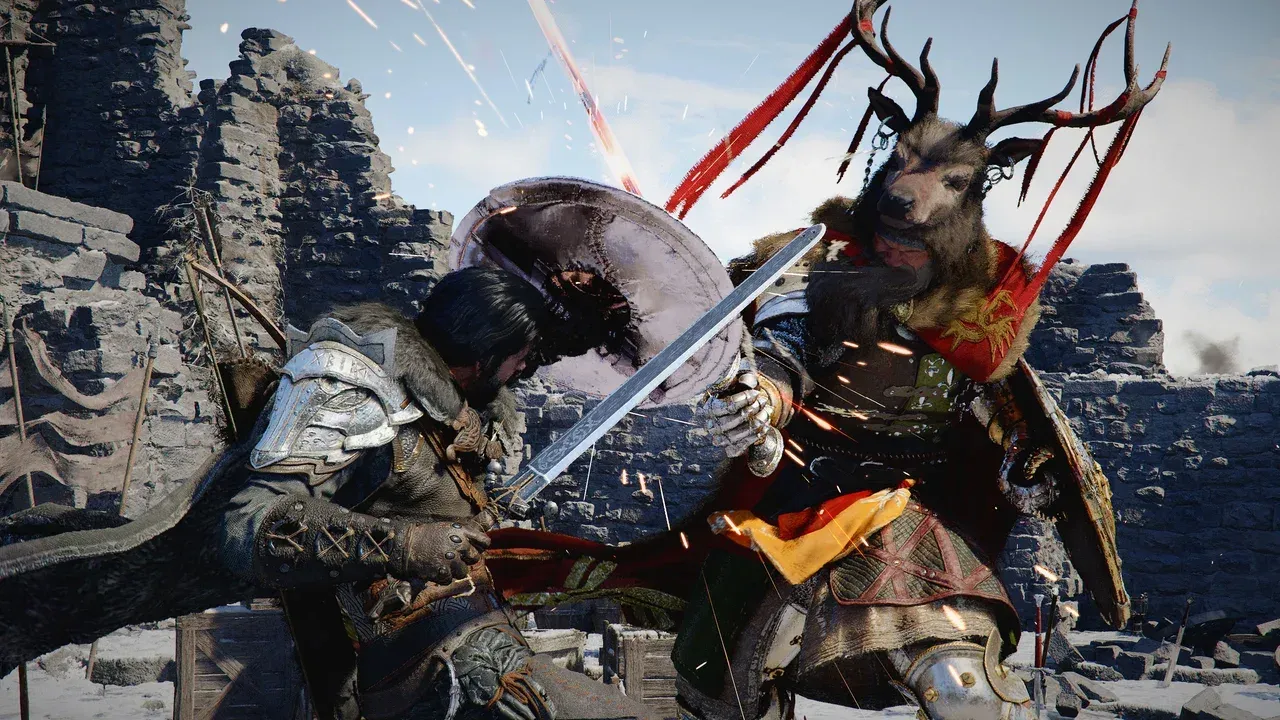
At other times, Crimson Desert is frustratingly hard. Boss battles can go from 0 to 100 without warning. Even early battles introduce instant-death mechanics, while battles against minions during these fights can lead to stun-lock animations, where the player can't move, block, or heal because of constant attacks.
In death, if you have the right items, Kliff can return to life with diminished health resources. But the loading animation upon revival is surprisingly long, and the boss can attack you during that time. This will often, and with great frustration, lead to a renewed death. Checkpoints are few and far between, and often will force you to rewatch entire cutscenes, which the game does not allow you to skip.
When I played Crimson Desert for the first time back in Gamescom 2024, I came away hugely impressed by its combat and style. In 2025, I got a taste of the larger mechanics at hand and reported that while the action was still fun, everything else felt overdesigned. There were mechanics for the sake of mechanics on top of each other.
In the full version, the fights are still fun, at least when they're not ridiculously difficult, and the world looks incredible for the most part. But it all feels unfocused, superficial, and as if it were designed as a completely different game altogether. Played with friends, the boss battles make more sense. If I were part of a clan, I could understand the timed building sections and survival mechanics requiring immense amounts of raw materials.
With friends, I could even see the vast (if empty) world as an opportunity to just hang out. It wouldn't necessarily be well designed or compelling on a narrative level, but it would have rudimentary tools for us to create our own fun.
Played alone, it feels like I'm missing an entire portion of a game, and what's left is an experience that doesn't care if I have fun or not.
And yet, as said, it also feels like an Early Access title. To date, the developer has issued a statement saying they're working on fixes for almost everything their customers have complained about. Perhaps in six months to a year, Crimson Desert will look and feel completely different.
But Crimson Desert is not an Early Access game. It is a full release, priced at a premium, and that comes with certain expectations. In many ways, it does fulfill the bare minimum criteria. It has things to do for hundreds of hours, if you're willing to put up with its obtuse mechanics and nonexistent story. But that's asking a lot from the player, and I'm not certain Crimson Desert gives as much as it demands.
Not yet, at least.


