

Version: Digital retail review code provided by the distributor
Independence & Ethics
Region Free is reader-supported and maintains full editorial independence. For more on my scoring and standards, see the Review Guide.
It took me ages to get into Esoteric Ebb.
I got a review copy at launch, so almost three weeks ago. I immediately leapt at the chance to explore what should have been an instant home run for me. I've been a lifelong Dungeons and Dragons fan, I love the CRPG genre, and Disco Elysium is my second-favorite game of all time. On paper, Esoteric Ebb should have been an instant source of hyperfixation.
Instead, I bounced off of it almost immediately. It was like a visceral rejection. As if I had put something in my mouth that my body identified as poison.
After staying away for days, I made careful moves back to Esoteric Ebb. What made me reject it so hard? By all accounts, it's a perfectly fine indie title with a fascinating world and surprisingly beautiful art style.
Well, it was the Disco Elysium of it all. Esoteric Ebb wants to be like Studio ZA/UM's masterpiece so badly that it detracts from everything it does better. At its worst, Esoteric Ebb feels like a mod for an existing game rather than the fascinating exploration of identity, politics, and masculinity that it really is.
It took me another few days to get over my gripes. I played out of obligation rather than interest. Then, after some time, I finally vibed with the game. I could overlook the obvious influences and cover band dialogue, and I started to have fun.
I'm glad I stuck around, because Esoteric Ebb is something special. It just takes a bit of digging.
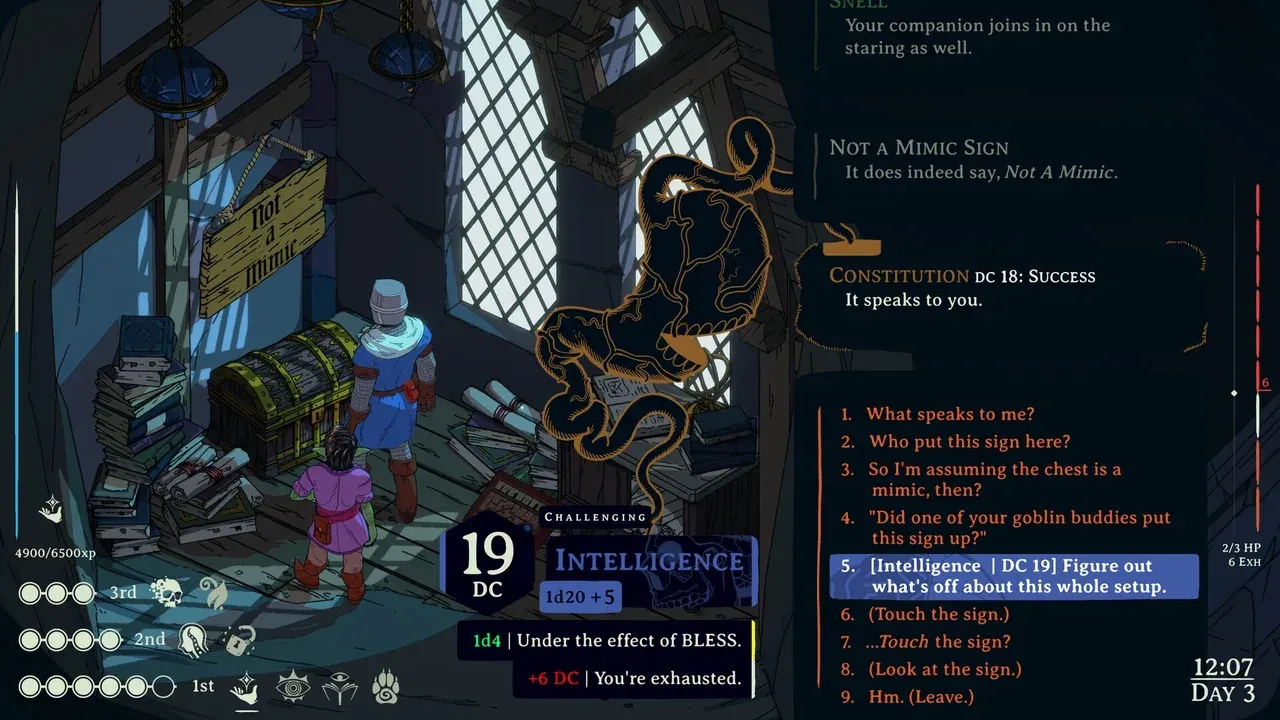
Esoteric Ebb borrows liberally from Disco Elysium, Planescape Torment, and Terry Pratchett's Discworld novels. Calling it Discworld Elysium wouldn't be too far off, and your reaction to that comparison will define how much you'll enjoy the game itself.
The game begins on a slab, where you wake up from a near-death experience. Like in Disco Elysium, you have no memory of who you are, why you're there, or of the general state of the world. You're a Cleric, but even that's questionable. In this world, that means you're a cop, and you've got a job to do.
Your arrival in the city within days of an important election, the first of its kind, has put everyone on edge. Someone tried to kill you and failed. A tea shop was burned down in the process. Whoever is behind it, they're covering their tracks in a hurry.
Soon, you're paired with a mismatched partner, Snell, a streetsmart goblin treated as a lesser citizen because of his race. He plays the Kim Kitsuragi to your Harry Dubois. There's a pretty Orc lady who might as well wear a Miss Oraanje Disco Dancer shirt the first time you meet her.
Then there's the Esoteric, the shivers of this world, where you can reach out to feel the ethereal beyond the veil. At all times, something moves just in the corner of your sight. Whatever that is, and if you'll ever find out, depends on the roll of the dice.
At all times, your skills (dexterity, strength, intelligence, wisdom, constitution, charisma) argue amongst themselves. There is no clear dungeon master, or DM, but there's a sense that fate has a bitter sense of humour.
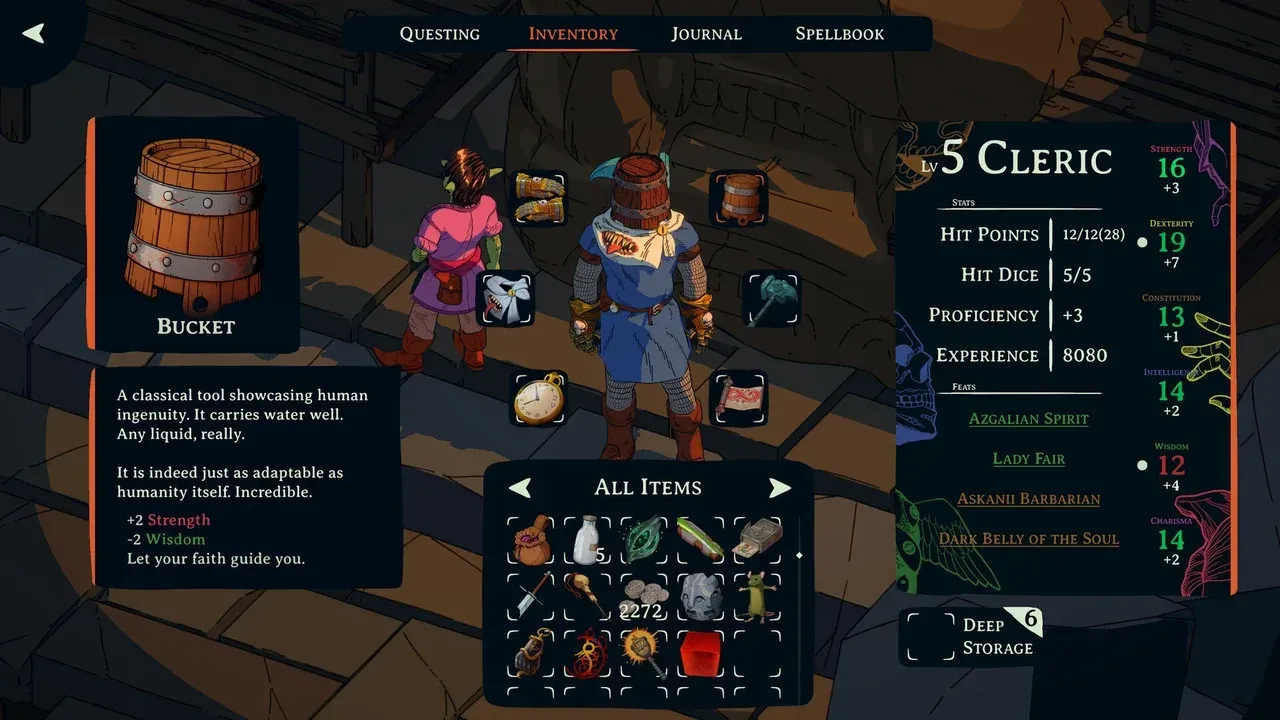
If that sounds too much like Disco Elysium, congratulations, you know how I felt at the start. I couldn't get past how similar it all is. The Cleric is Harry, right down to the overwritten monologues and inability to act like even a semi-functional person. Snell is Kim, and the game even toys with similar themes with all the subtlety of a sledgehammer.
The dialogue lifts its humor and tone directly from Elysium, and the overarching narrative of a great political shift is the same as Le Retour, the return, which everyone in Revachol awaits with bated breath.
Your skills are a vocal part of your psyche, and each one has an opinion on how you should behave as a person. Strength is a brutish nationalist, Intelligence is a snooty elite liberal, while Wisdom pushes for a fantasy-level socialism. Unlike Elysium, where Harry's internal monologue took parts of his broken subconscious, these are mechanics lifted directly – sometimes verbatim – from the fifth edition player's handbook.
Which makes for an odd experience, as the skills themselves, as traditionally presented, are neither good nor bad. They merely are. It feels odd that Esoteric Ebb equates strength with fascism when the point of Dungeons and Dragons is that you can play these skills however you like.
By sticking so close to Disco Elysium's structure, Esoteric Ebb overlooks some of the finer points of what makes its other half, D&D, work. For the first few hours, at least until the end of the first day. (And yes, that five-day structure is also from Disco Elysium.)
But then, slowly but surely, Esoteric Ebb starts to find its own footing. The plot, part murder mystery, part Manchurian Candidate, moves far more briskly than Disco Elysium's deliberate and melancholy one. The world proves more Pratchettian and silly than at first glance, and the humour is equally demented.
Then there's the smart way that Esoteric Ebb blends its gameplay mechanics, lore, and a metatextual conversation of how these work. As a Cleric, you can cast magic, and, just as in Dungeons and Dragons, that's as problematic or casual as the DM decides. Here, you can do whatever you want, but by Crom, you'll be judged for it.
Cast, for example, a Charm Person spell, and Esoteric Ebb lets you know that you've committed a gross violation. There's an entire conversation about the morality of some spells that breaks the fourth wall, but also reframes so much of the experience that it engaged me more than anything else in the story up to that point.
It's here that Esoteric Ebb starts to shine. It finally moves beyond a mere shade of Disco Elysium and starts a dialogue between the player and the game that is as refreshing and exciting as ZA/UM's masterpiece.
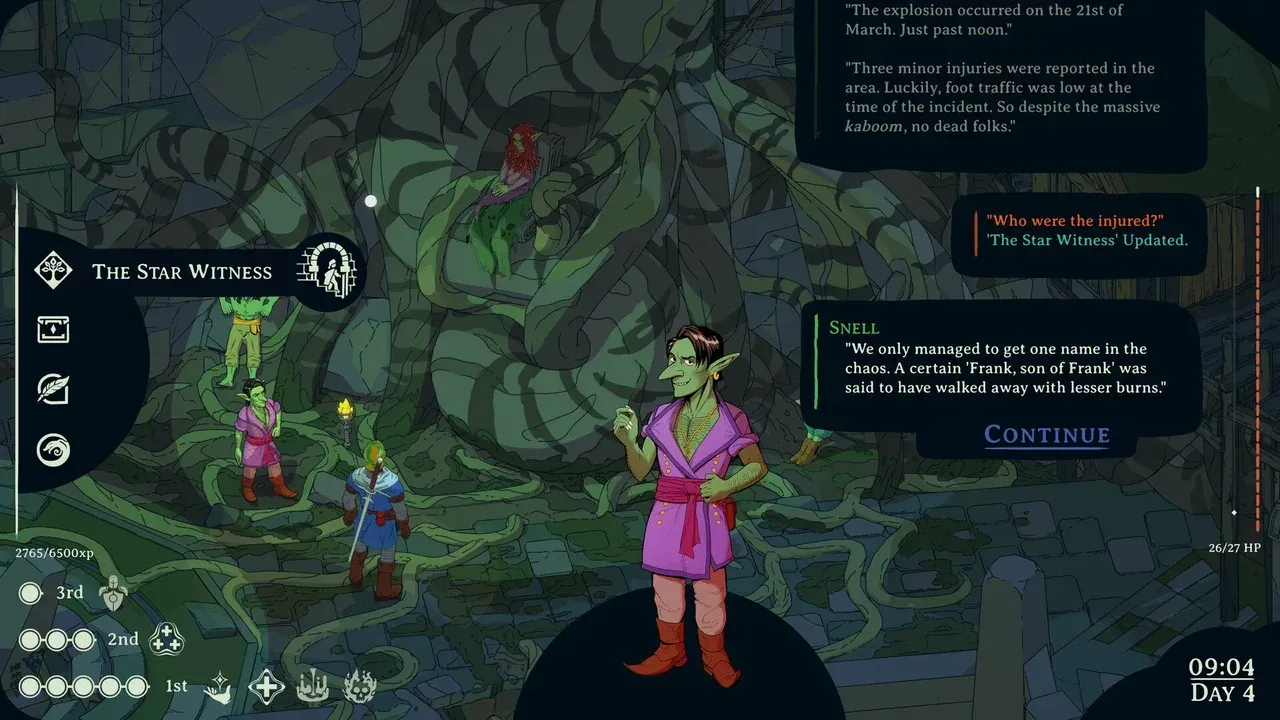
As the story moves forward, the characters grow out of their inspirations. The Cleric can become almost anything the player wants them to be, and it leans far harder on the D&D elements than previously anticipated. Snell, too, proves a worthy partner with a sharply observed story that is often surprisingly moving.
It does stumble on occasion. I don't get why the developers felt it was necessary to include any combat mechanics in the story, especially when they can bring the game to a grinding halt without warning. There are also a couple of railroaded moments that need to happen for the story to work, but they're not as cleverly disguised as the game thinks.
But when it works, Esoteric Ebb soars. It says a lot about the experience that after a hard initial rejection, I've not only consistently returned to the game but restarted new adventures multiple times to experience everything it has to offer.
It isn't Disco, but it's more like a great cover band that is just discovering its own groove. By the end, you can pick out what it will sound like on its own, and the results are tremendously exciting.
I can't wait for Esoteric Ebb 2.


