

Version: Digital retail review code provided by the distributor
Independence & Ethics
Region Free is reader-supported and maintains full editorial independence. For more on my scoring and standards, see the Review Guide.
The more time I spend with Timberborn, the more I love it.
At first glance, it is an easy game to fall in love with. The visuals and music are all fantastic, with an easy charm that evokes old-school animations. It has a delightfully droll sense of humour that pops up when you least expect it.
There are puns all over the place, and it gives the game a sense of momentum even when you're just learning the ropes. I wanted to see what I could unlock next just to get a bit more flavor text and lore. City-builders aren't necessarily known for their writing, but in the best cases, like here and Frostpunk, they serve as vital elements of the overall experience.
In Timberborn, humanity has gone the way of the dodo, and beavers rule supreme. But nothing comes easy, even when you're at the top of the food chain, and there's a lot that needs building just to keep civilization going. Droughts, famine, homelessness, and polluted water are just some of the dangers that linger from the days when humankind roamed the planet. It's up to the beavers to sort these things out.
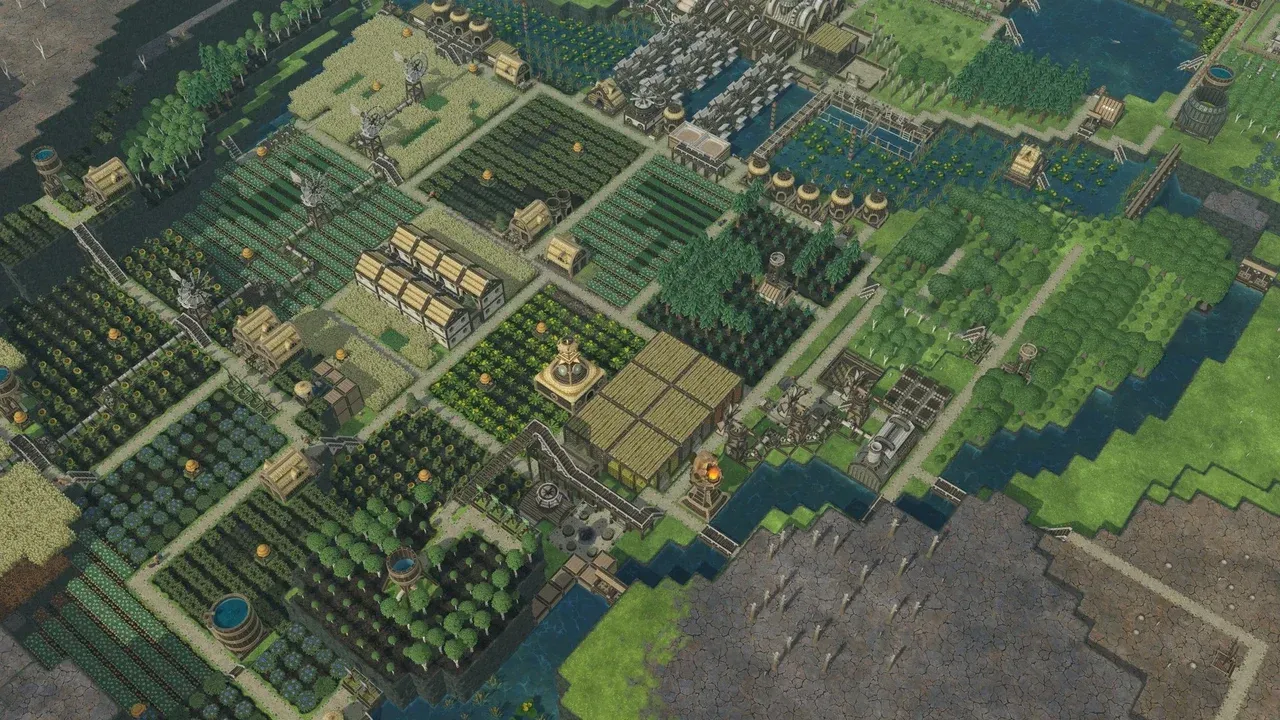
Timberborn starts easy enough. At first, you just build huts for your few survivors to live in, and start to assign places for workers in the few industries available. Some will chop wood, others will harvest crops, and so forth.
Then, things start to escalate. Beavers need to keep their teeth fixed, while some require a place to relax. A scientist can invent new things, while water sources need filtration. Resources must be stored for the incoming harvest, and eventually, the entire landscape has to change to accommodate newcomers.
Before you know it, your city spans numerous levels both above and below ground, and you're spending time just organizing automation and zip-lines for faster travel between multiple districts that span the entire map. Building the city is just the first part. It's in the tinkering where Timberborn really shows what it's made of.
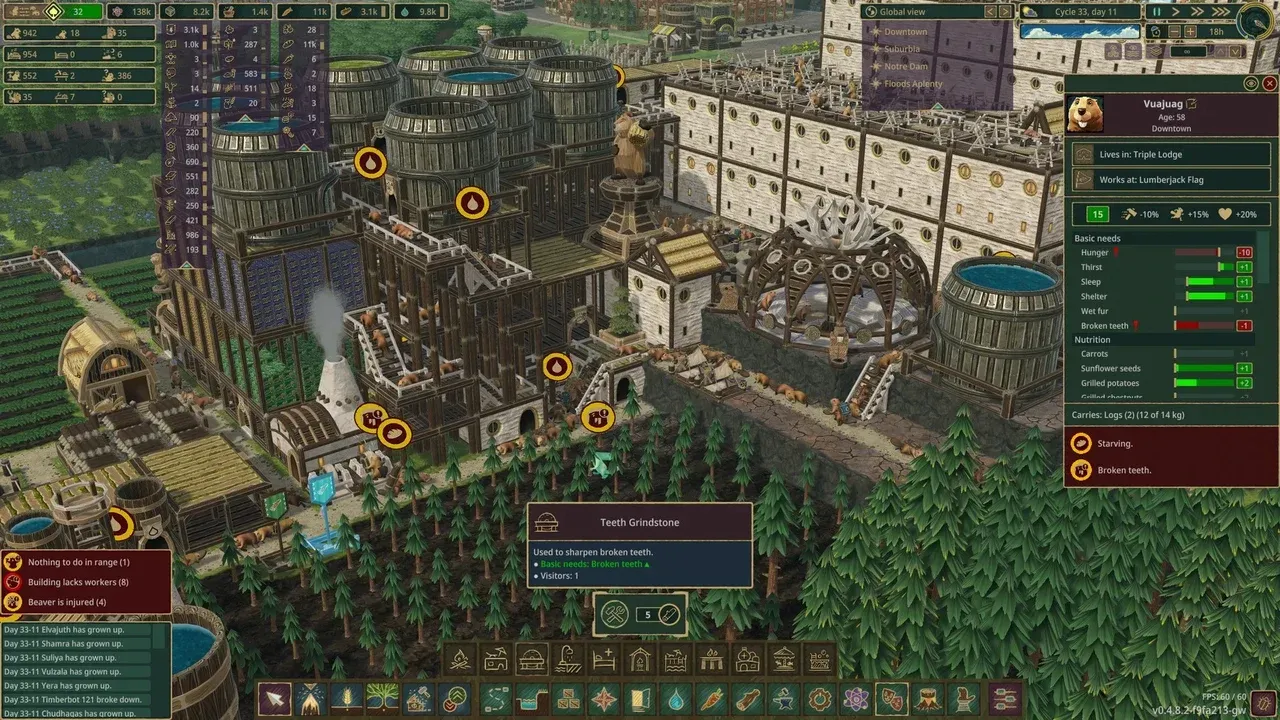
Timberborn has been in Early Access for some time, and its first full 1.0 release took place earlier in March. I've spent the past few weeks on-and-off toying with every element of the full game, trying to figure out what makes it so addictive.
For me, I think it's how deceptively engaging its pacing is. Even a short session can stretch into hours simply because of how well Timberborn keeps me engaged. I'll notice that some beavers need homes, so I find a location for them to stay. But then I'll notice that it would actually make more sense to rebuild a section of the housing complex to accommodate more beavers in the future.
That leads to optimizing the roads for that part of town entirely, which in turn forces me to ask if I have work for everyone who has just moved in. Clearly, I also need to consider which district needs people more than the other, and if there's a chance my beavers can commute using a new zip-line that I should build next.
It's an ever-growing series of escalations, each one more intriguing than the last. It never feels like busywork, because every building opens up new opportunities to make things better.
On top of that, Timberborn looks amazing. It's one of the most coherently and stunningly designed games of this type I've ever seen. You can flip through multiple levels at ease, and each one reveals intricate detail like a pop-up storybook, or one of those old mosaic collections of ancient history, where artists went to town on the most minute things possible.
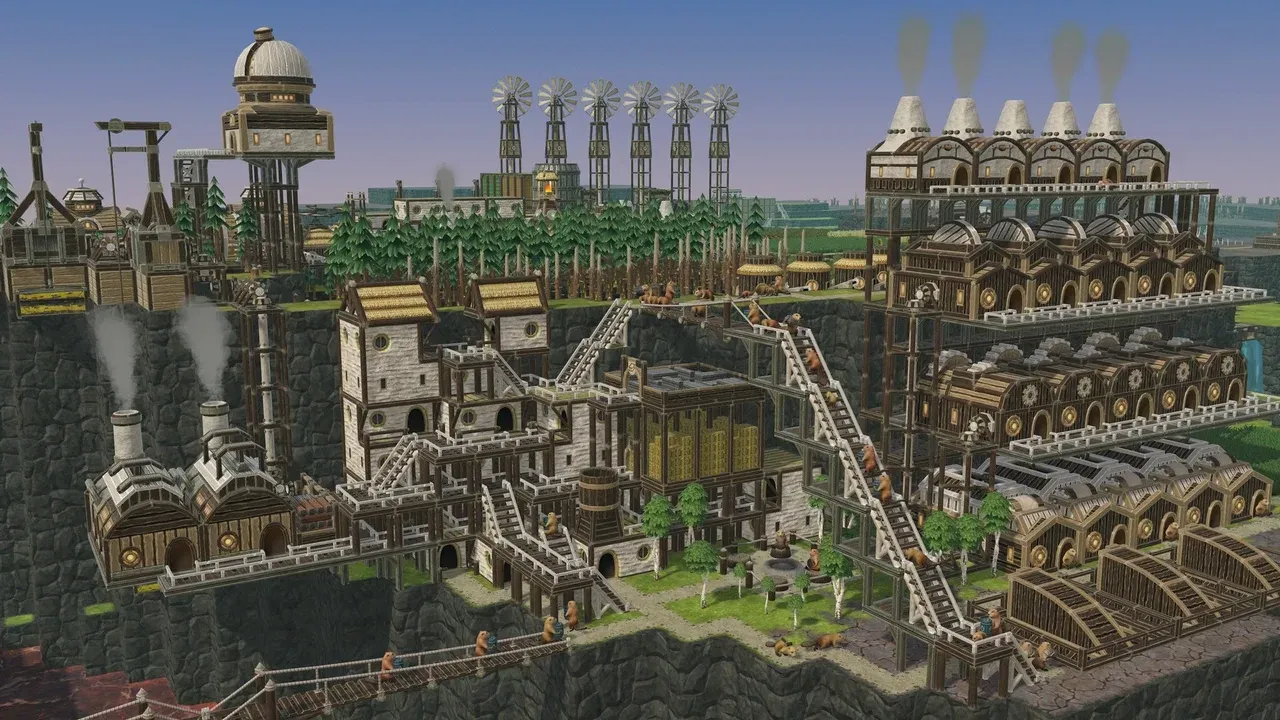
At first, Timberborn will feel overwhelming. The menus are a little fiddly, and there are times when I still get confused about which sub-menu has the correct deletion tool that I need. By the time you have multiple automations in place and numerous districts to control, I wish there were an opportunity to simplify the controls a bit.
But, then again, that would take away from the freedom that Timberborn offers. It's one of those games that truly has very few limits. Whatever you can imagine, you can probably build. During my time with the game, I've seen some spectacular works by designers far, far smarter than I am. Each one has made me want to go back and redo something I've only just started to imagine.
This speaks highly of how satisfying Timberborn's gameloop proves to be. Even starting over feels like a welcome challenge. And while early stages are punishing, especially if an unwelcome drought suddenly wipes out a blossoming settlement, numerous accessibility options make the game easier for those who just want to build.
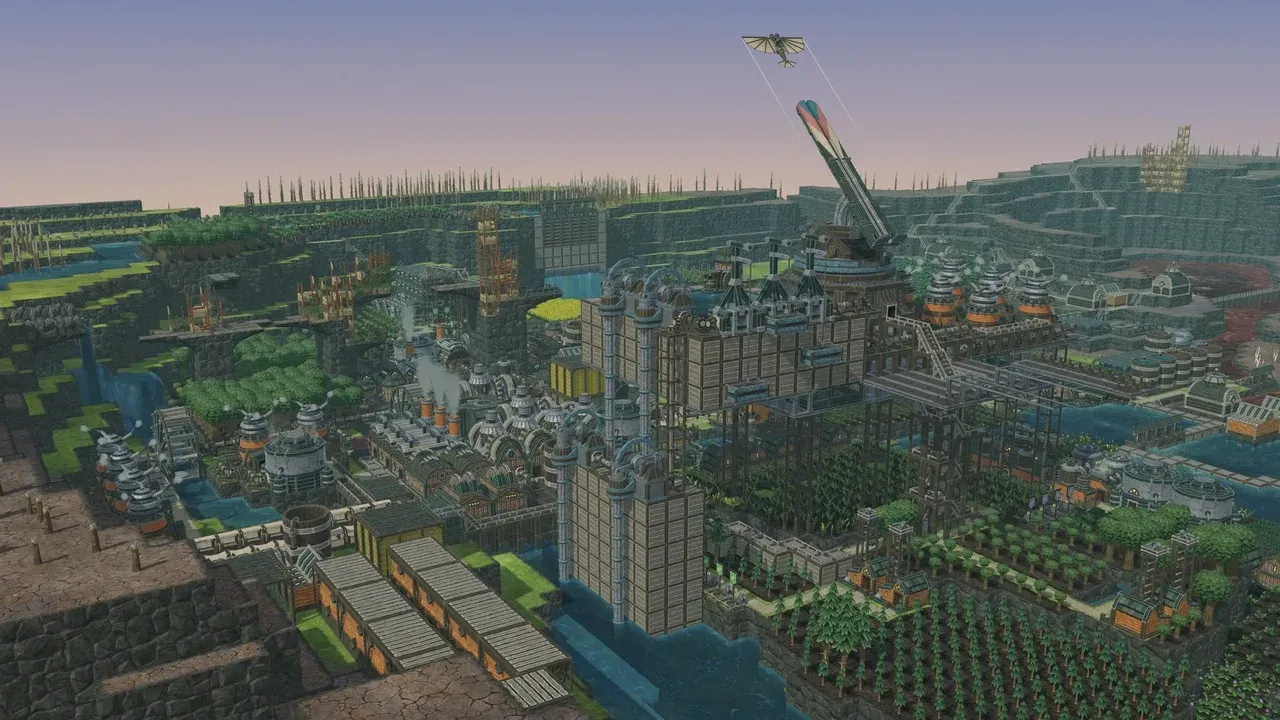
I've always been a big fan of LEGO and building simulators. I love games that give me the tools and encouragement to zone out and dream. Timberborn does exactly that, and it does so in a way that balances out the complex with the accessible.
While something like Factorio might feature more in-depth mechanics for persistent automation, it is also far less welcoming than this vision of beaver utopia. Timberborn takes time to fully open up on its numerous mechanics and some of the finer points in its endgame, but it does so in a way that encourages the journey. Even if it takes months to achieve, every step is a little victory.


