Distributor provided a review copy.
I love the Like a Dragon (Yakuza) series. I know each game has plenty of faults and the franchise refuses to change, but I don't care. Outside of Final Fantasy, there are few long-running titles that matter to me as much as this one.
The reason for such intense love is twofold. Firstly, I love how the series continues to reinvent itself despite staying the same. If that sounds contradictory, welcome to the world of Yakuza. But where else are you going to find a franchise that can go from a straight up mafia melodrama to heartfelt slice of life drama to samurai action and even pirate adventure serial? Every episode is its own strange universe where any semblance of logic is replaced with the rule of cool. If it's awesome, it's probably OK.
In that sense, Yakuza 3 was always an outlier. After the bombastic drama of the first two parts, it slows the action way down to focus on the inner turmoil of Kiryu and his new life as an adoptive father to the children at the Morning Glory orphanage.
This, of course, isn't everything that Kiryu gets up to. He's also the head of an all-girl biker gang(!), a fighter in an underground colosseum, and the mascot for a new mobile phone company. Plus, there's that whole business with the Yakuza, which just won't go away no matter how many times Kiryu retires.
It is very, very silly. But it brings up the second reason this series works so well.
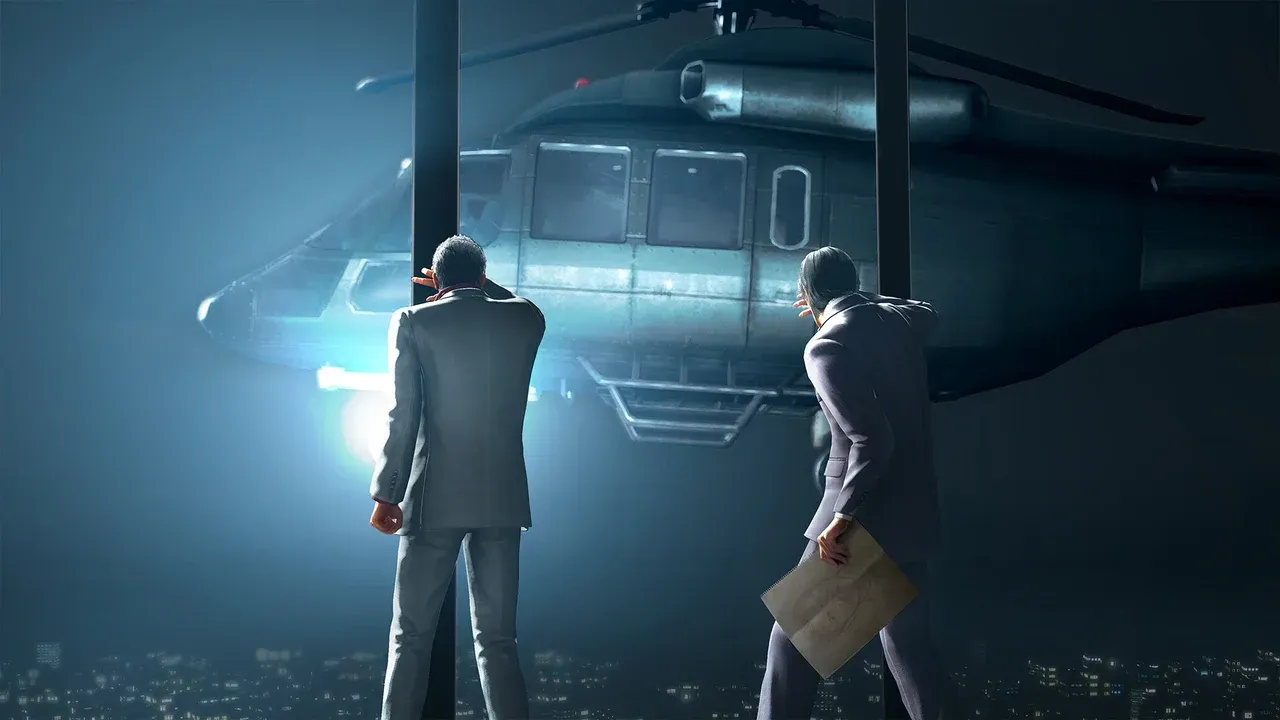
Aside the silly business, Yakuza is a series about men who never grew up. Each one of the protagonists and anti-heroes is an orphan or someone who suffered so much abuse as a child they never grew past it. Kiryu, who sought a father figure in a cold Yakuza captain, now finds himself in a position to right the wrongs of his past. It's here that Yakuza shines.
Much of the game is spent guiding the children in life, helping them with homework, cooking for them, and lending an ear when necessary. It is heartfelt and touching and it made me cry more than once with its wholly sincere approach to found families.
There's a scene where Kiryu comforts a bullied child who asks why they should even continue to exist when they're such a burden on society. Kiryu tells her of his own past, who he lost, and how he is proud every day to witness how his newfound family will grow beyond his own shortcomings. It is tremendously moving. Especially as Kiryu is often mistaken for a figure of toxic masculinity by those who clearly haven't understood what the series is about.
Beyond his work at Morning Glory, Kiryu extends his help to those in need. There's a lovely sense of companionship and enforcement of the social contract as we fix broken things, mend relationships, and generally leave things better than we found them. It makes for a wholesome and rewarding gaming experience, one that even the most sullen players should enjoy.

Yes, the plot is silly and often far too stretched out. No question about that.
The first five or six hours are basically an extended tutorial, and there are issues in pacing. Your enjoyment will differ entirely based on how much you love the mood and tone of this series. For me, Yakuza has always scratched the hyperfocus itch, which means I will happily spend hours and hours just doing busywork.
And I know it's busywork and repetitive. Elsewhere, I'd have no patience for it. But in Yakuza, I can't help but love it. My glass house comes equipped with rocks, as usual.
It must be mentioned that Yakuza Kiwami 3 is also an odd duck as a remake. While some additions and changes are genuinely great – Morning Glory is finally fun! – others remain bafflingly dull. The original photography quest from the PS3 era, where Kiryu would chase down odd characters living in Okinawa for fun stories, is now gone. Instead, RGG Studio has replaced it with the horrendously boring photo hunt from other Yakuza titles. What gives?
Elsewhere, the new biker gang story, Baddies Battles, is wonderful, if shallow. It's certainly miles better than the original offering. But, as if to balance out the good stuff, the new LaLaLa mobile phone connection quest is a watered down version of what we got in Infinite Wealth, and it's more of a chore than it is fun.
Granted, these are all extra. None of it is necessary to complete the story. But Yakuza is all about the side stuff. They're a feature, not a bug. If you're going to add in new things, why not make them stand out or take chances with them?
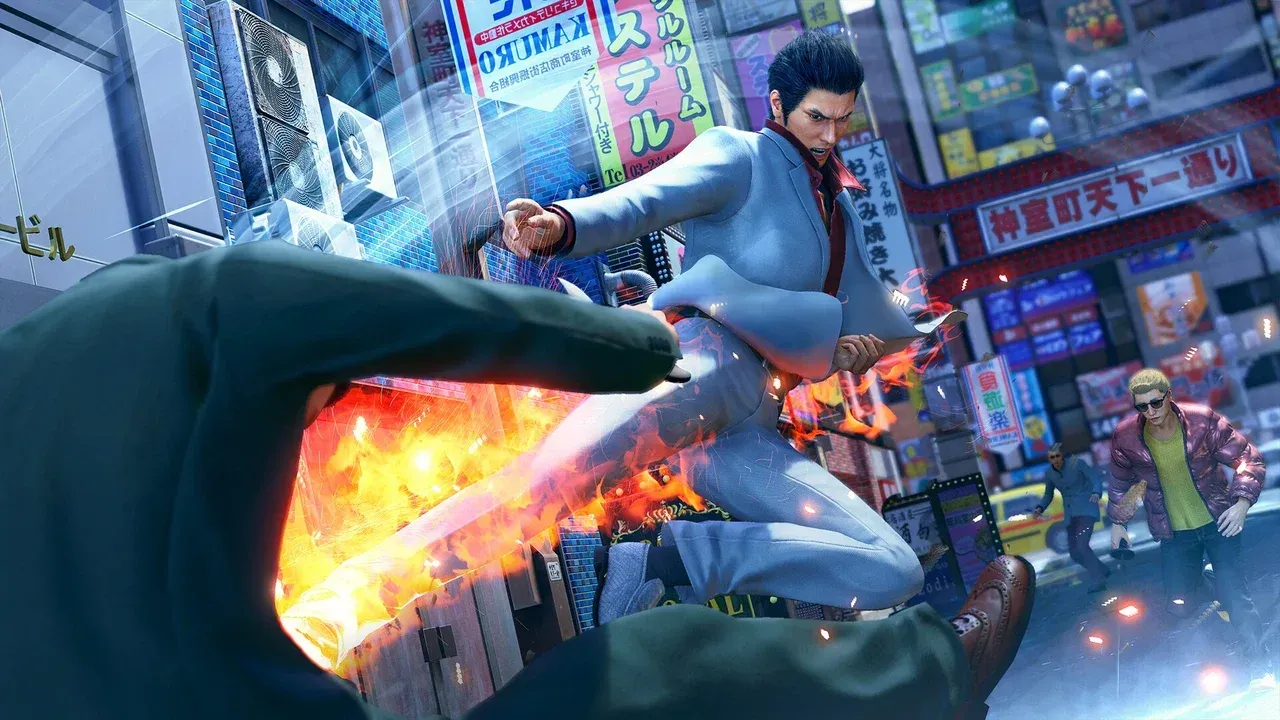
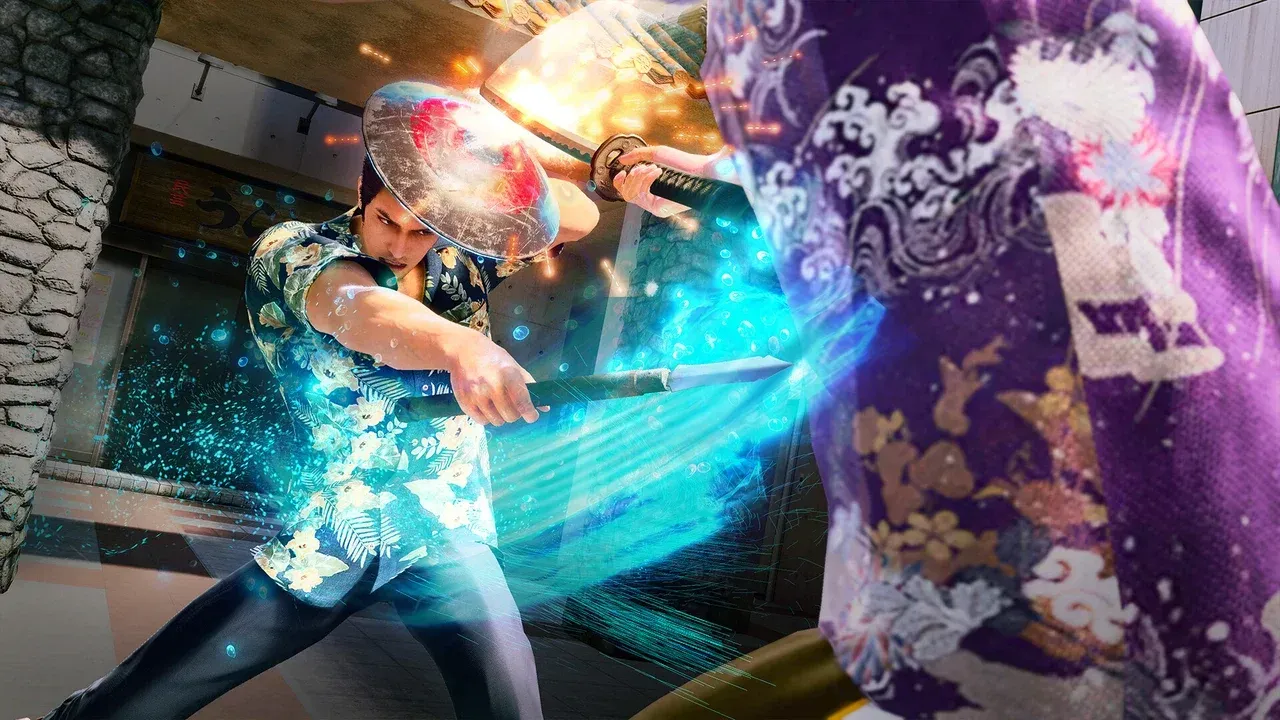
Luckily, combat has received a major overhaul compared to the original, and it's finally fun again. Yakuza 3, in its original PS3 and even in the remastered version, was an unfair experience that brought the entire game down with it. Now, with a heavier emphasis on the combat stylings from Yakuza 0 and Pirate Yakuza, Kiryu's adventure feels way more accessible.
Which is great, because there's still a lot of fighting. There's an entire side-quest involving a colosseum tournament that's utterly bonkers, but also full of wonderful fan service. Boss fights are also better this time around, and there's none of the cheap insta-kill action found in the original version. On top of that, Yakuza Kiwami 3 has three different difficulty levels and none of the achievements are locked behind arbitrary difficulty walls.
Sadly, it's not all good stuff. There are elements where Yakuza Kiwami 3 really stumbles.
The new Dark Ties expansion is fine, but it comes at the cost of messing with the original story in a way that diminishes the big picture. Also, it's about a thoroughly unlikable anti-hero who, when we first meet him, murders a woman in cold blood, only for the game to spend an inordinate amount of time trying to get us to like him. It doesn't work at all, and the fact that RGG Studio even tries is baffling mistake. A part of it feels like it's put together from deleted scenes that were meant to be featured in the original story. Now, they're stitched together into an unsatisfying second package that RGG seems to think is the new direction for the franchise.
I really, really hope that isn't the case.
Then there's the case of the original Yakuza 3 and its remaster, both of which are now gone from the digital stores. You can luckily find them on physical media, but it's incredibly distressing that Sega has felt it necessary to prevent their digital sales to force customers into Kiwami 3. If there ever was a case to be made for the importance of physical media, it's in situations like this.
Finally, there's the casting. Kiwami 3 introduces new characters and replaces old favorites with new actors. One of them, Teruyuki Kagawa, has admitted to repeated offenses of sexual assault and misconduct. In the past, RGG has recast actors caught using drugs. It is baffling and deeply distressing that here they haven't just sought out Kagawa for the role, but defended his casting. It casts an ugly shadow over my beloved series, especially as the franchise has numerous times taken a hard stance on protecting others, no matter who they are.
There are many valid reasons to dislike Yakuza Kiwami 3. Some of the changes are objectively poor and make the game less interesting than its original counterpart. Removing choice from customers and erasing the originals and remasters is bad for everyone. As is casting a known abuser in a prominent role. These are things the game cannot escape.
But it is also the most accessible way to experience the most heartfelt and engaging story in the series. It features some of the most poignant and important ruminations on personhood, self-worth, love, and what it means to be a good man in a broken society that this franchise has ever made.
While the production itself is at odds with its message, there's no denying that Yakuza Kiwami 3 is a worthwhile game despite its many faults. I enjoyed my time with it, even though I winced more often than I have with any other title in the series.
The original is still one of my favorites. Kiwami 3 might become that for newcomers, and I wouldn't rob them of that joy, no matter my own reservations.