The Blood of Dawnwalker has immense pedigree behind it, but that comes with mammoth expectations, too.
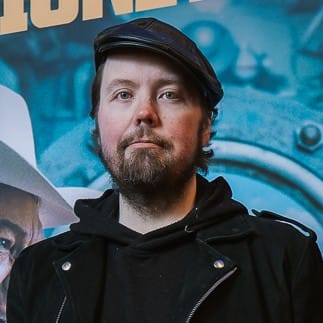
It is the first game from studio Rebel Wolves, founded by Konrad Tomaszkiewicz, director of The Witcher 3: Wild Hunt, who left CD Projekt in 2021. His goal was to return to the roots of computer-RPG experiences and to craft an entirely new adventure, one the studio desribes as a narrative sandbox set in medieval Europe.
For his new venture, Konrad brought along his brother, Mateusz, who was a quest designer on The Witcher 3, as creative director and Bartlomiej Gawel, lead concept artist at CD Projekt, as art director. Within a few years, the team grew to around 100 members as The Blood of Dawnwalker is projected to release sometime in 2026.
At Gamescom, I got a chance to see how the game looks like in action and speak with Mateusz about the art, design, and philosophy behind Rebel Wolves' vampire epic. It's safe to say that few other games in 2026 have me as excited as this dark fantasy of vampires and fate set in medieval Europe.
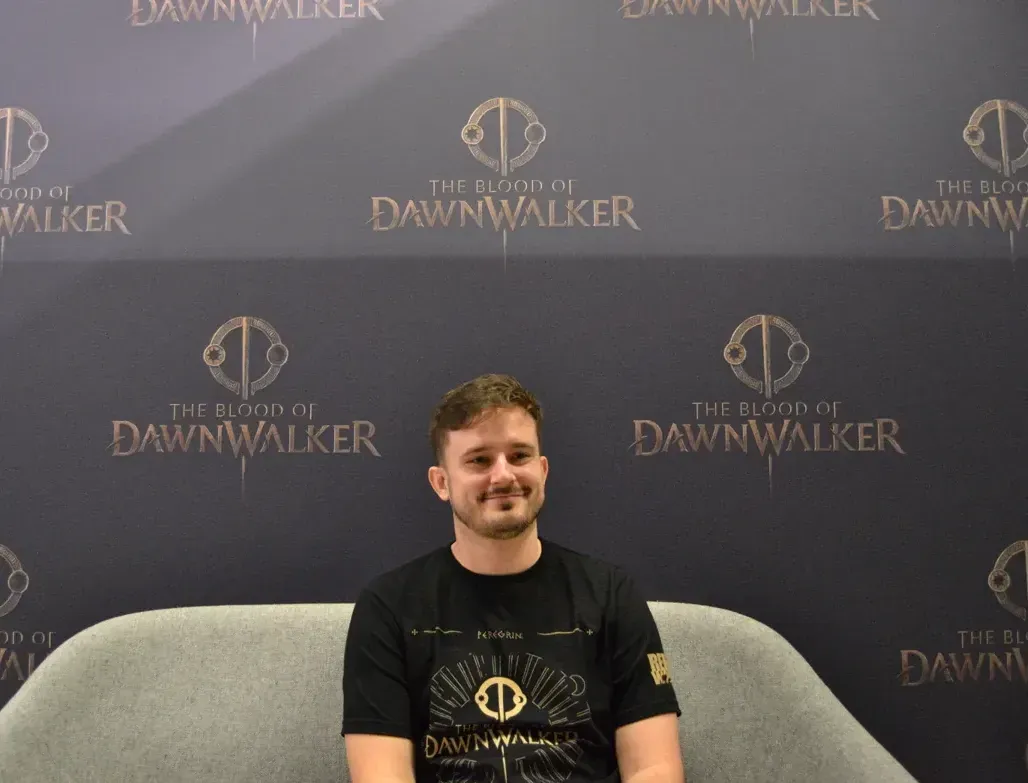
After seeing the gameplay footage and hearing all these things about your goals, there's no way I can't start this without asking if it's possible to just go directly to the end of the game and see what happens?
Mateusz Tomaszkiewicz: In a lot of cases you can. The game is something we call the narrative sandbox and that comes out in the way we structured the narrative content. First of all, a lot of these plot lines are completely optional; your main objective is to free your family. It's completely up to you hpw you want to approach it.
This is something that's inspired by Fallout 1 and 2. In those games, if you knew where the Enclave base is, for example, you could just go to complete the main quest. Our game is similar in that regard.
There are certain places where some story bits happen with some NPCs where something else would happen if you go there without them. But we felt we could do it in a way that is cooler if you actually can progress certain quest moments without even being guided there.
You can expect this kind of game structure in our quest design and all of the content that we are building, including playing out of order, as well.
[In Fallout 2], if you knew where the Enclave base is, you could just go to complete the main quest. Our game is similar in that regard.
The game has a distinct mechanic in switching between the human world and the vampire one. Is it possible to complete the entire game in a single loop, or do you have to switch between the night and day cycles?
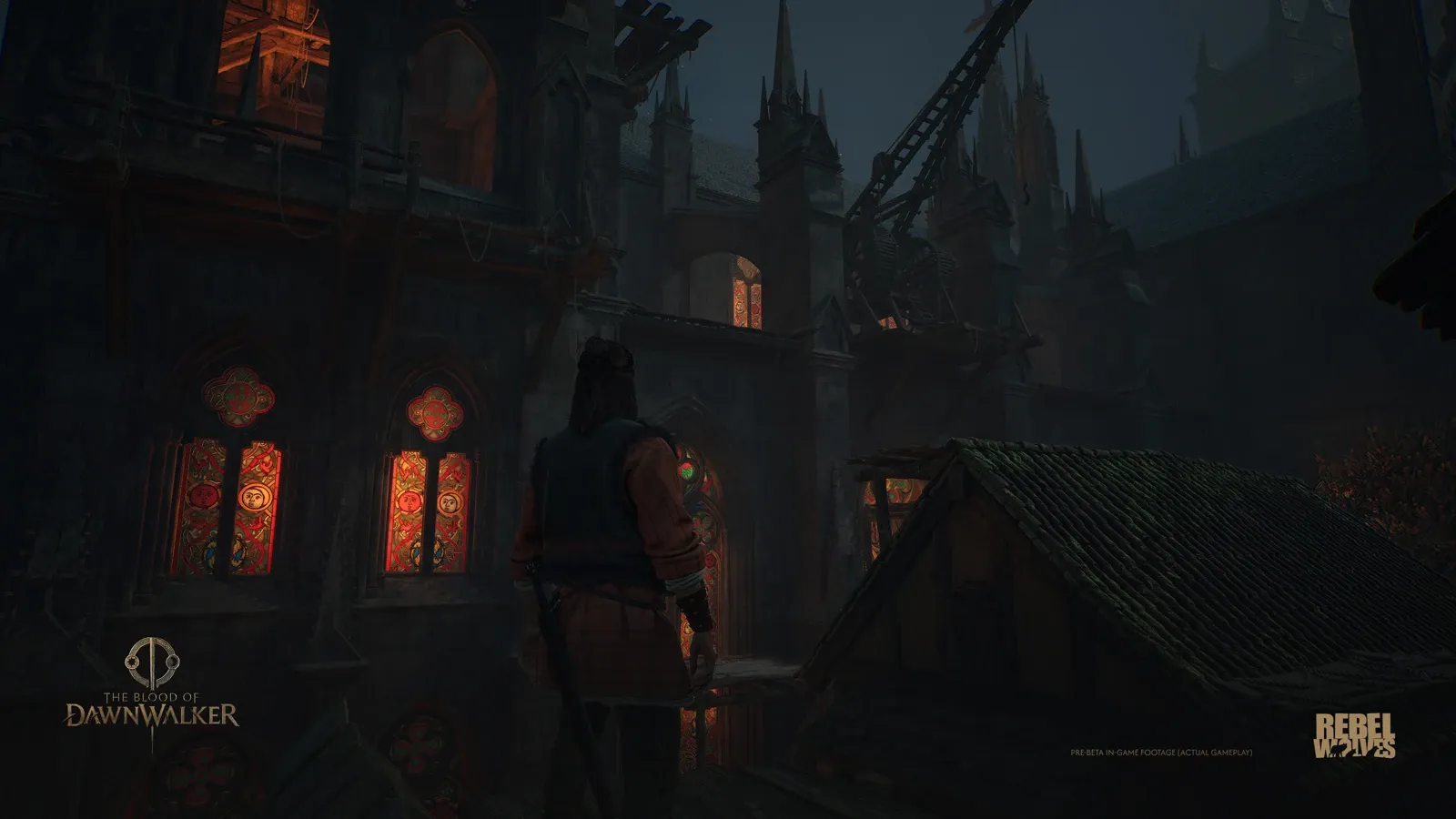
MT: There are a few things to it. Our hero gets to turn into a human during daytime and a vampire during the night. The very nature of this is tied closely to the time mechanic, which feeds back into the time limit for the main objective.
In theory, you can play it the way you just explained, because we have time skipping in the game. So for example, you could skip the daytime if you want to play as a vampire every time, right? But this will cost you time. Which brings you closer to the deadline that you have in the main objective. So you can play like this, but it will have the consequences if you run out of time, but it won't end in a game over. So think about it more like choice and consequence. That's the thing we are known for.
We do have some quests that are specific for the nighttime or daytime, which you might miss out on if you play this way. So I really recommend mixing both and just checking what they have to offer. There are some secrets you will find only as a vampire and some that you will only find as a human.
As a vampire, we have access to these abilities vertical traversal. So plane shifts, like walking on walls. Then you have shadow step, which is like teleporting around as this dark mist. As a human, you can use magic. You can speak to corpses by casting a hex that will wake them up for a moment and you can maybe learn new information that will push your quest forward or unlock specific new outcomes for the quest, which you normally wouldn't have access to as a vampire.
I think the coolest playthrough is when you use both a little bit. But if you want to focus on one, you can.
Watching the gameplay, it almost feels like there are two different styles of gameplay between the night and daytime shifts. Would you say that's accurate or how would you describe their differences?
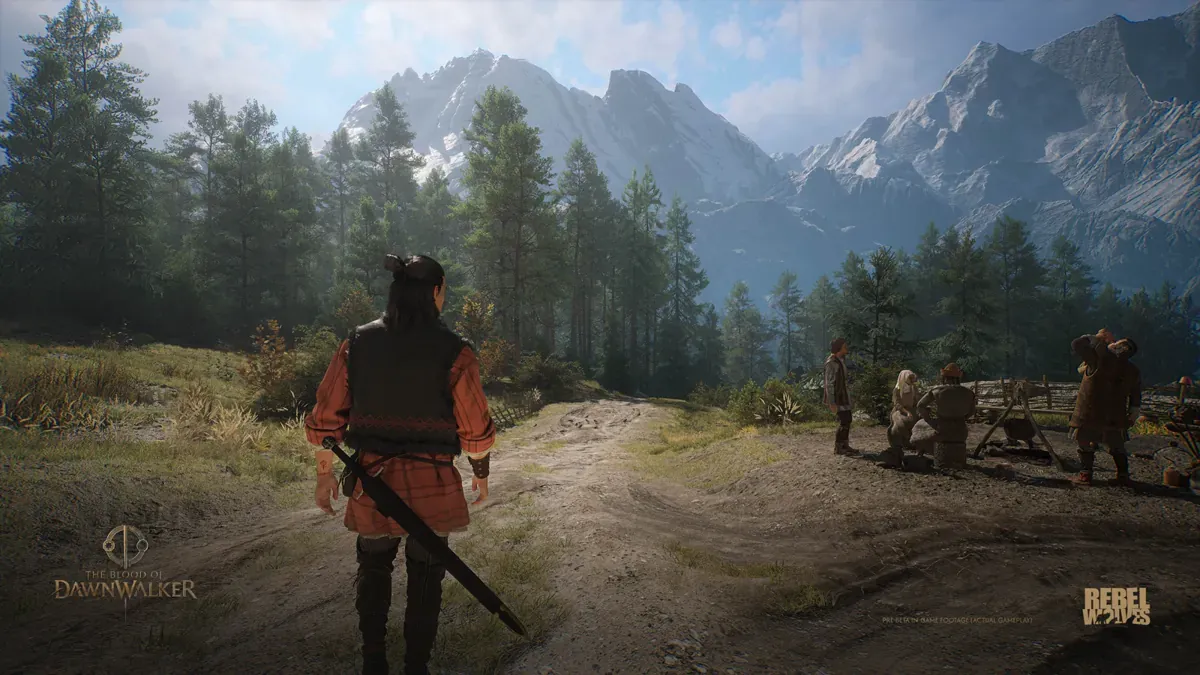
MT: It really depends on the quest. The specific quest you saw is slower because it's daytime and there are people and rituals going on, so you have more dialog. During nighttime, the city is taken over by the vampiress, so it's empty and most people are sleeping. But there are some other cases where a lot of inhabitants of this hidden world – vampires and other creatures – are actually more active during nighttime. So in these cases you can expect more RPG interactions then as well.
I understand the feeling because the vampire combat is also faster with the way Coen moves and shadowsteps around. Traversal is faster, too. I would say it's a fair point, but also it's not like there's a strict division. It really depends on the context, because we always build it by hand and make it fit the context.
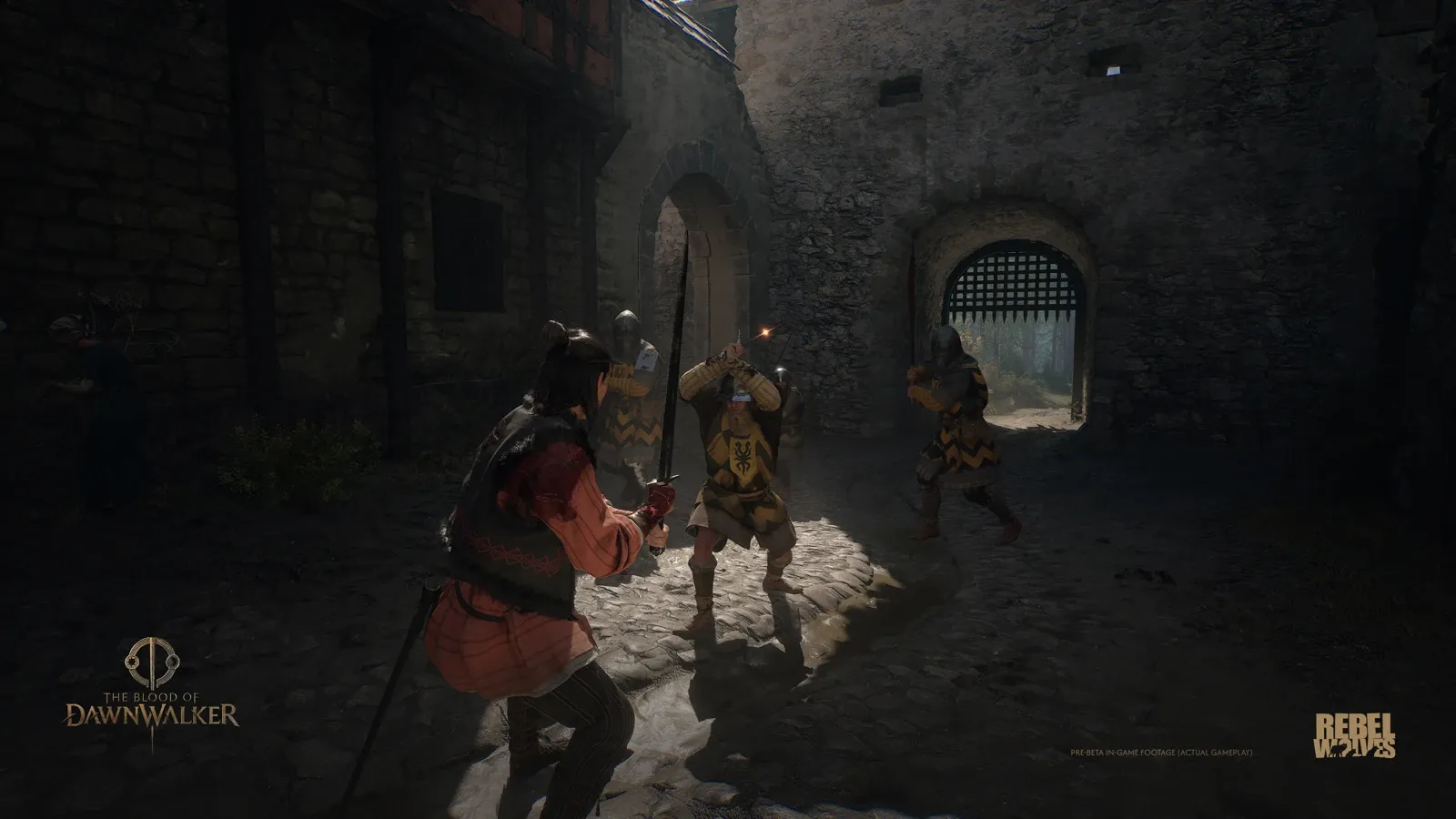
Can you tell a little bit about the combat mechanics? Will there be a lot of weapons and how deep are the mechanic for that?
MT: We have multiple different item slots in the inventory. So the armor, for example, is divided into different slots. You have the chest piece, you have the bracers, you have pants, shoes, and so on.
In case of weapons, the basic two are vampire claws during nighttime, but you can also use your sword. During daytime it's mostly your sword, but you can also use your fists. You have some other weapons as well, but Coen was trained in sword fighting mainly, so this is his main area of expertise.
You can see the bandits, for example, that they use some blunt weapons, so you can expect to be able to use these, but sword is Coen's main thing.
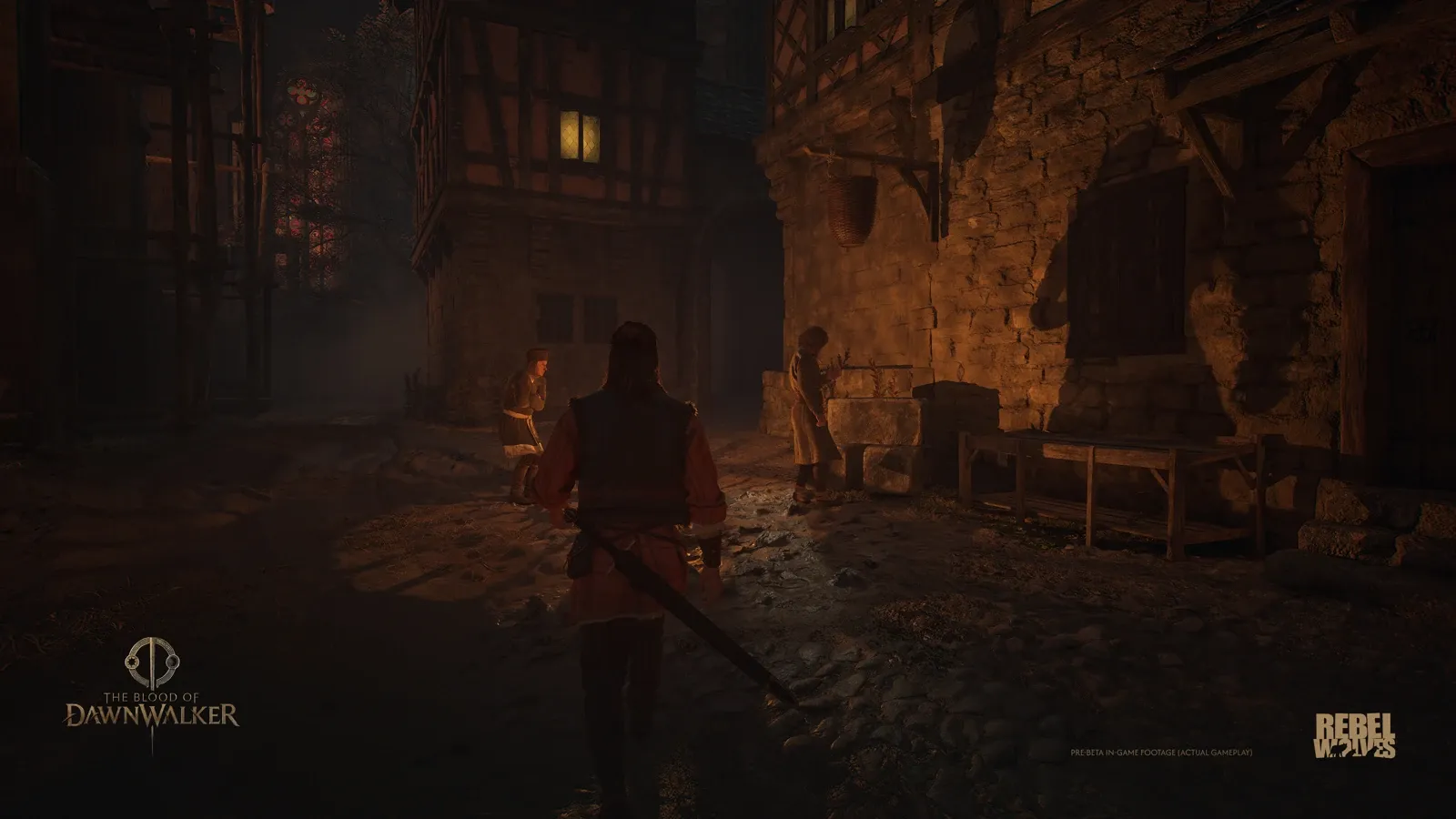
Will the armor pieces have cosmetic changes?
MT: Yes, absolutely. You can see in the trailer that Coen is wearing this more endgame tier armor, and in the gameplay footage he's wearing more early game clothing. There are a ton of different looking items. I know that a lot of players love to dress up their characters not just for the stats, but also for the looks. So you can absolutely do that.
We have different weights of clothing because there are lighter and heavier armors, so you can maximize your utility out of them. There are also rings and talismans which are tied to your magic-using abilities.
I immediately noticed the directional attacking and blocking prompts, which sound really interesting. But also in the show, it was explained that you can also non-directionally just block and make big attacks. Can you expand on those a little bit?
MT: We know there are multiple types of players, and some people really enjoy this stuff, and some other people prefer more action-based gameplay.
Our game director, for example, his preferred way of playing is doing the directional blocks because he finds them fun, but he doesn't really enjoy the directional attacks. So he uses the omni attacks and normal directional blocking.
The way it works is if you use only parry without directions, it will just consume a little bit of your stamina. You're not really punished by the game, but it's so you don't just stand blocking all the time.
Then you can use dodges. This is what I do often; I prefer to dodge away and approach them again and use magic, for example. So I will play with the abilities which also help to introduce different gameplay into the core loop.
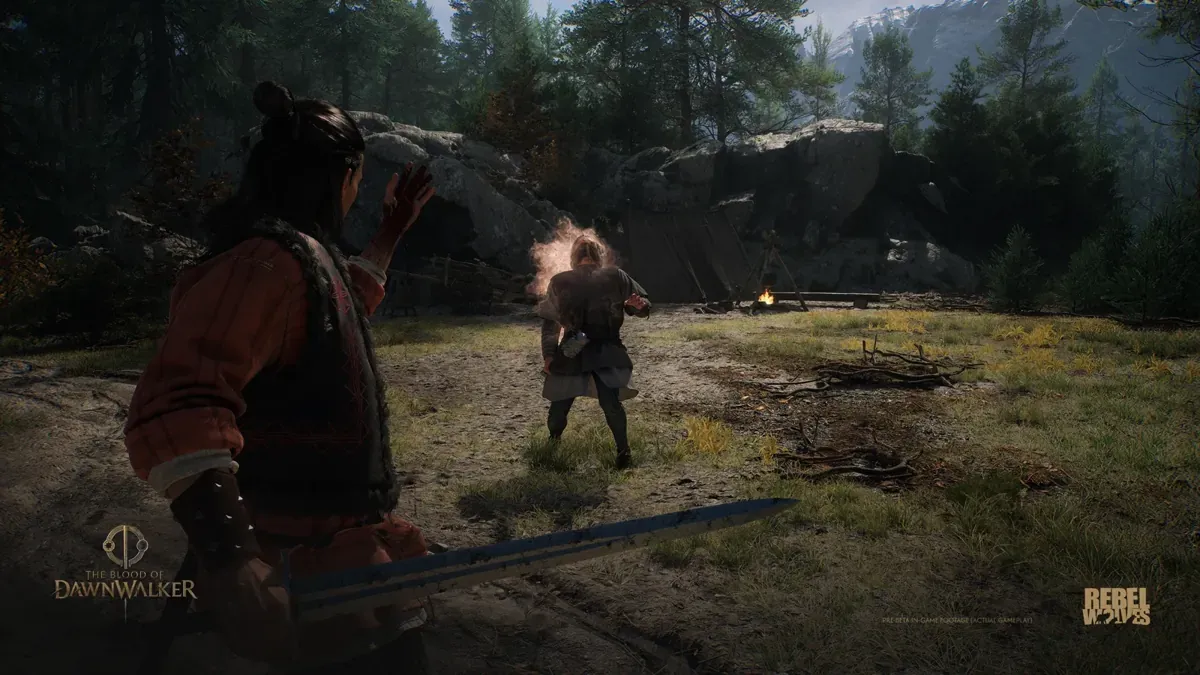
Can you mention anything about how large the world is?
MT: It's difficult to talk about the size of it. It is not like a huge open world; it is this valley that you saw in the trailer, but it's dense with content though. You travel mostly on foot, but you have some special abilities that you can use as a vampire, but we have also some that we haven't shown yet.
I think in terms of scale, we used the comparison to The Witcher 3: Blood and Wine as a size of the valley. But, again, I would say geography and kilometers alone are not enough to describe it because of the content density.
I'm very happy to hear that, because I'm so much more excited about something that's like densely packed and has a lot to explore compared to just wandering around empty spaces for ages.
MT: We also felt that way, and also it was a scope that we felt our team was able to pull off. We felt this way it can feel like the place you actually inhabit, so you get to know certain places. There's more a feeling of belonging, because it's big enough to feel interesting, but not too big, so you don't feel rushed past things.
Theoretically, right after prologue you could go directly to the end and, if you're good enough, beat the game.
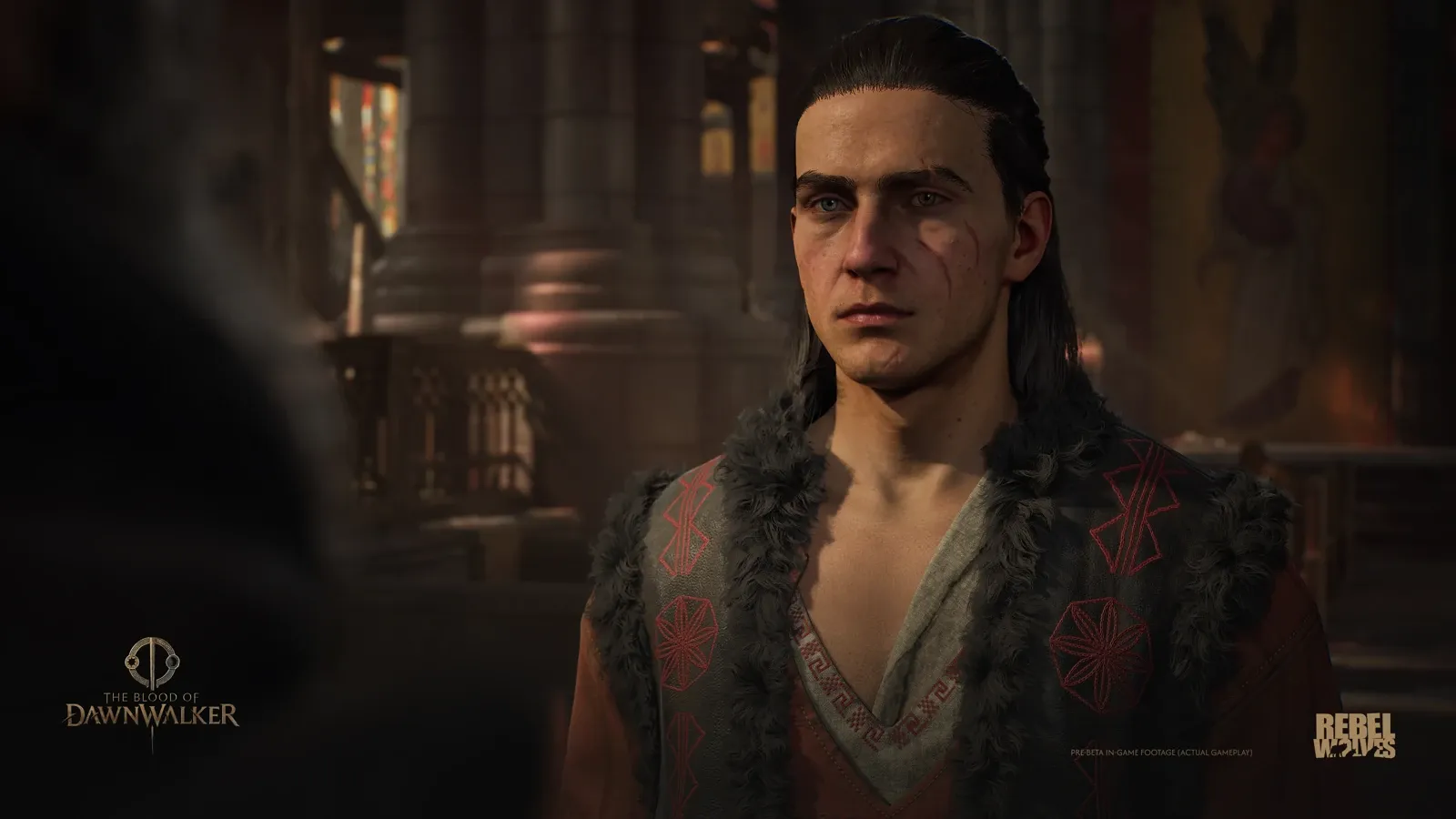
How long do you expect the game to be?
MT: This is always difficult to calculate because the game is so open-ended, there are so many different ways to play it. We estimate an average playthrough will take around 40 hours of gameplay, but this can vary wildly based on the player and depending on how much of the content they want to do.
Theoretically, right after prologue, you could go directly to [the villain's castle] and if you're good enough at the game, you could beat the game. You could free your family, and that would make for a shorter playthrough. But there is a ton of stuff to find in the valley, so if you want to spend more time there, you absolutely can.
I get a lot of vibes of games like Way of the Samurai on PS2, where it wasn't necessarily a massive open area, but it had so many different stories and elements that you couldn't see them all in a single run.
MT: Absolutely, it's the same for us. We were inspired by games like Fallout 1 and 2, but also some newer games that did this like Breath of the Wild.
I think it's cool because it gives you this feeling that it's not content you're railroaded into. You're not forced to go through long hours of main story. You get to choose how do you want to shape your experience, like which plots do you want to interact with and which ones you want to abandon. Sometimes you won't even find some of them, because we also don't want to feed you with this stuff. You have to explore to find even some of the big quests.
The Blood of Dawnwalker is out later in 2026.