
And Her Body Was Never Found (re-review)
When I saw And Her Body Was Never Found at SXSW early this year, I hated the experience. If you had asked me about it in April, I'd have said it was the movie itself, but that, too, would have been wrong.
Believe it or not, sometimes I'm wrong.
When I saw And Her Body Was Never Found at SXSW early this year, I hated the experience. If you had asked me about it in April, I'd have said it was the movie itself, but that, too, would have been wrong.
Since that day, I've seen this deeply distressing film three times, and not once has it felt easier. There has never been a reprieve in the endless barrage of marital violence that would allow me to distance myself from it. After recommending it to a friend at a festival we were both at, I received a late-night message commenting on how the film shook them up. Clearly, there was something that I had missed – or wanted to miss.
 Joonatan Itkonen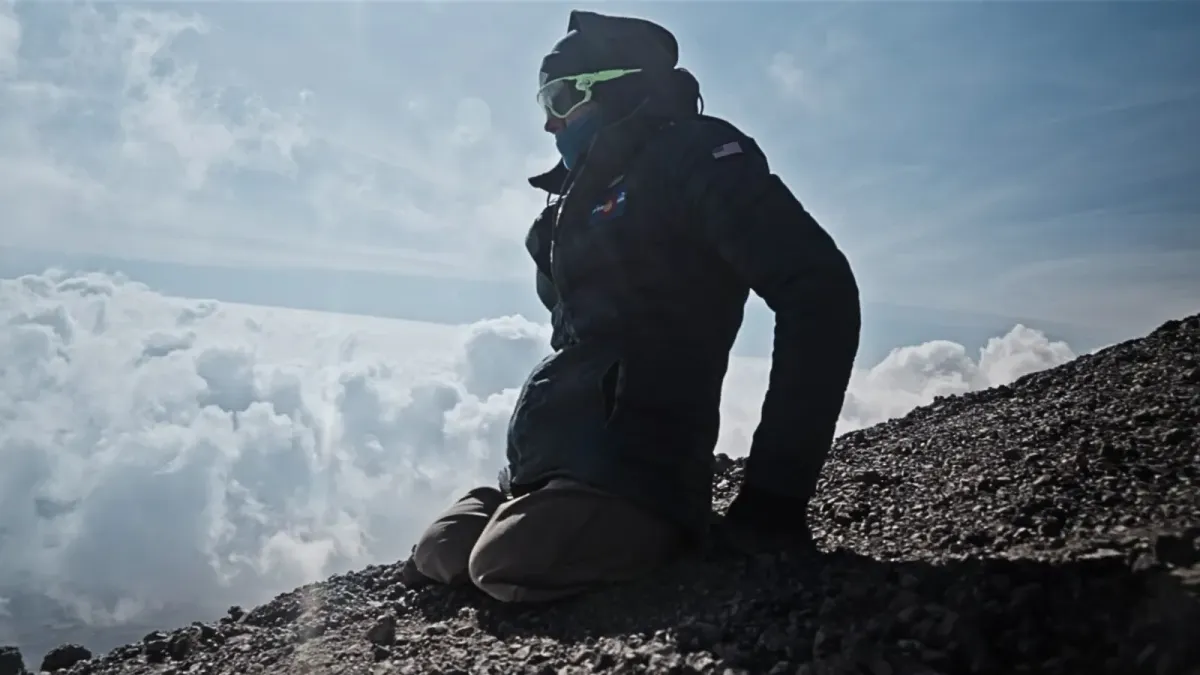
So, I sat down with the film once more. Did I find myself in the light? Am I a believer? Well, no, not entirely. But I was wrong in my approach.
Films are an empathy machine. They require us to connect with the artist, the actors, and the people they portray. We have to believe that what we're seeing has a semblance of reality for any of this to work; otherwise, it is nothing but shadows dancing on the wall.
As an autistic person, I have a hard time reading people. The idea that someone is angry, disappointed, or frustrated with me without me realizing it keeps me up at night. Then there's the yelling. I can handle it just fine if it's movie screaming. A monster in the dark, or a chainsaw tearing someone apart? All fine with me. I'll watch that until the cows come home.
But a despondent mother coming apart at the seams in Hereditary or the painful miscommunications between Polaris Banks and Mor Cohen in And Her Body Was Never Found? I will cower in my chair like a terrified fawn. If it feels like it could happen in my home, it crosses a line I'm not equipped to handle.
And Her Body Was Never Found starts at that line, steps over, and keeps going until we're miles away from it.
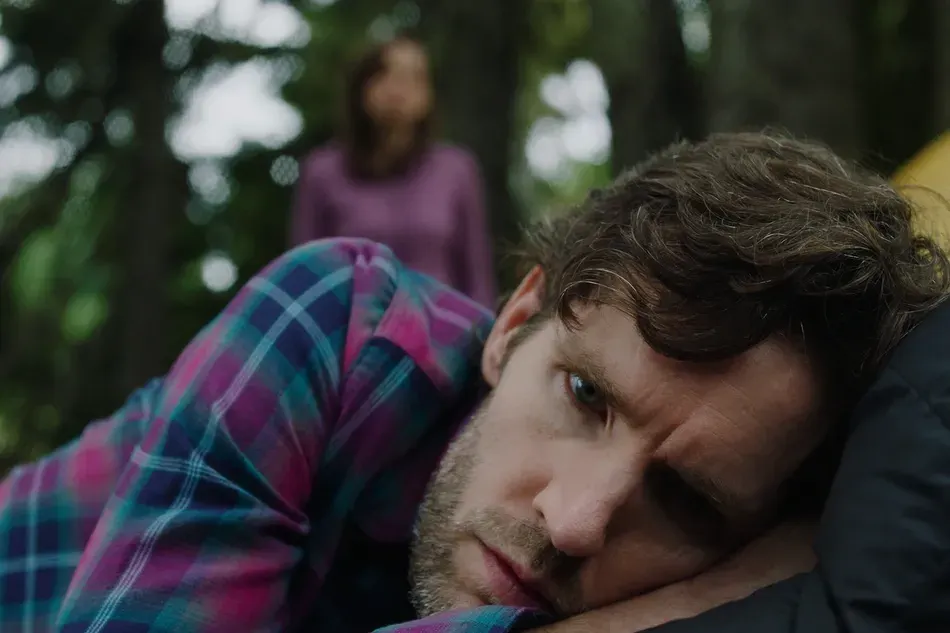
For 85 agonizing minutes, we never leave the argument. Keren (Cohen) and Jeff (Banks) might try to move on, but even in the rare moments of levity and reconciliation, their problems linger suffocatingly in the air. Their grudges operate on the same inescapable level of a Japanese curse, where even open environments become hostile spaces. In one of the most terrifying moments, Cohen and Banks revive the intensity of The Blair Witch Project, only this time it's a spouse hiding from another.
Were this a case of two difficult people trapped in a toxic relationship escaping some greater metaphor, like in It Follows, I think And Her Body Was Never Found would be an easier film to watch. But there are no ghosts or malevolent spirits; there are only two people who love and hate each other.
It is to the filmmakers' credit that they refuse to settle for just that. In an equally surprising and frustrating twist, Banks and Cohen flip the script on the expected, and reveal their film as a meta-commentary on the genre, the role of the viewer, and, in part, their own desire to air out dirty laundry on a global scale. They, as characters in a film, are aware of themselves, as the people making this project, and the audience, who will eventually, maybe, see it. At least until one or both try to upend the expectations once again, leaving it uncertain who, if anyone, will leave the mountain alive.
Does it work entirely? I'm still uncertain. Months ago, I would have argued it is the work of narcissism run amok. A way of forcing the audience to work as a therapist for people who admit this is not a healthy coping mechanism. On my second viewing, I wondered if it's any different from men of a certain age producing films for themselves, where they get to play action hero. Now, I think it's a bit of both, and that's not altogether a bad thing, either.
I'm deathly allergic to insincerity; I can smell it a mile away. Put me in front of a maudling Oscar drama where every emotion is played for the back of the theater, and I'll walk out annoyed instead of moved. But it's so rare to watch the polar opposite of this. A movie that places the actors in an emotionally ugly state and keeps them there for a full feature. It's the film negative of a joke that goes on so long it stops being funny, then turns into performance art, then swings right back to the beginning. Only we're not laughing, except in those long, uncomfortable stretches between screaming matches, where the silence is deafening. It's admirable, even when I still question whether we, as strangers, should be privy to such intimate affairs.
Is it well made? Yes. That I can't deny. If it weren't, the emotions wouldn't connect on this level. I have seen too many films that aim for sincerity, but can barely form a coherent scene, to know the difference. In a way, And Her Body Was Never Found plays like a mix between Marriage Story and The Blair Witch Project, and there's something horrifyingly fascinating about that combination.
I'm not sure if I can truly recommend it to anyone, and I'm still of two minds whether I like it as much as I admire it. But I can't stop thinking about it, and that means whatever hesitations and objections I might have are secondary to its quality as a film. It is the most challenging movie you'll see all year, possibly any year.