

Version: Digital retail review code provided by the distributor
Independence & Ethics
Region Free is entirely reader-supported and maintains full editorial independence. For more on my scoring and standards, see the Review Guide.
When Disciples: Domination landed in my review pile, I first thought it was a Diablo-style isometric hack-and-slash title. The beautifully realized overworld and heavily Blizzard-coded style did little to challenge that notion.
Yet Disciples share much more with the old Heroes of Might & Magic series than with Diablo, even if the grimdark world leans away from the bright and optimistic high fantasy. It is a sequel to the 2021 title Disciples: Liberation, and the fifth instalment in the series, not counting the standalone expansions. I hadn't played a single game in the series before Domination, and I can't say the game onboards new players very well, despite extensive cutscenes and exposition at the beginning.
During my review period, I went back to recap the events of Liberation, along with some gameplay tasters, to get a feel for the series as a newcomer. If, like me, you're joining the series at this late stage, chances are you'll be just as lost. Dominion does very little to onboard anyone who isn't already invested in the series, which is certainly their prerogative, but it is an odd tactic for a small-scale title that could use a larger fanbase.
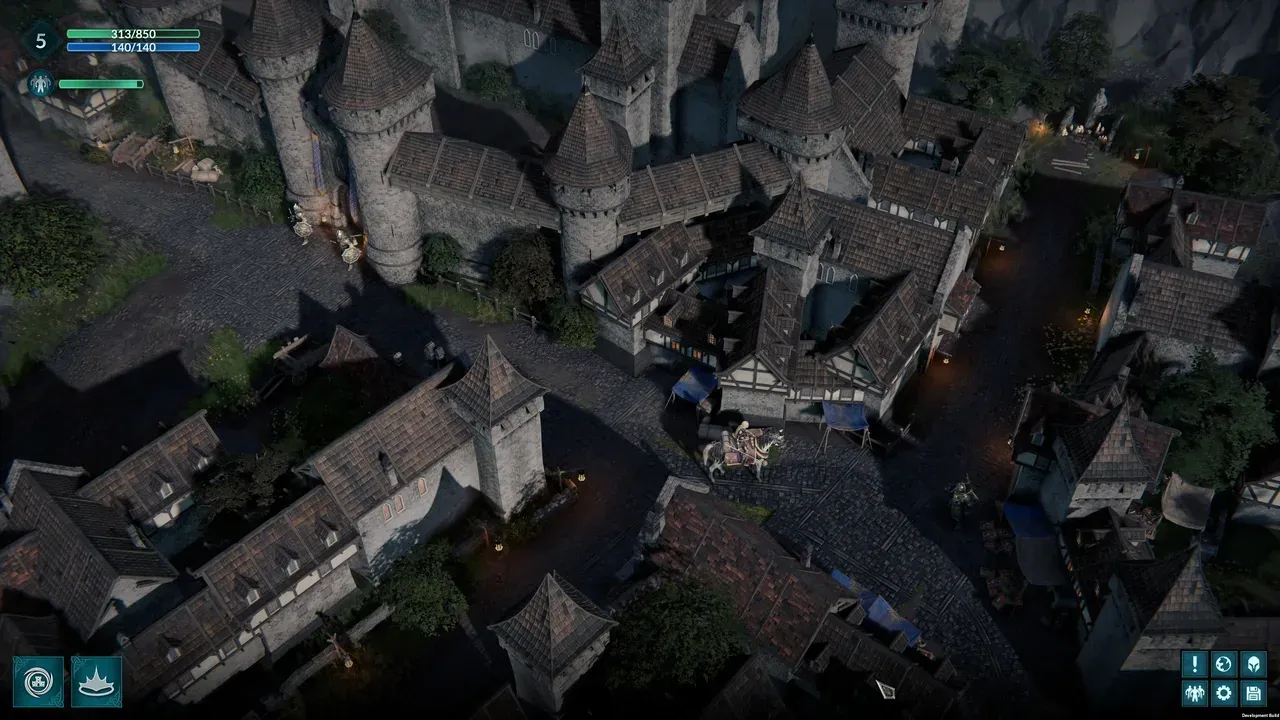
The plot is a straightforward high-fantasy riff on genre tropes, which isn't necessarily a bad thing. In fact, I was instantly intrigued by the concept of playing a ruler almost two decades into their reign over a kingdom, which we rarely get to see in any media. The only notable example of this that I can think of is Fable 3, which attempted to showcase the difficulties of leadership, but managed to do so only superficially.
Sadly, it's a very similar situation with Disciples: Domination. Our hero, Avyanna, despite an extensive backstory in the franchise, is still very much an audience surrogate with little character to her name. She has held the throne for 15 years, during which time a new threat has risen to threaten everything she has built for all the races in the kingdom of Nevendaar. To save her homeland, Avyanna must rekindle her strategic relationships with the other factions and rebuild an army that can withstand the war that is to come.
Most of the connections to Liberation happen early on, and it's here I wish Domination had more help for newcomers. For the first few hours, you're pummeled by exposition, names, locations, and concepts that prove simply too much for anyone just getting started. Domination falls into the trap of every fantasy-aspirant, where the names get longer and sillier, and everything has to have its own unique spin, even when it doesn't need it.
Luckily, after a rough opening chapter, Domination cuts ties with the previous entry somewhat and forces Avyanna to rebuild things on her own. It's here that the game stretches its legs and allows for its mechanics to do the talking, which is mostly a positive.
While the story isn't exactly memorable, it functions perfectly fine and doesn't trip over itself. That's really all you can ask for from a budget title, especially one that's come this far with an already established fanbase.
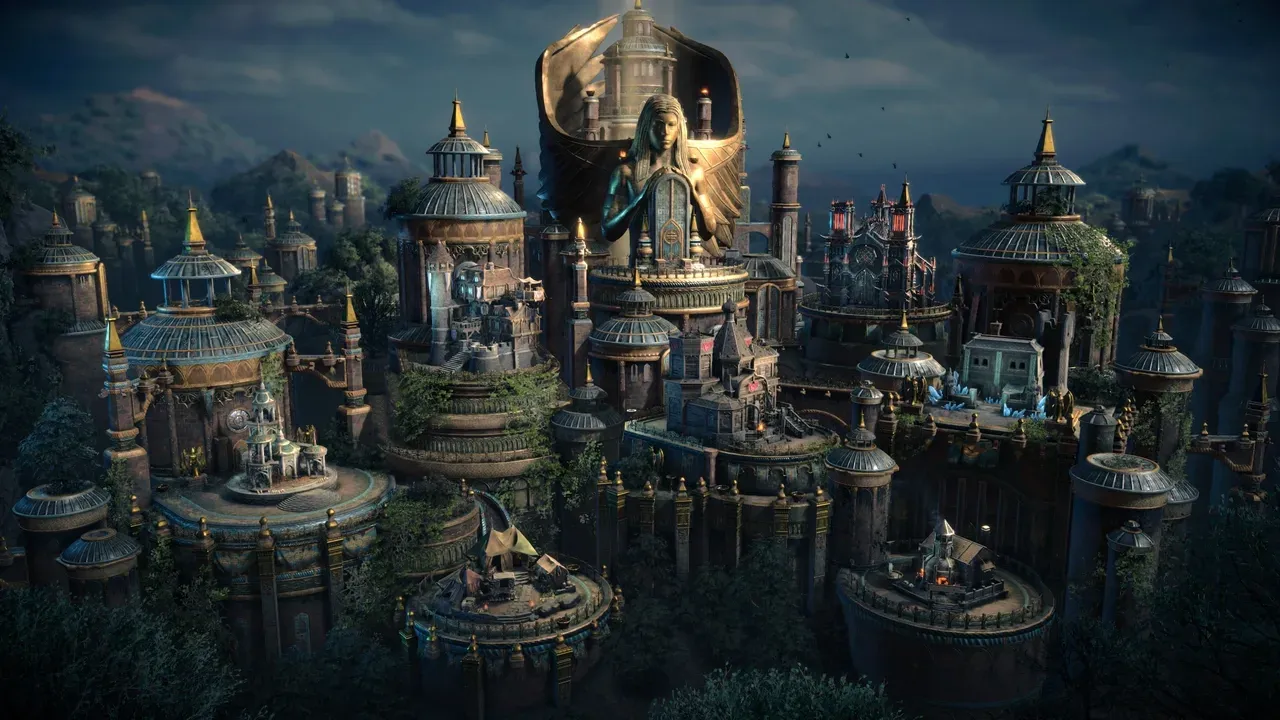
The same can't be said about the mechanics, which are varied but often superficial. Apart from the Diablo-esque overworld exploration, Dominion features genre staples like faction building and management, training troops, narrative sections where you choose the political fate of your allies and kingdom, treasure hunting, resource mining, and even the occasional easter egg hunt.
It's a lot, and not all of it is anything but superficial. For example, the political narrative is mostly window dressing, and most of your important choices are heavily tied to bigger events. Most of the scenarios where you settle petty grievances and in-fighting between your countrymen are distractions. You might get the occasional bonus or new troop from helping out, but it's sadly nowhere near the intrigue or depth I had hoped.
Similarly, building your troops quickly turns into a series of emphasizing a single, almost game-breaking unit formation, and ignoring the rest. While some opponents have buffs and guards against elements, it's reasonably easy to build a squad of fighters that can take on everything the game throws at you.
These fighters are similarly familiar, though it'll take a moment to register their naming schemes in Dominion's world. Paladins are tanky healers, Disciples function as clerics, Dwarves are fighters, and so on. You can mix and match units as freely as you like, which does make for some fun combinations. Where else will you see an army of clerics and undead hordes working side by side?
Avyanna can choose from four starter classes, like Warmaster (fighter), Primordial Ruler (necromancer), Holy Regent (cleric), or Witch Queen (sorcerer), which give her unique abilities and weaknesses. There are reasonably elaborate skill trees for each class, which is a happy surprise, especially for those who love to spend time tinkering with their builds. Personally, I went for the Warmaster class, as most of my units stacked bleed damage for a continuous onslaught against enemies.
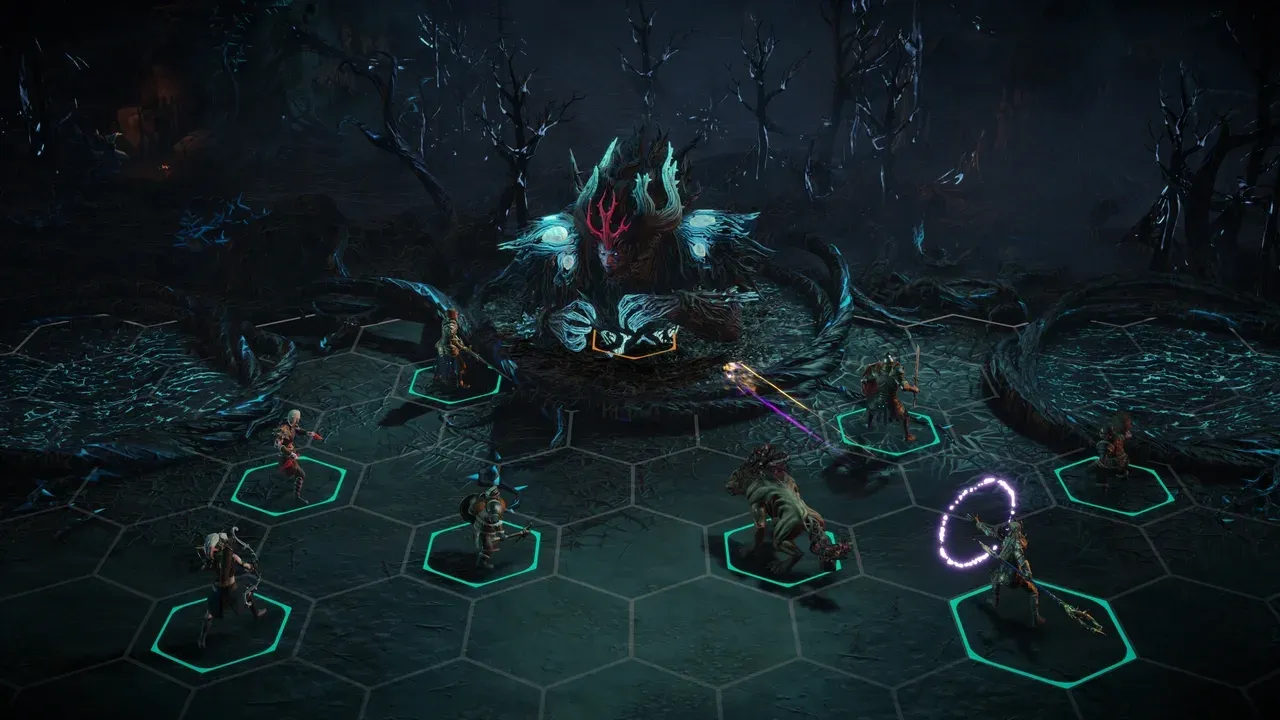
Combat is familiar to both fans of the series and the genre. Each fight occurs on a hexagonal chessboard, where fighters start on opposing ends and can take a set amount of moves on each turn. For the most part, it's as fun and engaging as ever, especially as you figure out the finer points of bottlenecking enemies on maps with environmental hazards.
Fights can take anywhere from a couple of minutes to almost a half-hour, depending on the size of the opposing army or villain. Dominion is at its most frustrating when you realize a fight isn't going your way, and you have to restart a longer battle well towards the end. It's part of the genre, and it isn't unique to Dominion, but this isn't a title you can just pick up and play in short bursts.
As a combination of puzzle mechanics and strategy, Dominion's combat system is a great reminder why this series has endured for so long. Whatever other issues the game might have, the battles are certainly a highlight. There's a lot to love here, especially if you're a fan of chess and tactical planning.
It's just a shame that the emphasis on combat seems to override everything else. If Dominion cut back on its other mechanics and just focused on the battles, with maybe an occasional stop in town for items and scheming in the style of Final Fantasy Tactics, it would make a stronger impression.
Now, it feels like the other elements are there to pad out the gameplay, but aren't actually necessary. Especially when Dominion pushes for something as immensely frustrating as real-time resource harvesting, where you have to wait, MMO-style, to gather more valuable materials to grow your armies. No, thank you, Dominion.
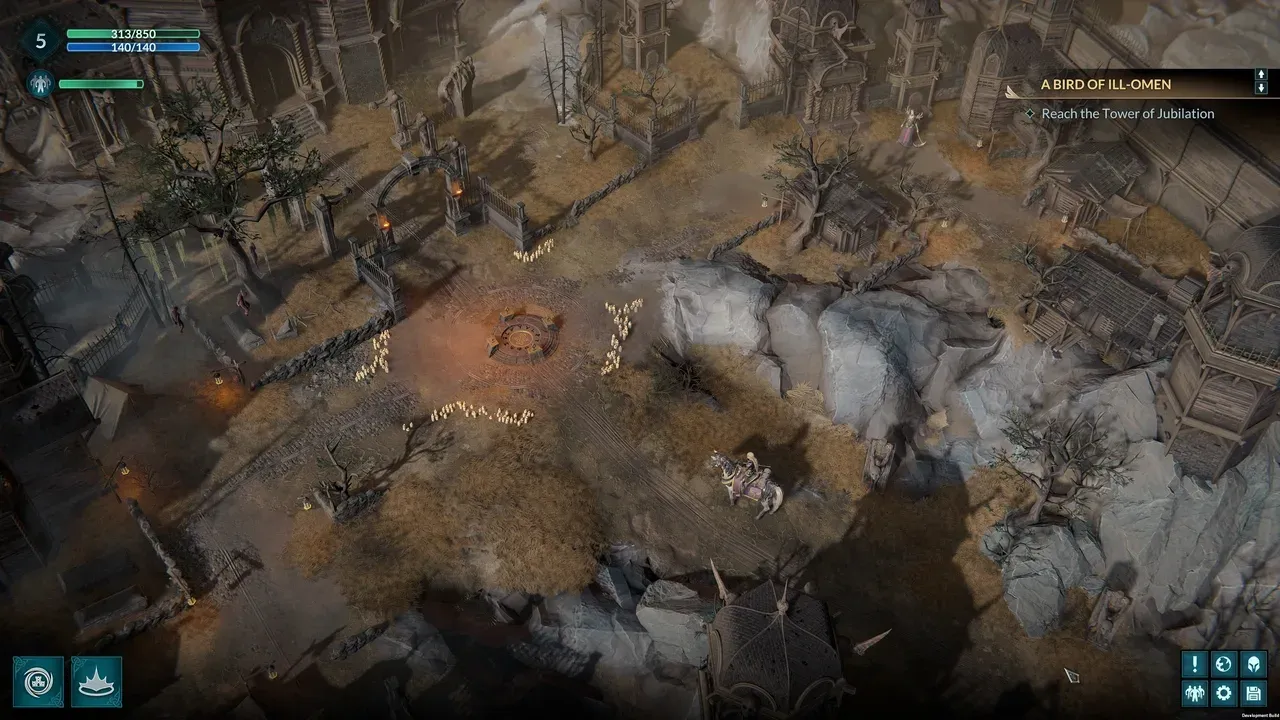
Disciples: Domination is a game for the fans, and most others need not apply. By now, it knows exactly what it wants to be, and it doesn't seem interested in changing or expanding beyond that. Which is just fine, not every game needs to be for everyone, and there is a niche for this kind of tactical fantasy.
I had intermittent fun with Domination, though I can't say I'll return after I'm done with my review. Unlike other games in this genre, like the aforementioned Final Fantasy, or others like Triangle Strategy or Ogre Tactics, Dominion just didn't tickle that particular itch I have for these types of games.
I can see what it wants to do, and it's so highly specific that you need to already be a devoted follower to keep up. Which, again, is not a bad thing. But it's like Marmite; you either get it or you don't.


