Distributor provided a review copy.
It's never been easy to be a Dragon Quest fan. Even today, when the series is arguably the most accessible to western audiences than ever, Square Enix still finds ways to make things just a little too difficult.
Case in point: If you want to own the physical copy of the game for the Switch 2, you're stuck with buying the Switch 1 version, which is arbitrarily locked and with no way to update or move the saves to another version. Both PS5 and Xbox versions are entirely on the disc, but the Switch 2 edition is bafflingly a game key card.
It's not nearly as bad as things used to be, but it is a major frustration at a time when the Switch 2 should be the go-to console for all things JRPG. Especially after the golden era for physical media as ushered in by its predecessor.
But, then again, at least the game is available at all. I come from a time when the only way to play Dragon Quest was to import it from Japan – and then learn Japanese to understand any of it. Which is what I did.
I love this series. Sometimes to my own detriment. I've played most versions of every release, including Dragon Quest VII Reimagined. Originally released for the PlayStation, VII struggled with a turgid pace and some dated mechanics that compared unfavorably to its great competitor, Final Fantasy IX, at the time. When the re-release, titled Fragments of a Forgotten Past, came out for the Nintendo 3DS, Square Enix smartly updated most of the mechanics to a more palatable form.
Reimagined expands and enriches those changes even further. As a result, Dragon Quest VII is the most accessible and fun version of the iconic RPG to date. It's a profoundly fun and engaging adventure story about fixing the past (often literally) that finally fulfills the promise of its original release 25 years ago.
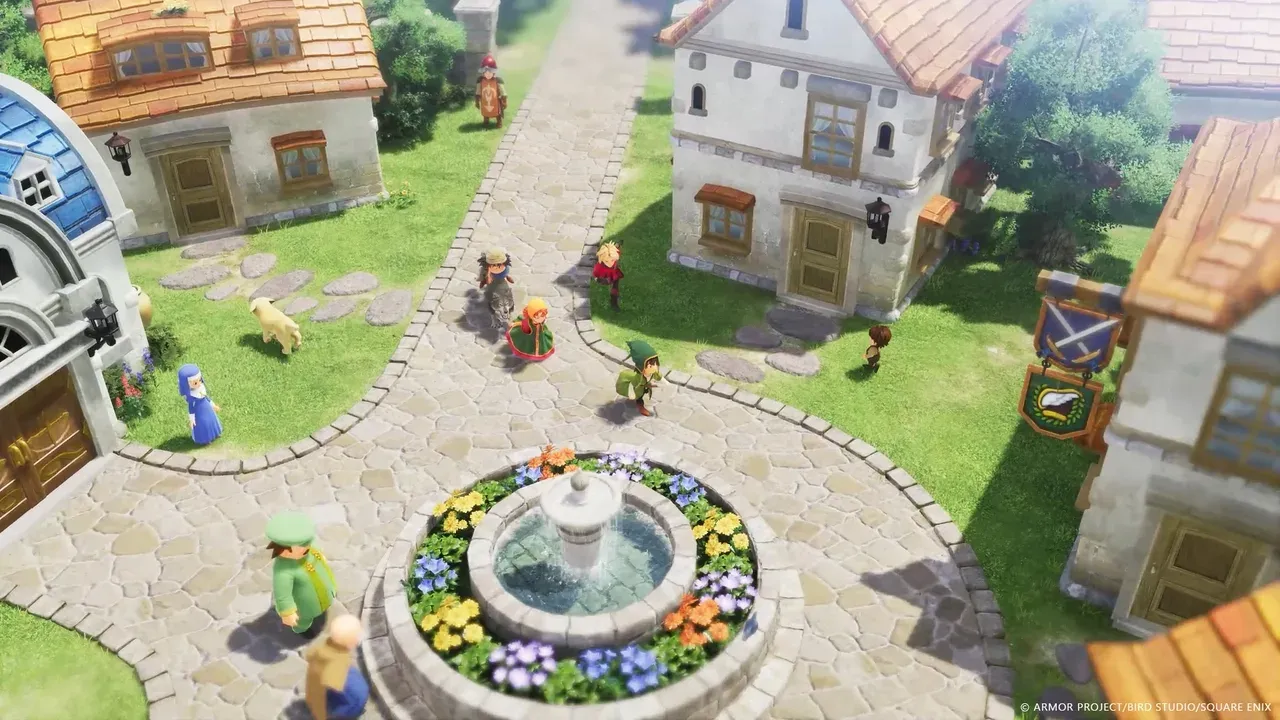
The story is as freewheeling and esoteric as anything in the franchise. It begins as our nameless Hero, along with his father, discovers an ancient map that reveals their broken world was once far more connected than they ever believed. Together, they discover a way to travel in time(!) and set out on a quest to bring the sparse island together into a unified continent once again.
As always, much of the story is secondary to the mood and style of the adventure. Like other parts of the saga, Dragon Quest VII embraces every imaginable trope and cliché with great admiration, and it does so with such sincerity you can't help but love it. There isn't a single sarcastic element in this game. What you see is what you get, and for that, I admire it a whole lot. Sometimes you just need a story that is unabashedly wholesome. Dragon Quest is exactly that.
The gameplay unfolds in an episodic manner, where our heroes travel to disparate islands, then move back in time to their original point of fracture, and rid the locale of whatever demons ail them. After that, there's a quick victory lap where you can admire the fruits of your labor – and potentially fix a couple of new problems that have come up – before moving along to the next location. Rinse and repeat.
It's not as grand as other Dragon Quest titles and, despite the eventual "let's go kill a god" third act, it lacks the huge melodrama of other titles in this genre. Sure, you still have a prince in exile, a tomboy fighting against their patriarchal society, a wolf turned into a real boy, and a time traveling paladin in the mix, but most of their stories remain surprisingly subdued. Compare any of it to the multiple games spanning Erdrick storyline and it feels downright cozy!
Which isn't to say Dragon Quest VII Reimagined isn't a compelling bit of writing, it definitely is! It's just different, especially compared to modern instalments, where technology has expanded storytelling to the nth degree.
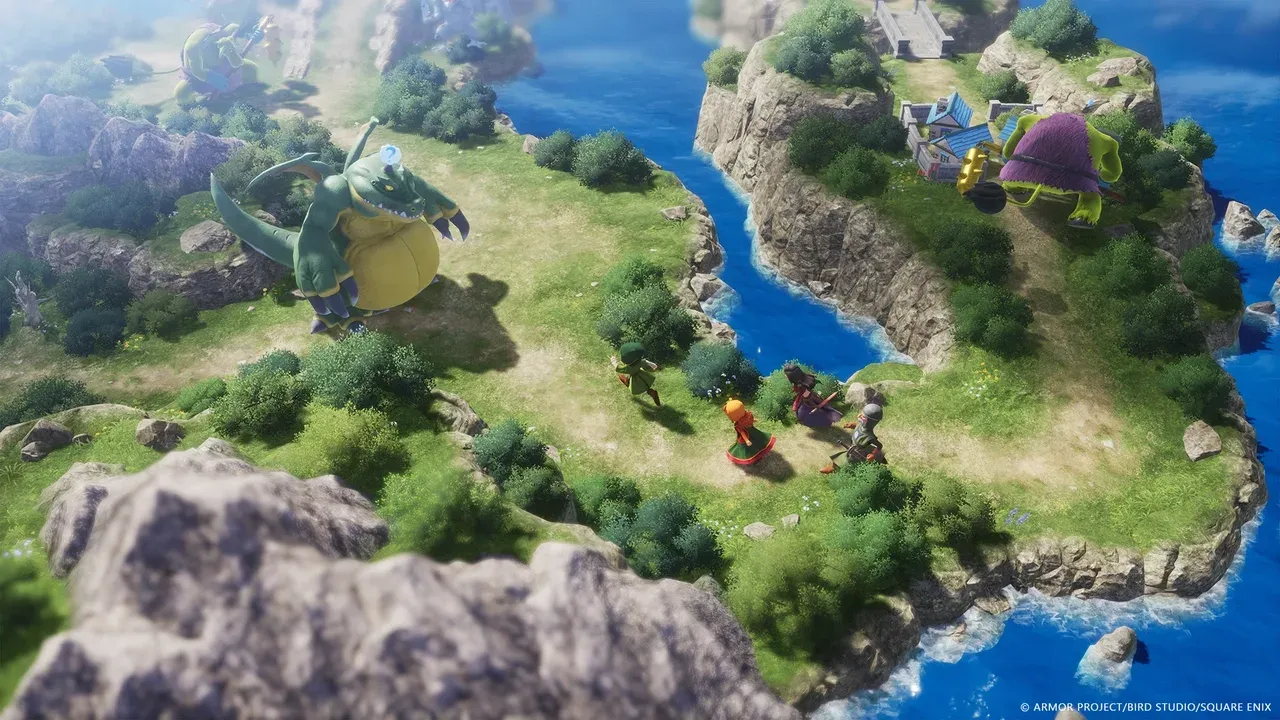
Where Reimagined really shines is in its updated game mechanics. Everything that was fixed for Fragments of a Forgotten Past is still here, but even better than before. For one, you can fully adjust the difficulty to suit your needs, which is incredibly welcome for a series as unforgiving as Dragon Quest. Saving is easier and more accessible, as are checkpoints and healing spots.
The pacing is vastly improved as well. The original PlayStation version took its sweet time to get going, and the original translation (scrambled together via multiple translation services in a hurry for launch) is hugely improved. It still has that eccentric and wacky cadence that Dragon Quest fans love, but it's also finally more understandable than before.
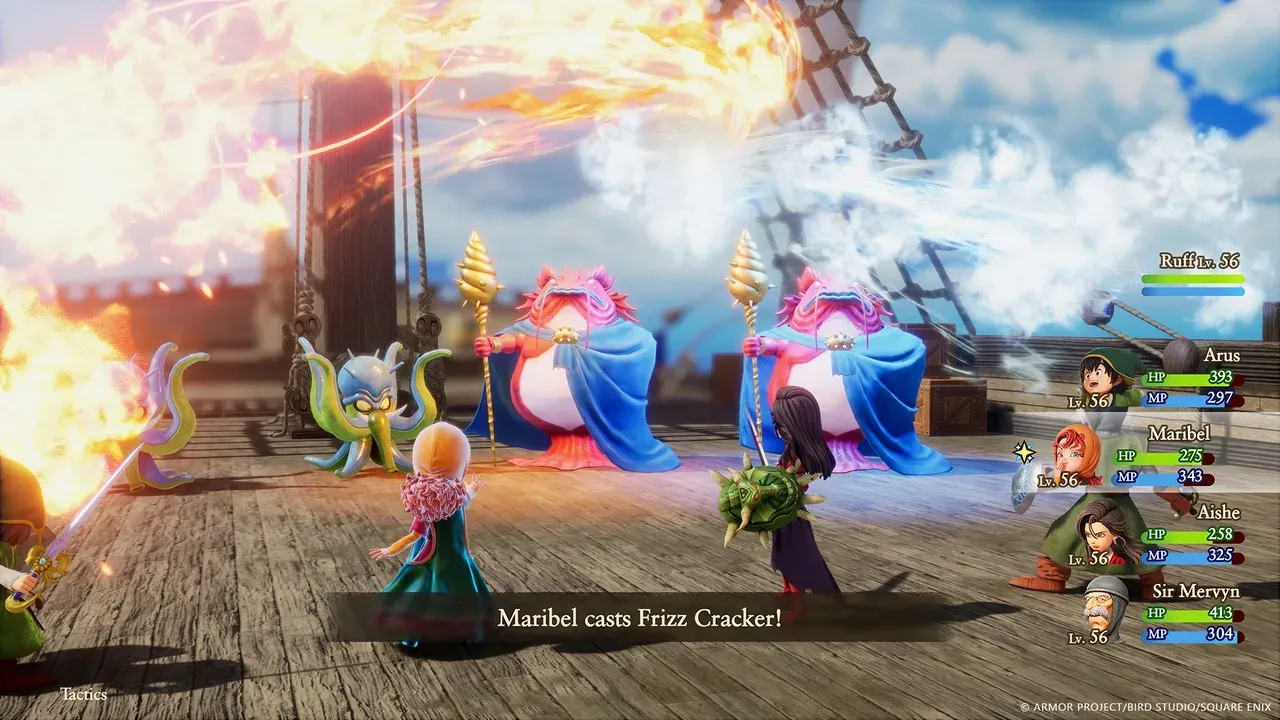
Combat and class systems have received a fair bit of love, too. There's a new job mechanic that mimics the efforts of games like Final Fantasy IV and Octopath Traveler, though it's decidedly nowhere near as deep. You can equip two jobs at any given time, which give you a new set of skills that aid in combat. Unlike other similar titles, you don't keep the skills once you remove the job. Instead, you work towards a goal of opening newer, better positions in the roster, which best fit your gameplay style. Or, as is always the case, are so overpowered that you just don't need anything else.
Fights are faster and less arduous, especially when it comes to boss battles. Lesser enemies no longer require a transition to the battle screen and can instead be killed directly in the world map. This makes for a much faster gameplay experience. There are no longer random encounters, but the world map is riddled with persistent monsters nonetheless, and you eventually have to grind quite a bit to progress in the storyline. Some things just don't change.
Dragon Quest VII Reimagined is a throwback in the best possible meaning of the word. It's a beautifully restored version of a classic that feels like the real thing, even though it's much different from the original. It reminds me of the emotion that I felt when I first played Dragon Quest VII 25 years ago on the PlayStation, and for that, I'm eternally thankful.
The new animations emphasize the brilliant character and enemy designs of the late, great, Akira Toriyama, and it's lovely to see a game that is unashamed about how colorful and bright everything is. No matter where you go, the world feels alive and vibrant without ever making a joke of itself. A lesser remake would insert modern stylings about how dated certain things feel, but they're never necessary.
Instead, Dragon Quest VII Reimagined celebrates that which was, what is, and what will be in the franchise. It is a perfect access point for new fans, and I'm so jealous and happy all at once that it's this easy for an entire new generation to discover this series for themselves.
It's not always easy to be a Dragon Quest fan, but the good times are more than worth the effort.