

Version: Digital retail review code provided by the distributor
Independence & Ethics
Region Free is entirely reader-supported and maintains full editorial independence. For more on my scoring and standards, see the Review Guide.
I'm a Marshmallow, meaning I'm a big fan of the mid-2000s series Veronica Mars. It's one of the shows that had a small but fiercely loyal following that still exists to this day, even if the revivals and TV movies haven't been as good as the original thing.
For a time, though, it was the gold standard for this type of material; young adult drama with richly complex women and minority characters facing off against the white patriarchy. Not to mention it had a kick-ass soundtrack.
When Life is Strange debuted back in 2015, it felt like a game version of one of my favorite shows. The comparisons weren't lost to others, either. At the time, Marshmallows all over the world couldn't stop finding comparisons to Veronica's adventures at Neptune High, and the designers happily basked in the shared spotlight.
Ten years later, that comparison feels even more apt. Like Veronica Mars, Life is Strange is now in the hands of a different studio, with a whole new host of writers, and a similar, but tonally different vision that made the original a classic. It's still just enough like that perfect first season, but at the same time, I can't help but wish these characters were allowed an ending.
The first game, Life is Strange, introduced players to Chloe and Max, who became icons within certain parts of the community. Max is a young girl living in the sleepy town of Arcadia Bay, where she attends Blackwell Academy. One day, she witnesses the horrific murder of Chloe, a childhood friend she had grown estranged from. In an instant, Max's supernatural powers kick in, reversing time just enough to prevent Chloe's death.
From there, the adventure expands to reveal Arcadia Bay's dark secrets and alter the very fabric of reality, as Max and Chloe grow closer together again. Depending on player choice, they can remain friends or fall in love. Most chose the latter.
At the end of the first game, and this is a major spoiler for an 11-year-old game, which is revealed at the start of Reunion, Max realizes that to prevent Arcadia Bay's destruction, and the deaths of thousands, she has to restore time to its original state, and let Chloe die. In a heartbreaking moment, the two share one last goodbye.
As far as game stories go, Life is Strange is one of the best. It is a poignant and often deeply moving exploration of friendship, love, and the cruel passage of time that works so well because it has a definitive ending.
That is, it did, until the sequels.
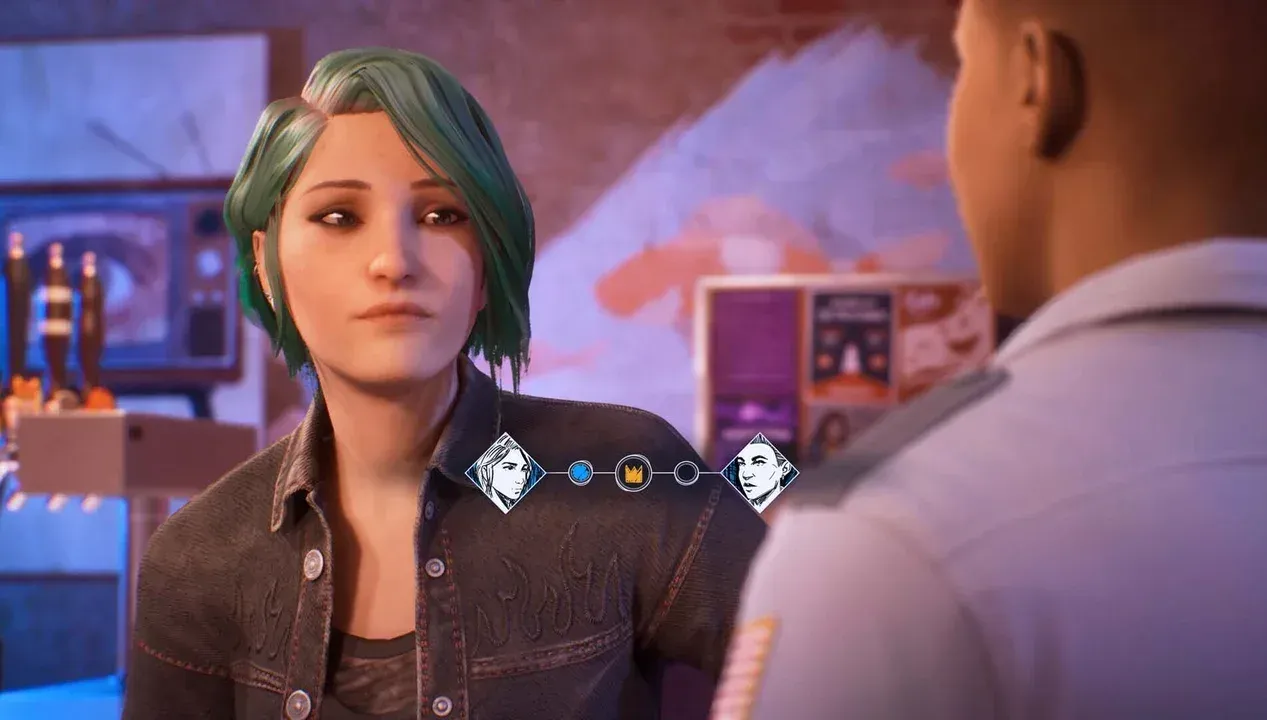
Life is Strange was a hit, and that means it will be milked to death and then some. The four sequels, Life is Strange 2, True Colors, Double Exposure, and now Reunion, all continue the story while attempting to cling to player agency. According to the developers, there is no canonical ending or choice for Life is Strange, which means every game has to include a version where Chloe is both dead and alive.
You can probably guess how many problems this causes. Especially as Deck Nine, the new shepherds of the franchise, clearly want Max and Chloe together, everything else be damned.
For those of us who saw Life is Strange as a brilliantly tragic coming-of-age story, a mix of Stand By Me, Bridge to Terabithia, and Stephen King, this insistence on serialized happiness feels unearned and trite.
Life is Strange: Reunion takes place in late 2024, after the third cataclysmic event caused by Max's powers. From the outset, it's clear that Deck Nine wants to wipe the slate clean once again. Previously established characters, regardless of player choices in the previous games, are gone, while Chloe is back in a major part. Every lesson learned from the first game is effectively pointless, as Reunion requires a tabula rasa for its narrative.
Your enjoyment of Life is Strange: Reunion depends entirely on how much you're willing to overlook just to see Max and Chloe together again. I can't help but think of it as extensive fan fiction, the kind we've seen for over a decade now on Tumblr and other communities. Sweet and well-intentioned, often even very well written, but ultimately selfish at the cost of the original story.
Life is Strange 2 already did the impossible: it continued the story in a way that allowed for Max to grow regardless of the choice made at the end of the first game. Most notably, it meant the story was hers, and Chloe remained in the background. By the end, the narrative found a conclusion that felt satisfying and whole, even if it was bittersweet.
By comparison, everything about Life is Strange: Reunion is saccharine. It says that choices don't really matter because the arc of the universe bends towards fan service. Previous love interests are now exes, gone off-screen to their respective planets like Poochie from The Simpsons, and major choices no longer exist, as realities have merged. All of it says one thing: don't worry about.
That makes any choice that Reunion asks of the player feel empty and weightless. If things are reset this easily, then why bother with giving ourselves over to a new story? The reason Life is Strange connected so beautifully was because it had weight. Our mistakes and victories meant something, even if it wasn't exactly what we wanted. Those kinds of lessons are vitally important in stories. They help us learn and grow in real life.
Now, we have a new mystery, a deadly fire that sends Max diving through time again, the return of Chloe, and a mysterious secret society that threatens to tear apart Caledon University. The problem is, we already had this in Double Exposure, and Reunion doesn't do much with the repeated environment or characters.
Yes, it's lovely to see everyone again. The character writing or dialogue isn't the problem. All of that is as good as ever. The music, setting, and feel of the game are all perfect. They have that melancholy nostalgia that is like honey to me. I'm reminded of my youth and how it will never return, which makes it feel that much more precious.
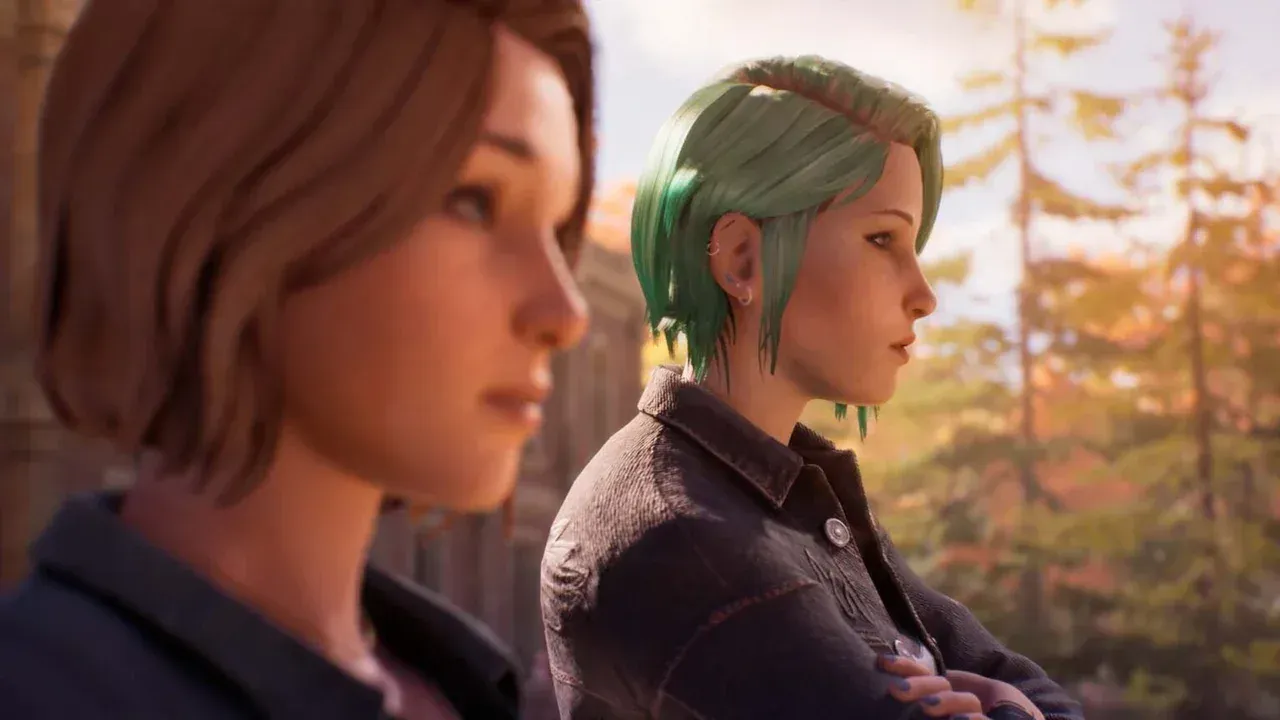
Reunion spends a lot of time setting up a new beginning. By the end, it's almost like none of the previous games matter. For a moment, I felt a rush of endorphins at the thought of my favorite characters existing together again. Then, I realized it was like empty calories for the soul. Fun for a moment, but ultimately bad for me.
Life is Strange: Reunion is perfectly fine as a game. It plays the same as the previous chapters, though the world is more static than before. The voice acting and soundtrack are impeccable. On a technical level, it's rougher than previous games, and some elements look rushed. I'm not particularly concerned about those things, though. I love the Visual Novel genre, and I'm fine with rough edges if the story connects. For the most part, Reunion works because of its strong foundations.
But despite the foundation, the new house that Reunion builds doesn't work for me. It doesn't feel like home in the way that Life is Strange did. That's the nature of revivals and legacy sequels. They're never as good as the real thing. At best, they're golems built from memories and dreams without a soul to call their own.
I can't begrudge anyone for their desire for comfort and a happy ending. In some deeper part of my heart, I'd want every character I've ever loved a fairy tale conclusion. But that would rob everyone, especially me, of something more important.
Life is Strange: Reunion, like the Veronica Mars revival and movie, is a decent enough expansion of the mythology, if only because we get to see these characters again. If it brings new people to the series, it has done something good, and we should only be thankful for its existence.
For me, it's a treat best left for the darkest moments where I need a sugar rush. As I get older, my need and taste for sugar grows smaller. But it will always be there.


