Distributor provided a review copy
MIO: Memories in Orbit is a masterpiece. It is one of the most beautiful games ever made and already a strong contender for one of the best games of the year.
It is set in a fantastical world that could be described as full of melancholy hopefulness. Tragedy has stuck and once great cities lie in ruins, but there's a chance that one day this will all turn out alright. Even if it takes hundreds of years.
You take the role of Mio, a little robot left alone on the Vessel, a generation ship full of other sentient beings. There is a sense the ship itself is alive, too. Once every aspect of this world worked in harmony, now things have fallen apart. At the heart of the ship is the Spine and an Oracle promising that one day all of this will make sense. But only if Mio can connect the other parts of the whole together again.
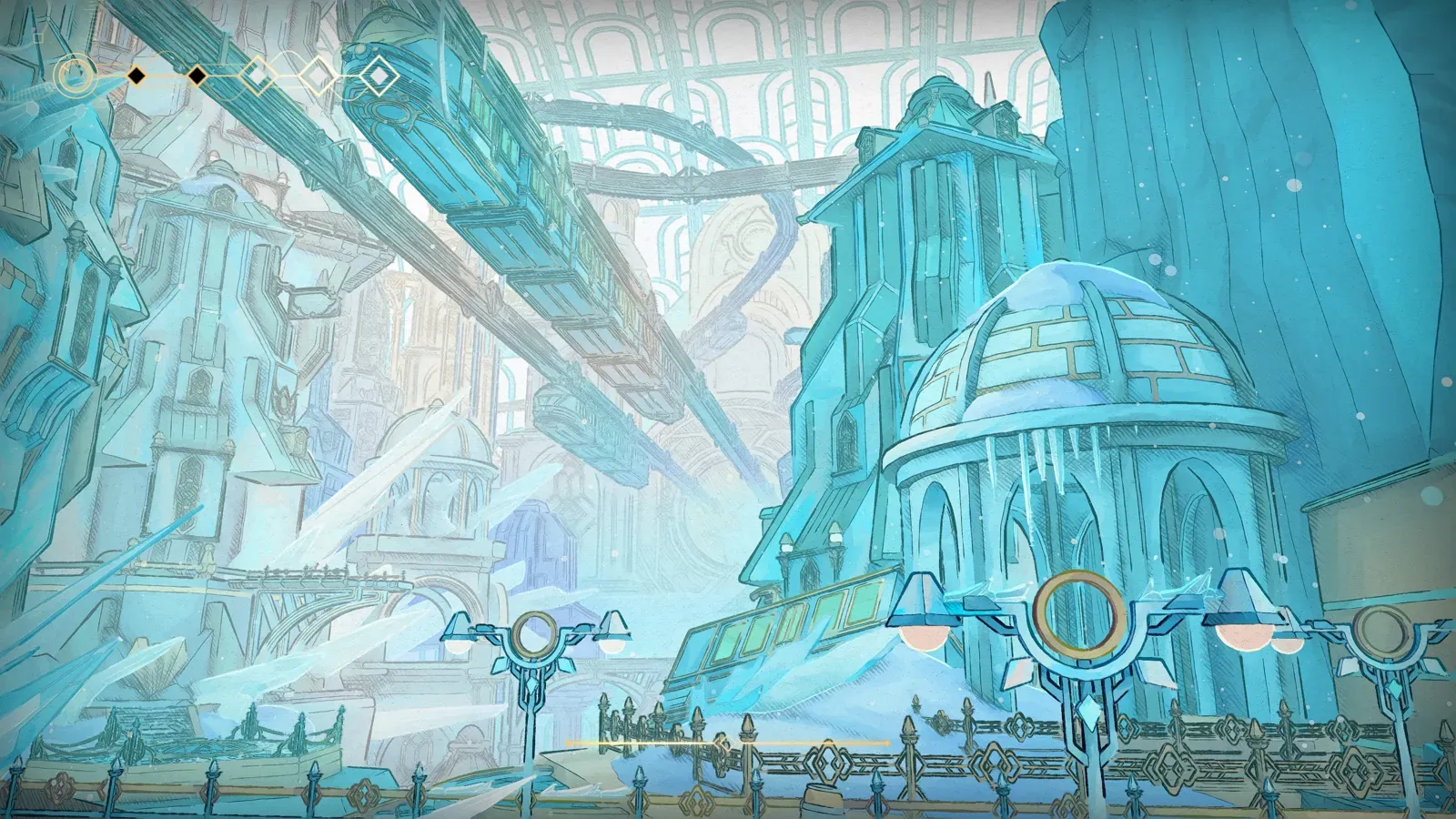
There's not a lot to go on, and most of MIO is told so sparingly that even well into the 20-hour story it will be difficult to make full sense of it. But that's part of the appeal. MIO exists in a world that is more felt than understood, and there's so much emotion pouring from every fiber of MIO's being that it's almost overwhelming.
The gameplay emphasizes this feeling of isolation. When you set off on your quest, Mio has barely anything to cling to. No map, no idea of who to trust, and certainly none of the skills necessary to climb the highest peaks necessary to find answers. Then, slowly but surely, as you find pieces of yourself in the wild, the world itself comes to life. Color pours in, other robots find their way to holy sanctuaries, and there's a sense that somehow all this will pass.
Every triumph comes with a sense of connection. When Mio finds a robot who upgrades their skills, it happens through a loving embrace that whisks our little hero into realms unknown, only to return them gently in deep slumber back to their starting spot. The relics of past titans rotate to understand the size of our small adventurer and touch both the environment and their faces in fascination. The animation quality cannot be overstated. Every inch of MIO is fit in an art gallery.
MIO has elements of Belgian comic books, French cinema, and occasional flashes of the works of Hayao Miyazaki in the ways it marries technology with nature. Yet it never feels derivative or second hand. This is the kind of marvelous inventiveness and artistry that rises beyond its inspirations and stands tall right alongside them.
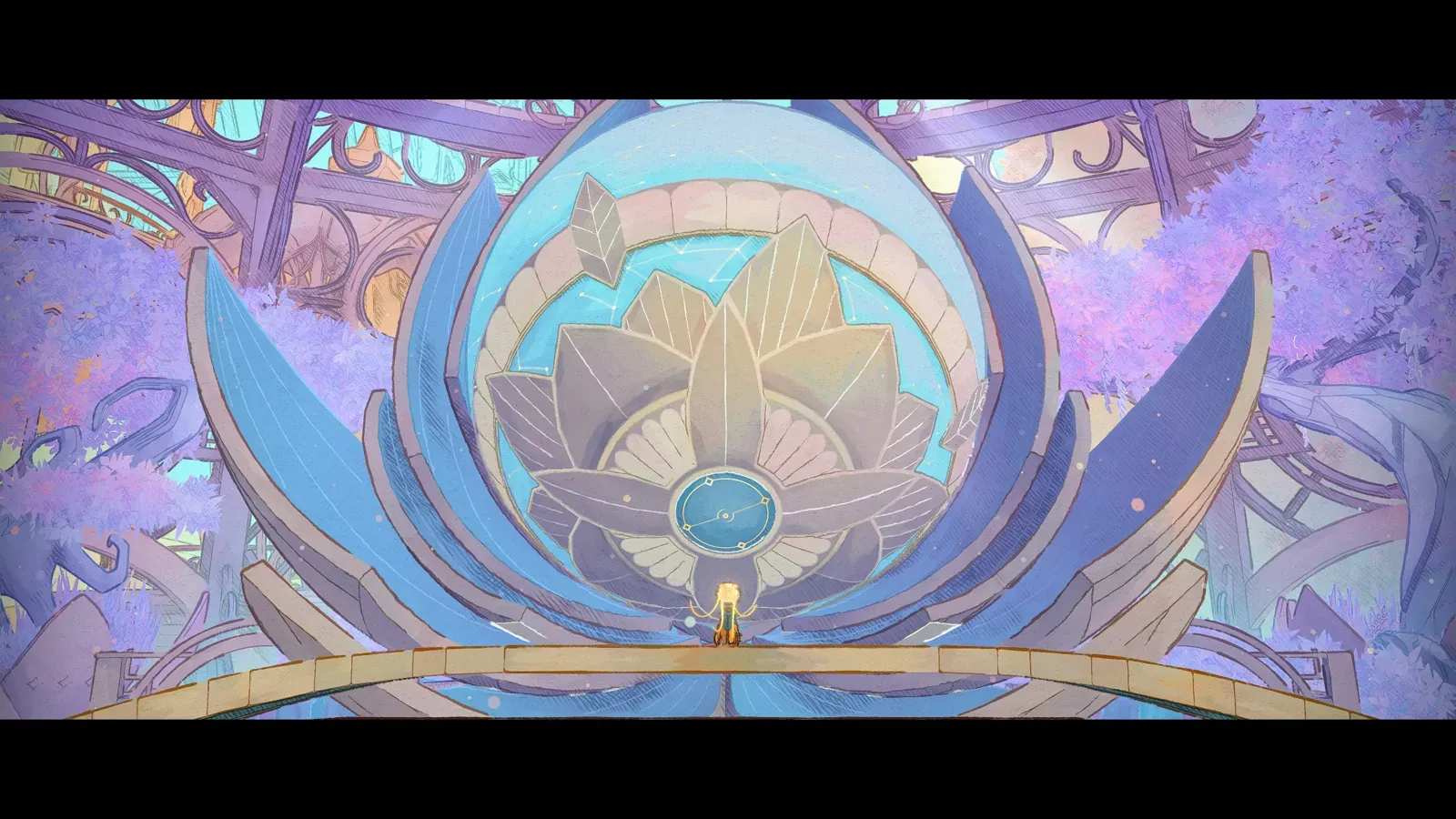
Then there's the gameplay, which is so finely tuned and precise it made me jump with joy. The world rewards exploration and discovery in the way that Metroid and Castlevania set forth all those decades ago. Every session I had with MIO felt like a little journey, a few more steps into the unknown. When I discovered a new skill, I couldn't wait to backtrack to old locations and see what I could find next.
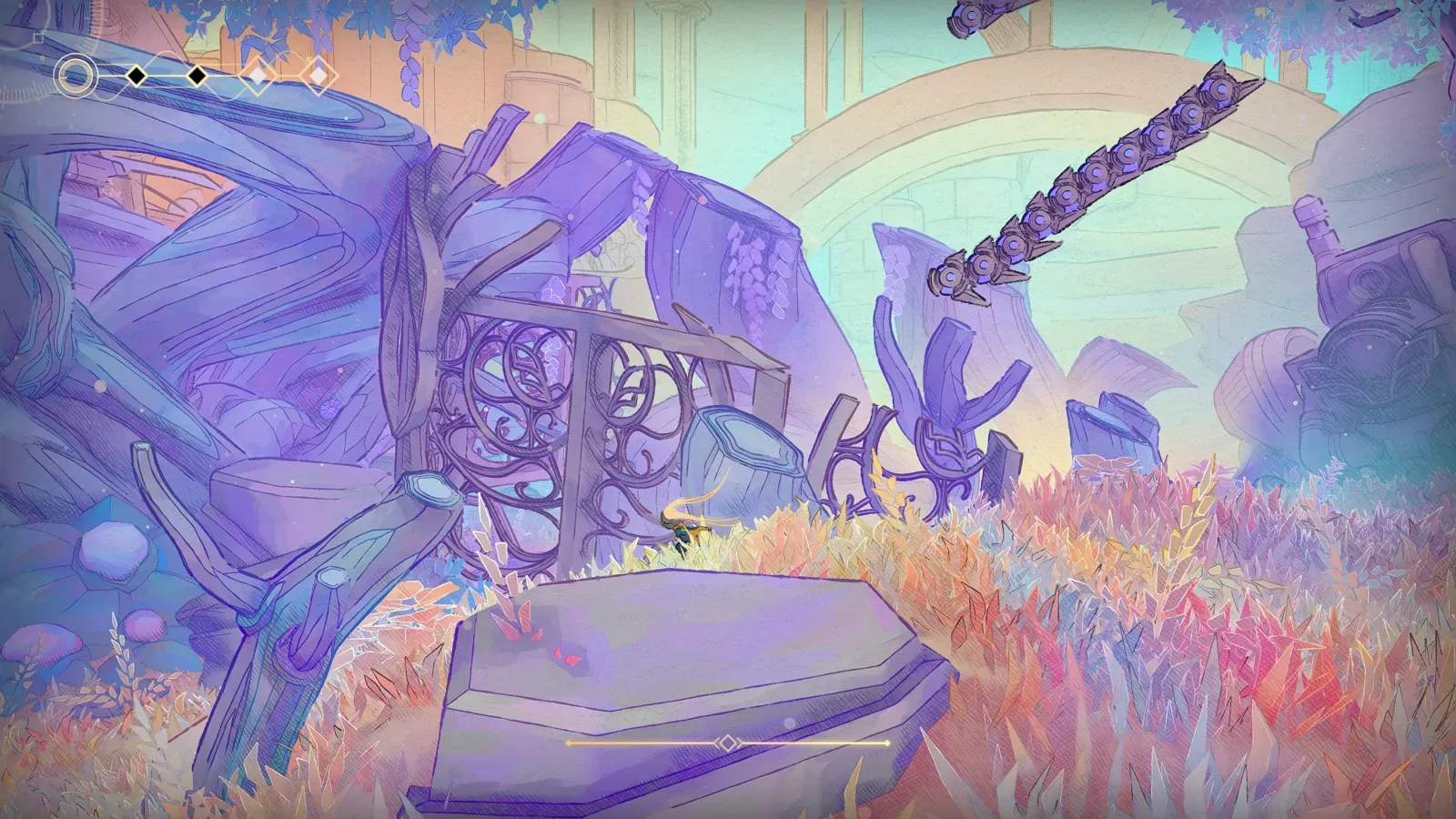
The map itself is large, but not unwieldly. Complex, but not frustrating. It somehow manages to balance every aspect of sprawling and intricate without ever losing itself.
The puzzle platforming is wonderful. It never feels unfair nor overtly complicated. Instead, it encourages to try and try again, and even when you die it's never too far from the last save point. As you gain skills, MIO delivers some of the most dizzying feats of gameplay engineering I've seen in years. You move with grace and skill through immense territories, and the gorgeous animations spark with imagination.
There's a skill that turns Mio into a spiderlike daddy longlegs, and it's never fails to make me smile. The way the animations and precise controls work together is something you'd think to find in a mammoth budgeted Nintendo title. Yet here it is, crafted to perfection from a small indie team.
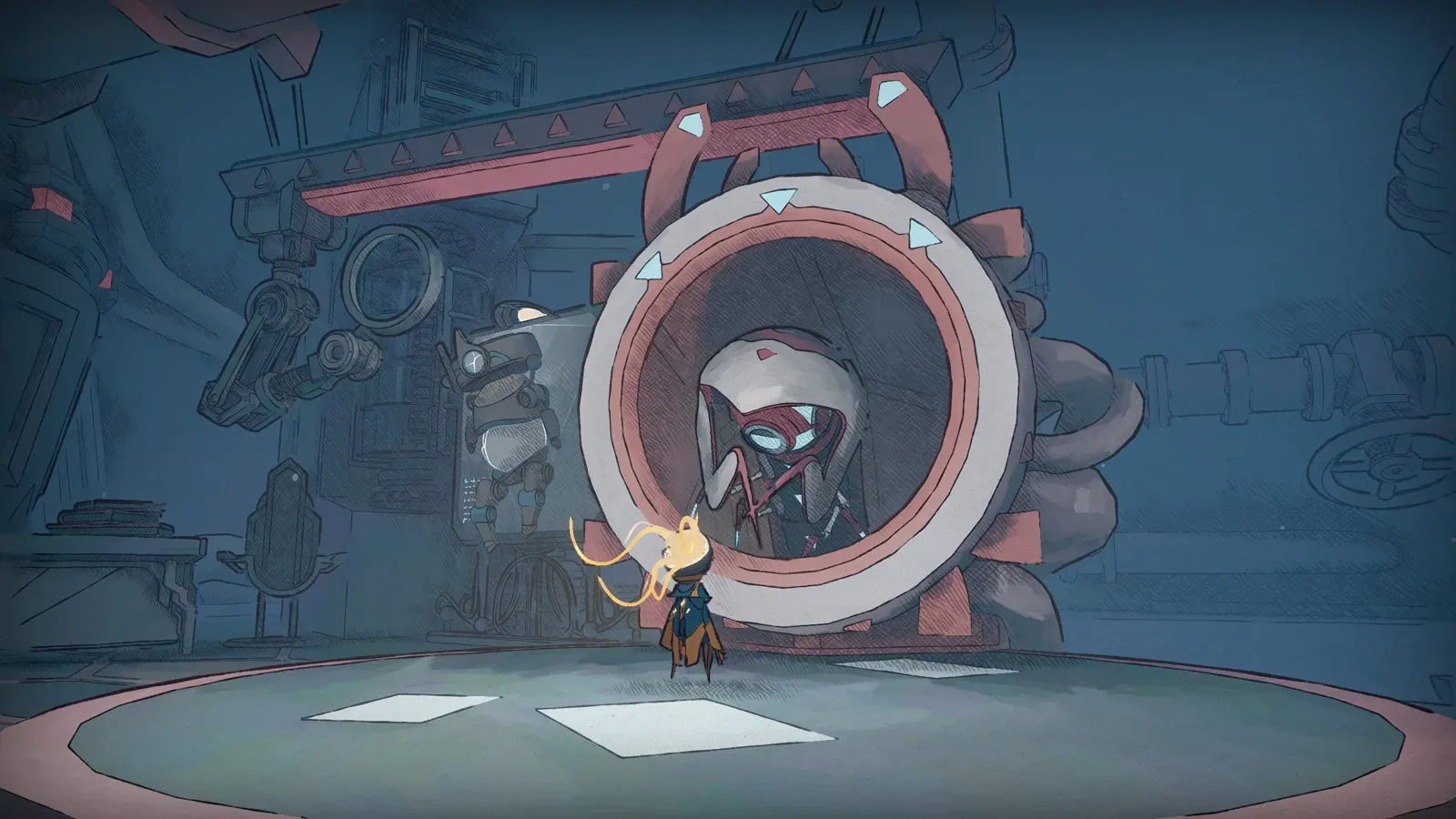
It's only in the combat where I find something to fault in MIO. Our little robot only has a few moves to their arsenal, and most boss battles go on for far too long. They're always imaginative and fun, don't get me wrong, but they could do with some editing. Especially towards the end, where it feels like the difficulty level jumps up a couple of ticks without any warning.
Luckily, even here MIO finds a way to delight. It has one of the most inclusive and accessible designs when it comes to difficulty in this genre. From the settings, you can turn on an option to let the bosses degrade with every encounter. This means that whatever damage you give them before you die will stick by increments into the next encounter. It slowly chips away at the difficulty, allowing you to still hone your skills with each fight.
You can also set the enemies into a pacifist mode, which means they won't attack Mio if Mio doesn't attack them. There's also an extra shield that activates when Mio stands still on the ground for long enough, giving you just enough leeway to handle difficult encounters or puzzles.
It's immersive, fun, and satisfying without ever taking anything away from the experience. MIO shows that even difficult titles in this landscape can be accessible, and it does so in a way that puts all other competitors to shame.
At around 20-plus hours, MIO is just as long as it needs to be. It tells a linear narrative that is haunting and beautiful, which ends just as I began to feel it had run its course. This is a game that understands how much it wants to be and delivers a precise and well-crafted experience without an ounce of fat to its name.
On top of that, it's gorgeous to look and features one of the best soundtracks to any game out there. I've spent hours just wandering around the impossibly beautiful landscape listening to the music, feeling the same overwhelming sense of emotions that films like Porco Rosso and Nausiica of the Valley of the Wind made me feel.
It is the kind of game I can recommend to anyone, anywhere. It sets the bar incredibly high for all others games that follow this year, and will remain a firm favorite in my heart for years to come.