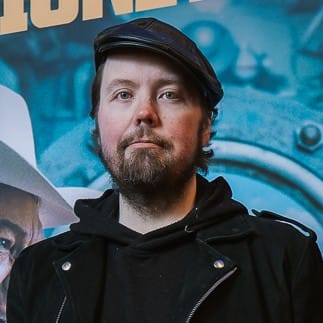
Lewis Teague is the filmmaker most grew up with even if they don't immediately recognize the name.
But bring up any of his films; the ferociously effective Stephen King adaptations Cujo or Cat’s Eye; the with an terror of Alligator; or the rowdy The Jewel of the Nile, and the faint recognition turns to enthusiasm.
They're cult favorites that have left an indelible mark on the zeitgeist in their own way.
His career is as diverse and unexpected as his filmography. During his 50 years in the business, Teague apprenticed under Sydney Pollack, partnered with Dino De Laurentiis, and directed acting legends like Martin Landau, Christopher Lloyd, and Michael Douglas.
He got his start at Roger Corman’s famed New World Pictures thanks to a recommendation from Martin Scorsese, and quickly developed a close relationship with the great John Sayles. His admirers include Stephen King, who famously declared: “Teague has absolutely no shame or moral sense. He just wants to go get ya, and I relate to that!”
Teague is now 87, though you wouldn’t know it from how quick and talkative he is in person. He’s come to Helsinki as a guest of the Night Visions International Film Festival to celebrate his career with the films Cujo, Cat’s Eye, The Jewel of the Nile, and Navy SEALs screening to a new generation of fans.
I met up with Teague the day before festival to cover some of the highlights of his extensive filmography.
[This interview has been edited and condensed for clarity.]
How did you get your start with Roger Corman?
I had reached a point where I was in my late 30s and I thought my life was slipping away and I'd never get to achieve my dream of being a filmmaker. I knew that Roger Corman had given a lot of directors their start, so I figured out a way to get a job in his company as an editor.
A friend of mine named Monte Hellman was set to direct a film for Roger called Cockfighter. I had met both Roger and Monty socially, but separately.
I called Monty and asked if he was going to make the film for Roger, and he said he was. So I told him: "Roger would like me to edit a film for him, but before I talk to him about editing your film, I wanted to see if it was okay with you."
Monty said: "If it's okay with Roger, it's okay with me."
Then I called Roger and told him: "Monty Hellman would like me to edit his film, but before I say, yes, I want to make sure it's okay with you."
Roger said: "If it's okay with Monty, it's okay with me."
That's how I got my first job with Roger Corman.
I edited half a dozen films. I directed second unit on a few more. I got to work with some interesting directors during that period like Ron Howard.
Eventually Roger gave me a crack at directing my own film, and I was really lucky that it was with John Sayles. John is a very smart guy and a terrific writer. I ended up directing three of his scripts.
The first one Roger gave me was a script that John had already written, Lady in Red, which I loved, and that turned out very well. That got me my second job, which was a film called Alligator, and I asked John to write that one.
I also directed a pilot that John had written called Shannon Steele, which is about a Philadelphia lawyer. I was also offered two films that John had written for Universal: Clan of the Cave Bearer and Valley of the Horses.
Clan of the Cave Bear was based on a best-selling novel by Jean Auel. Universal asked me to do it, and I hadn't done a studio film yet, so this seemed like a wonderful opportunity. But I heard they were going to shoot both Clan of the Cave Bear and Valley of the Horses consecutively. So when I had my initial meeting, I asked how much of a break will there be between the films.
The studio head looked astonished and said they were going to shoot them simultaneously. When you're in one location, you'll shoot scenes for Valley of the Horses and then Clan of the Cave Bear immediately afterwards.
I said it's going to be difficult enough to get Daryl Hannah to be believable as a cave woman in Clan the Cave Bear. I'm just not going to have time to make both work together if I have to shoot them at the same time.
So I turned it down, which was very painful, because I was at the beginning of my career and it seemed like an incredible opportunity to do two large budget studio films. But I had to turn it down because I knew I couldn't do a good job with either one if I had to do both at once.
It must have taken a lot of courage to say no at that point in your career.
It took a lot faith that my career would unfold better if I had a certain degree of integrity about what I'm doing. But it was scary to turn it down. Two weeks later, when I read in the trades they'd hired another director, I immediately thought I had made the biggest mistake of my life.
Then it turned out that when they tried to shoot both films simultaneously it didn't work. So they abandoned the second film, Valley of the Horses, and just finished Clan of the Cave Bear. It took a few years from beginning to end.
During that time, I made two more films. I shot Cat’s Eye for Dino De Laurentiis and I The Jewel of the Nile with Michael Douglas, which was very successful. So ultimately it paid off.
When it finally came out, one of the big complaints about Clan of the Cave Bear was that people had a hard time believing Daryl Hannah as a cave woman!
But there was a certain amount of trauma to turning it down that when it was released, I didn't want to go see it. Because in all honesty, there was another film I turned down and subsequently regretted when I saw that film in its completed form. Another director had done a great job with it.
Can you say which one?
After I finished Jewel of the Nile, I knew it was going to be a hit, which it was, and I thought it would elevate my status as a director. I figured that I'd get my pick of material. I wanted to do something that I felt would be prestigious and Oscar-worthy. I had this egotistical fantasy of being some combination of Steven Spielberg, Orson Welles, and Jean-Luc Godard all wrapped up in one fell swoop.
I was offered a lot of scripts, and one of them was RoboCop.
When I read the original script, it seemed like it was a ripoff of Terminator. I thought, well, it's a genre film, and that's all I've been doing. I want to do something else. I really wanted something like a romantic comedy or some sort of existential human drama. Not another genre piece. So I turned it down.
Then when I went to see it, Paul Verhoeven did such a great job with that film. I thought maybe if I look at it from a cosmic perspective, from the point of view of the cinema gods, I made the right choice because the script wound up in the hands of a director who did a better job than I might have done. You never know.
In any case, he made a terrific film.
I want to ask you about Alligator, which was a childhood favorite of mine. How did that come about and did you have any hesitations to make it due to the inevitable Jaws comparisons?
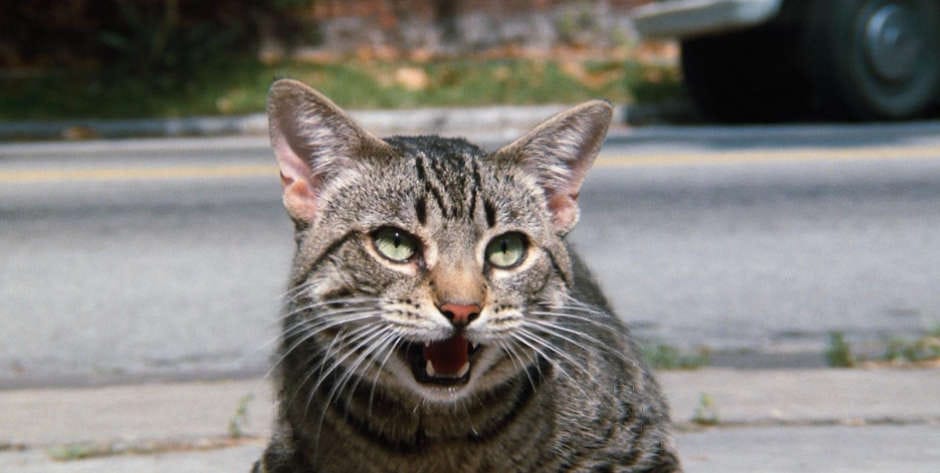
The success of Jaws gave birth to a whole slew of scary animal films. Alligator and Cujo are really beneficiaries of that: they're the children of Jaws.
What happened was the producer had taken advantage of an urban myth and had someone write a script that was very amateurish, pretty awful. But I loved the myth, I thought this could be fun to do. So I told the producer that I'm happy to direct Alligator if I can bring in my own writer, and I just had a great experience with John Sayles.
So I contacted John and we had one meeting. I said I'd like to completely throw out everything in the script except the urban myth and set it somewhere else. I also always loved the fact that in science fiction and horror films the monster is usually a metaphor for something else in society.
So John said, I can work with that. Then he wrote the whole script on a plane returning from Tokyo from scratch!
It was so good we didn't have to rewrite it. I had to cut it down a little bit to get it down to a feature length. But other than removing certain scenes to shorten it for brevity, we pretty much retained everything he wrote.
It's also a surprisingly funny film. Was that always the intention with the new direction?
John always put in a little bit of humor in the script, but the original intention was to make it as scary as possible. But then we had to manufacture a giant mechanical alligator that was basically an alligator suit with four men inside: two operating the front legs and two operating the back legs.
When we finished building this giant 30-foot-long alligator suit, I wanted to shoot a test with it. So we set up in a parking lot outside a warehouse in the San Fernando Valley.
We got the alligator out there, assembled it, and put the four very strong men inside. I got all the cameras rolling. By that time a large group of neighbors had assembled to watch what we were doing, maybe 150 people in total.
Now, if you've ever seen a real alligator walking, they move along very close to the ground, but their legs extend a great distance when they're walking. Their legs are very fluid and they reach out in a very lengthy kind of way. I called action, the guys started moving, but instead of long, smooth, stealthy steps, they took little short mincing hops!
Everyone watching burst into laughter.
At that point, the decision was made to emphasize comedy more than anything else. Well, comedy and the character drama too, which is the main cop haunted by memories and how the monster in the sewer revives all his post-traumatic stress symptoms. It was a combination of the two.
I did want to have some scary sequences in it, too. So I studied as many films that had made me jump out of my seat when I'd seen them, just to develop a set of principles on how to create a scary scene.
I eventually focused on two films: Wait Until Dark and Jaws.
Specifically two scenes: the one in Wait Until Dark where Audrey Hepburn tries to escape this basement apartment, and the one in Jaws where Richard Dreyfuss dives into the water at night to discover the overturned boat. I remember when I saw that one in the theater, the audience screamed. It was a great scene.
Those two scenes really operate using the exact same principles. You have to create a scary threat and you have to set the scene where they could appear at any minute. Then you have to create a situation where you expect the monster to attack from a certain direction at a specific time, and then it doesn't happen.
Instead, something oblique happens, then the attack occurs a moment later or from a different direction. It's sort of an exercise in biochemistry. You have to use enough scary techniques to get the audience on the edge of their seat. The viewer has have cortisol and adrenaline pumping through their system.
But if they're expecting an attack, they're going to brace for it. So if it happens when they're ready, they're not going to scream. That's why you have to somehow divert their attention.
In Wait Until Dark, Audrey Hepburn stabs Alan Arkin in the head, and she leaves him for dead or unconscious in another room to escape out the front door. Then the door is chained shut and she has to come back down the stairs, past the room where we last saw him, in order to escape out through a window.
The camera is set up in such a way that it leads you to believe that as she walks by, he's going to jump out. But he doesn't. At least not when she walks by the door.
She has a chance to take a few more steps, which gives the audience a just moment, a brief second, to breathe a sigh of relief and relax their grip. And then he jumps out!
I was convinced that's exactly how it works, so I tried to do that in a scene in Alligator and it didn't work. I couldn't understand why, so I recut it, and it didn't work, and I played around with it some more, but I couldn't get it to work.
I finally decided to call the editor of Jaws, Verna Fields, who at that point was vice president of post-production at Universal. I called her office and her assistant told me she was busy and asked me what this was about. I said: "Please tell her I've ripped off a scene from Jaws and I can't make it work."
She called me back in five minutes.
Verna Fields had mentored lots of directors. As an editor, she had worked closely with Steven Spielberg. I told her what I was working on and how I shot the scene and why it didn't work. We talked about how I had not done a few things correctly. She said Steven had the same problem on Jaws and they had to reshoot that scene in her swimming pool, which is now legendary.
Well, we didn't have any money in the budget for Alligator to go out and reshoot it, and it wasn't that important a scene anyway, so we just moved on. But I vowed to get it right the next time, so I shot the same scene using the same techniques in Cujo, and it worked perfectly.
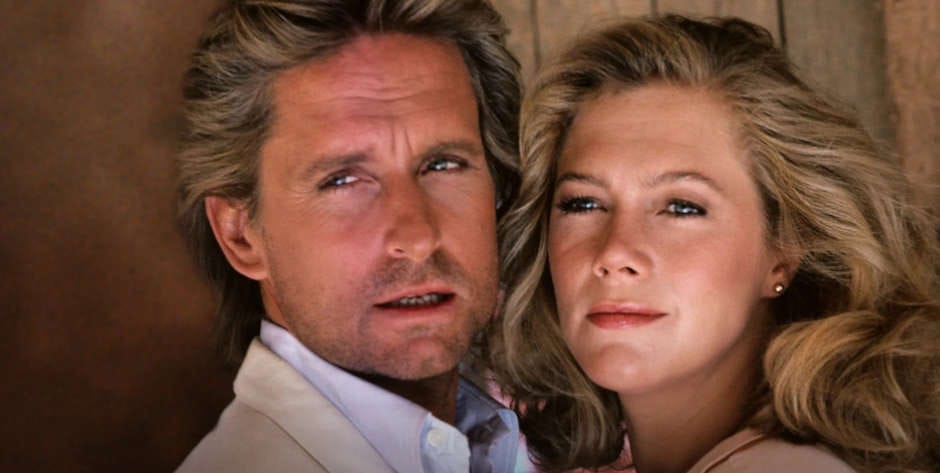
That's another film that works even when it shouldn't. There's an odd sense of inevitability to it. Like reality has broken down into this nightmare.
For me, that film was all about the nature of fear and the difference between real and imaginary threats.
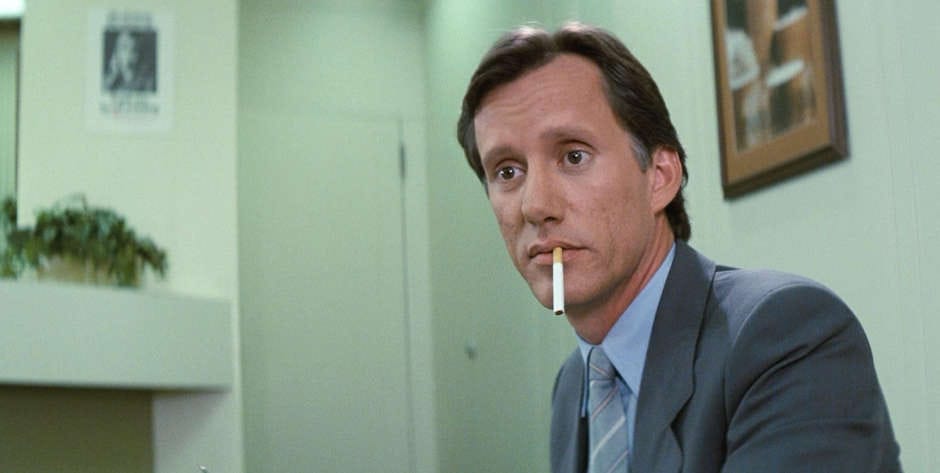
The characters are well-drawn, they're very believable. They have marital difficulties, so they move to the country to provide a better environment for their son instead of raising him in the city. She's terrified of being bored in the country and has an affair to sort of compensate for her own fears. He's afraid that after losing an account he won't be able to support his family.
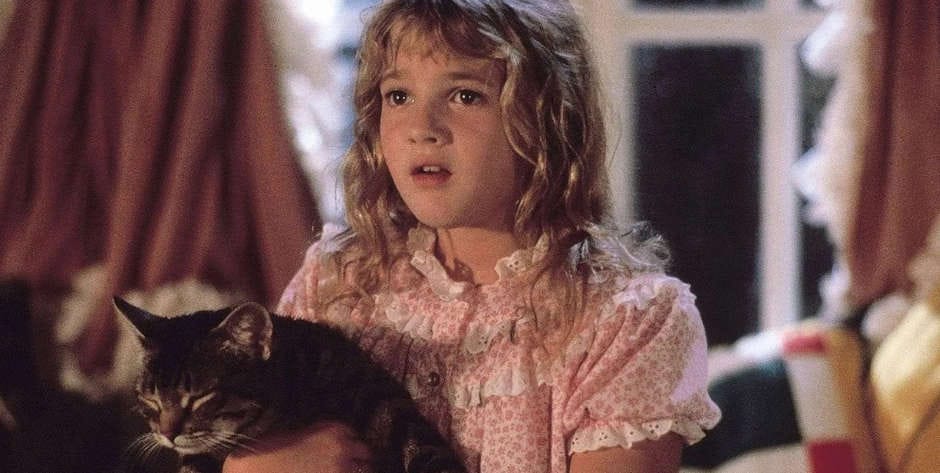
Their son feels the tension in the house, so those fears filter down to him, and he imagines monsters hiding in his closet. It's only until a real threat comes into their life, this dog was rabies, that it puts their other fears into perspective.
I like the fact that Stephen King had created these very believable, interesting characters. For me, that's the main thing that makes the story work.
I particularly like Dee Wallace in the film. She grounds the story in a very real place.
There was an interesting thing that happened when we finished editing the film and began having sneak previews.
The scariest part of the film takes place at the farmhouse after Dee Wallace is trapped in the car by the Saint Bernard. That's two-thirds, three-quarters of the way into the film.
We tested it in a screen room in Hollywood that had little dials at every seat so the audience could crank up and register exactly how interesting they liked each scene. The results showed that they were sort of mildly interested in the film up to the point where Wallace is trapped in the farmyard. Then their interest level soared sky high.
Warner Bros. looked at the test results and told the producers they had to cut out 15 minutes of character development so we can get to the farmyard quicker, because that's what the audience is most interested in. They were insistent on that.
So I cut 15 minutes out of the film and we tested it again in the same place. The levels at the beginning were exactly the same, sort of mildly interested, only when they got to the farmyard, instead of going sky high, their interest level dropped. They didn't care as much. They weren't as scared anymore.
We had taken so much interesting character development out of the first half that they didn't care about Dee Wallace and what happened to her anymore. So we put everything back in that we had taken out. It showed me how important it is to have a realistic, believable story with interesting characters. Without them, it won't be as scary because you don't care that much about what happens to the individual.
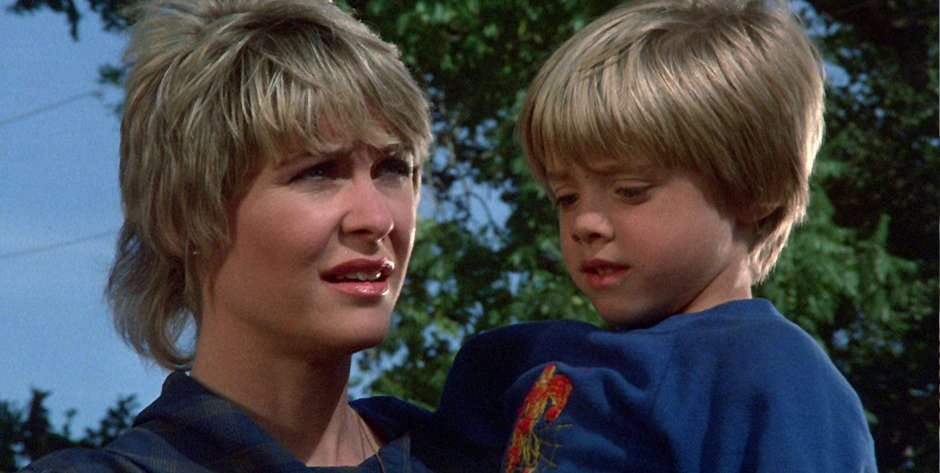
After Alligator, what was it like working with real animals in Cujo?
We had, I forget the exact number, 10 or 11 different dogs. Each one with a different skill. One dog was really good at jumping, another was good at growling. And the dogs get tired and they have to be replaced, so we had a lot of them.
Cujo worked for several reasons. One is that I had a fantastic animal trainer who was able to get the dogs to do what I wanted. Another is that I had done so much second unit work in the past that I knew how to create montages to make sequences work. And thirdly, I guess I have a lot of patience.
What was something from directing second unit work that helped? I find all of this technical behind the scenes information fascinating.
Directing a second unit usually involves shooting bits and pieces of film that are a little too complicated or unnecessary for the first unit to shoot because it doesn't involve actors. You're working with animals and cars and inserts of newspapers and so on. The main difference is that you're not working with actors.
In Cujo, I had to create very complicated montages to get certain kinds of effects. For example, there's a scene where the dog is very sensitive to sound and the phone ringing makes it go ballistic. That scene begins with the dog ramming the side of the car that Wallace is trapped inside. In the final cut sequence, the dog rises up, races towards them, and rams the side of the car with its head.
That required me to get one shot of a dog running towards the car and leaping at it. To achieve that, I shot the car straight on and took the doors and the front seat out. So the dog that's running, the St. Bernard, which is a large, lumbering dog that's not the most agile creature on the planet, could run and jump into the car and come out the other side.
Then I had a man in a St. Bernard suit in a closer angle throw himself at the side of the car. Then I had a mechanical dog head for the close-up shot of the head ramming the door and the metal buckling. After which I could cut to Dee and Danny screaming inside the car.
Finally, I took another dog and put it on its back beside the car. When I called action, they released it, and it stumbled to its feet. When you cut all those shots together, you have maybe three or five seconds of film, which makes it look as if the dog is actually running and ramming into the car.
I was able to create these montages based on my experience with directing second unit. I learned how to take all the different pieces of the puzzle and equipment, mechanical dog heads and men and dog suits, and combine them in such a way to make it work. I think I was pretty good at creating montages.
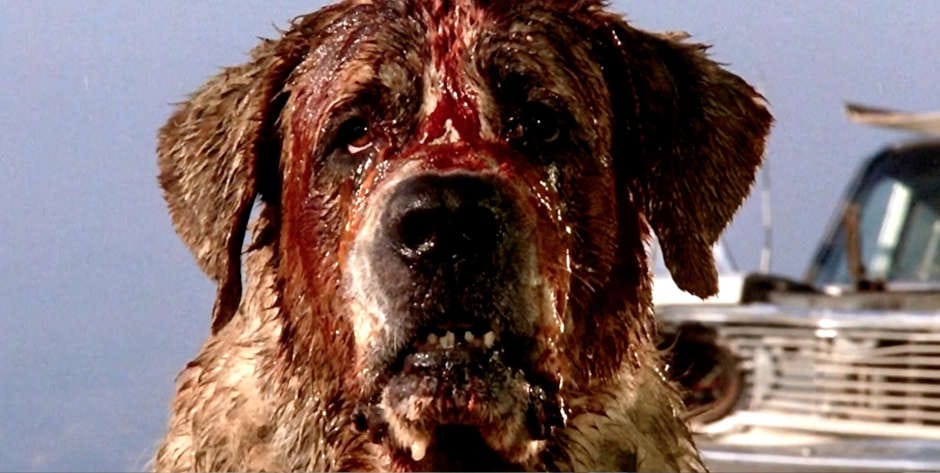
The young actor also sells the horror really well. He's never unbelievable in his terror.
He was such a good child actor. Unbelievably gifted. I don't take any special credit for his great performance. He just delivered. He had a capacity to pretend. Most kids have a capacity to pretend, but he had that without being self-conscious or fearful.
I want to ask about working with Dino De Laurentiis, who is a legend in the film business. Do you have any stories about what he was like?
Absolutely! He produced three of my films: Fighting Back, starring Patti LuPone and Tom Skerritt, Cat's Eye, and then I did another film called Collision Course.
I really enjoyed working with Dino. He epitomized Italian charm. We developed a very friendly, personal relationship. He opened a studio in North Carolina where every weekend he would have people over to his house for dinner and half a dozen people working on films.
He would cook pasta and lecture about Italian cooking. He was a very smart, efficient, and charming guy with a lot of experience. Most of his films weren't that great, but it was fun working for him. He had a warm, personable attitude, and I got along with him really well.
He had made hundreds of films by the time I worked with him. I remember he never had anything on his desk that wasn't apropos to the meeting. There'd be a desk with a telephone, a lamp, and the book or script that we were about to discuss. Nothing else. He kept his desk clean. And that was a leadership skill.
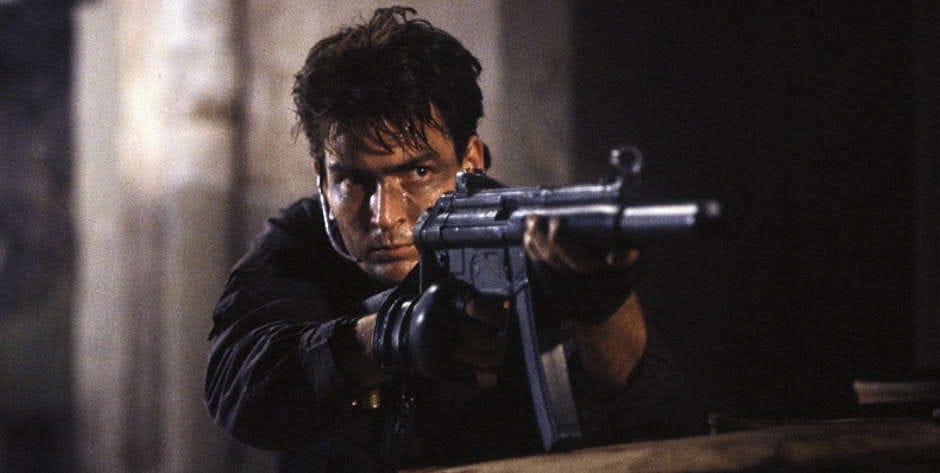
He also never left any decisions unmade. For example, he called me one night about 6 or 7 P.m. in New York. He had an office in New York and I was at the hotel next door. He called me and he said:
[Teague adopts a surprisingly accurate imitation of De Laurentiis]
"Louis, I'm sending you a book. I want you to read it and let me know if you want to make it into a movie."
I said I was about to go out for dinner with some friends, when do you want to talk? I want to know how much time I had to read the script. He replied:
"Tomorrow morning! You call me at 7 o'clock!"
He was like that. So the next morning I met him in his office. I was bleary-eyed because I'd been up half the night skimming this book. I said I liked it, I think it could be a fun movie to make.
He asked who I wanted to hire as the writer. I said there were a few people I have in mind, but I'd like to do some research. Dino shook his head:
"No, you tell me. If you must make a decision right now, which one do you pick?"
I thought it was just a hypothetical game. I said my friend Don Dunaway just did a rewrite on Cujo. So Dino turns to his consigliare, Fred, and said: "Fred, what agency is this guy down with? Call William Morris and make a deal and have him on a plane to New York today!"
That's how he did business. If there was a decision to be made, he did not want to put it off because he was juggling so many projects simultaneously. He would have three or four films in development and maybe another film or two in post-production at any moment.
He had other enterprises too. There was an olive oil importing business. He opened up a food shop restaurant in New York when I was there. He did so many things in his life that if he postponed any decision, they began to pile up.
Every question would occupy a space in his brain that he wanted to keep free to make more decisions. It was a great leadership skill to learn.
I try to practice the same thing: if there's a decision to be made, make it right now. 99% of the time, your first choice, your intuition, is going to be correct. And if it's a mistake, then you change it, but you haven't wasted any time.
That's what happened with Clan of the Cave Bear, which turned out well. Then I turned down RoboCop, and that was such a mistake. But the main lessons in life are learned that way.
I'm grateful for the mistakes.