

Version: Digital Early Access code provided by the distributor
Independence & Ethics
Region Free is entirely reader-supported and maintains full editorial independence. For more on my scoring and standards, see the Review Guide.
The Last Caretaker is a fascinating mix of melancholy exploration, immersive storytelling, and survival-crafting mechanics. It's also very much unfinished and constantly changing.
I spent a month with the Early Access build of Finnish developer Channel37's grand game for a preview, and during that time, it received two major updates and numerous quality-of-life improvements. This isn't a review, as I don't review Early Access titles, but the Last Caretaker is already such a robust package that fans of the genre should have it on their radar as a serious contender as their next obsession.
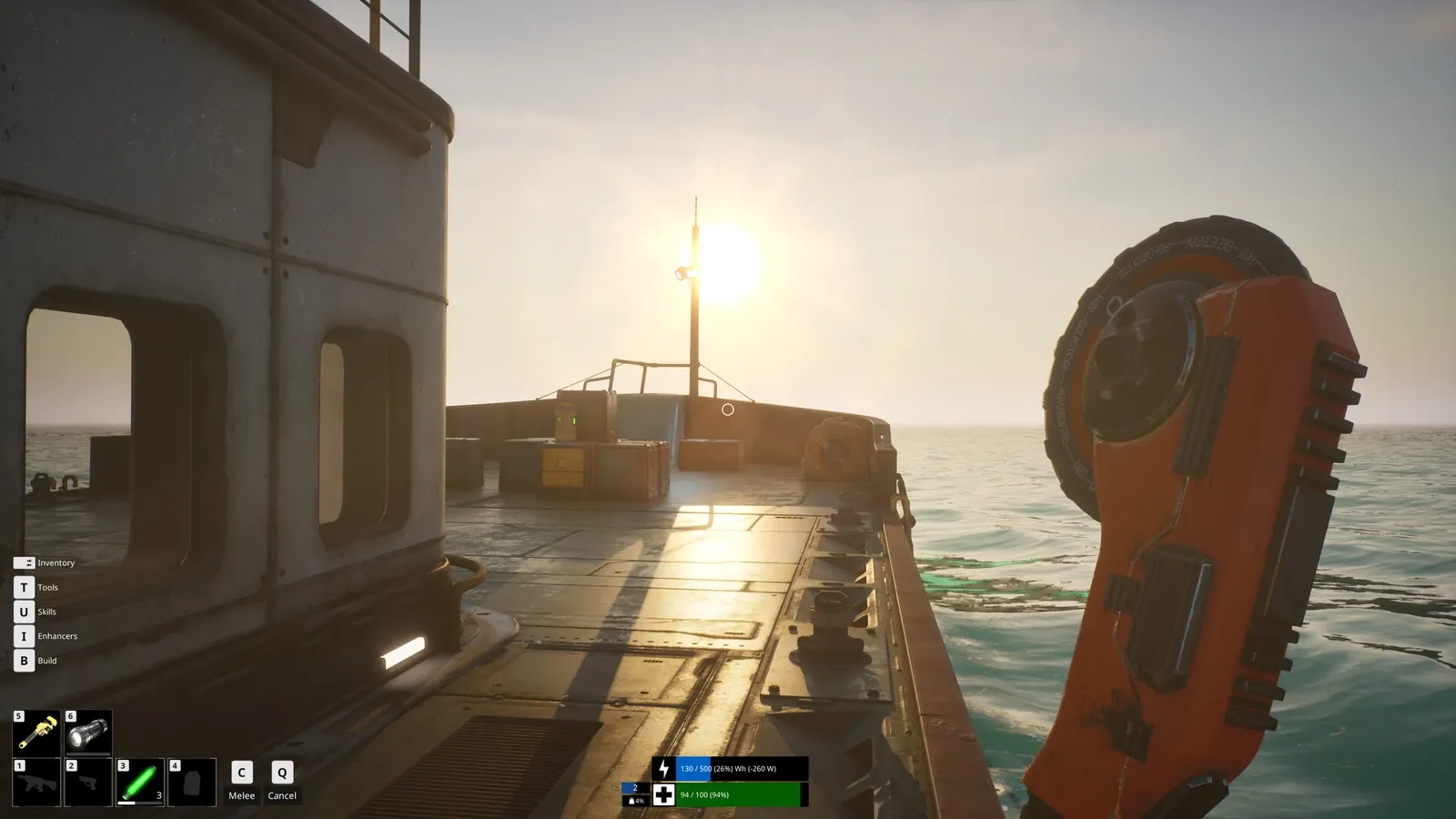
There's a lot to love in The Last Caretaker, especially when it comes to mood and tone. Every inch of the post-apocalyptic world is drenched with immaculate detail. Much of the story, such as it is, is told in bits and pieces, mostly through logs and detritus of the past. Channel37 doesn't reinvent the wheel here, but their writing is strong enough that even familiarity feels fresh.
Players take on the role of the titular last caretaker, a perpetually happy-to-serve automaton, who wakes up in an abandoned facility in a post-deluge world, where humanity has wiped itself out. Remains of destroyed robots litter the landscape, and every new location reveals some tragic reminder that whatever happened here washed away entire families in the blink of an eye.
As a marriage of gameplay loop and storytelling, The Last Caretaker works wonderfully. We, as players, have a natural tendency to start solving problems. We crave the rewards and unlocks that come from putting two and two together. So when we wake up at the bottom of an abandoned shipyard, it feels immediately natural to start figuring things out.
From there, levels unfold in similar, but increasingly complex ways. Every location needs power in some form before it can be used, and power needs to be transported from point A to point B. At first, these puzzles are simple. A single cable runs either across the room or downstairs, but it's not long before you have to start balancing loads and intricate routes to make things work efficiently.
The buildup in plot and gameplay works brilliantly. Every new area provides just enough wonder and mystery to keep you guessing, and the mix between an Isaac Asimov story and murder mystery, where the victim is the entire human race, is tantalizing. I heard from friends that earlier builds were even more streamlined than what I've played, which makes me wonder if the plan was, at some point, to keep this a strictly linear narrative-driven experience.
The ultimate goal is to save humanity. To do that, you act as a biblical lifegiver to an entire species. It's here that The Last Caretaker dips into the more interesting aspects of its sci-fi origins. But it's still in the very early phases of development, with more content coming at a steady pace. During my testing period, Channel37 released a major update featuring a new Earth Council, which serves as a push towards getting people off-planet.
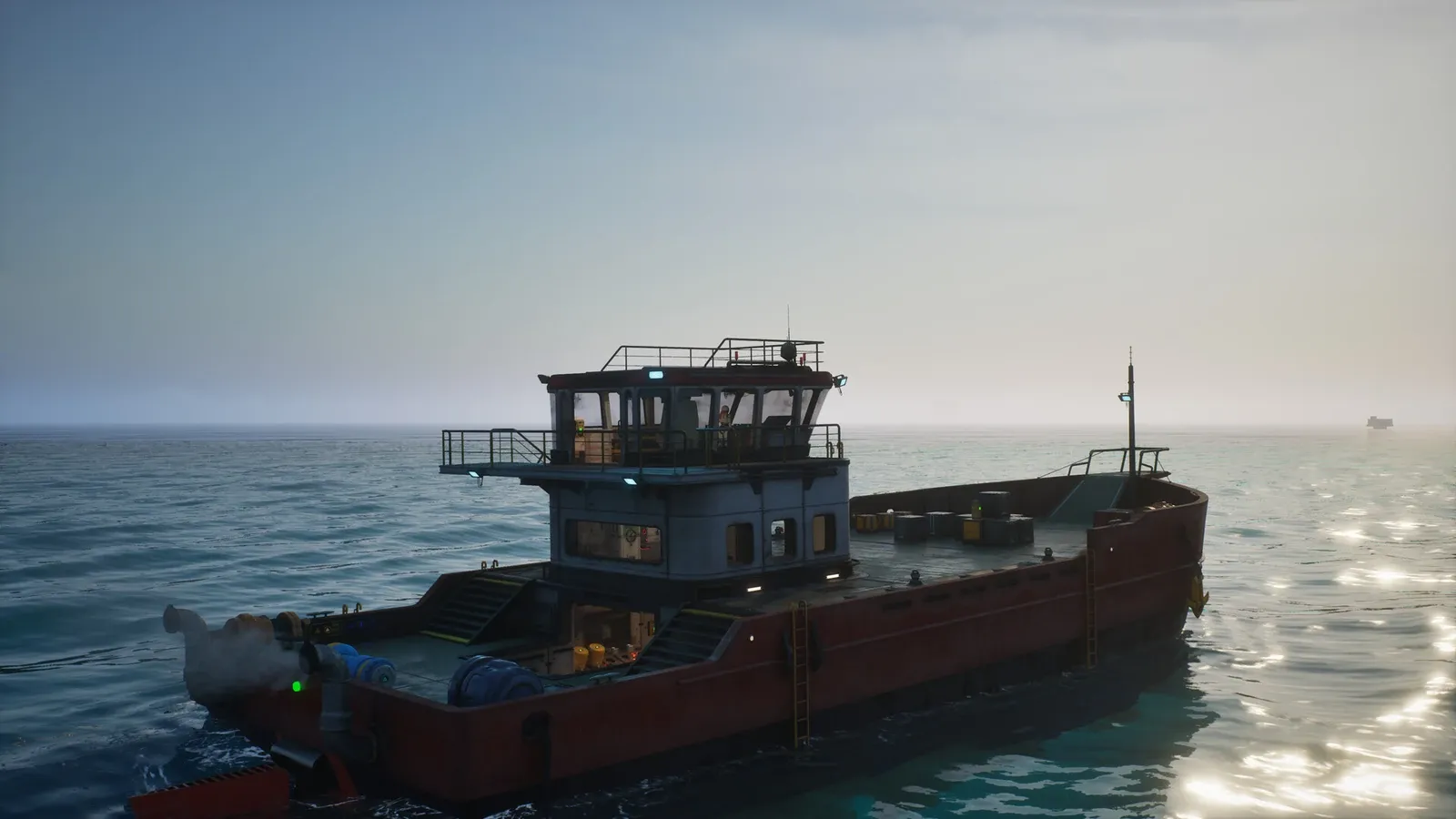
But reaching the endgame takes time, and the road there still clings to both the good and bad points of this genre. The Last Caretaker is, after all, a survival game. Most of the early hours, and well beyond, require tinkering, repetition, and a cycle of failure that can grow tedious.
It's the contradiction of story and gameplay that no game in the genre has managed to balance out so far. A part of me wants to dive completely into a strictly narrative and guided experience about the relationship between robots and humanity. Another is perfectly content with building new solutions to keep my trusted vessel going in a semi-open world, where there's nobody around to bother me.
How The Last Caretaker balances out its urgency and meditative pace remains to be seen, as the current build is still very much in the "just mess around and see what happens" phase. It's not bad in the least, but it requires a specific approach to make the most out of its unique charms.
For example, those who love the hardened survival mechanics of this genre will be happiest in the early hours of the game. It's here that your resources are most limited, with a constant need to find batteries to keep going. You are, after all, a robot, and while you don't eat or drink, you do need your fix of Duracell to keep going. It's a fun workaround, but it's still the same mechanic as in all the other titles.
After satisfying your immediate needs, your next goal is to make sure everything powers on. Lights, doors, and your boat all need electricity in varying degrees. At first, it's a bit of a pain, and you constantly have to make compromises with what you need versus what you want. It's not quite a base-building experience, as much of the gameplay loop requires travel across a beautiful ocean. Still, there's a lot of busywork in transporting items between hubs on a boat with limited cargo space.
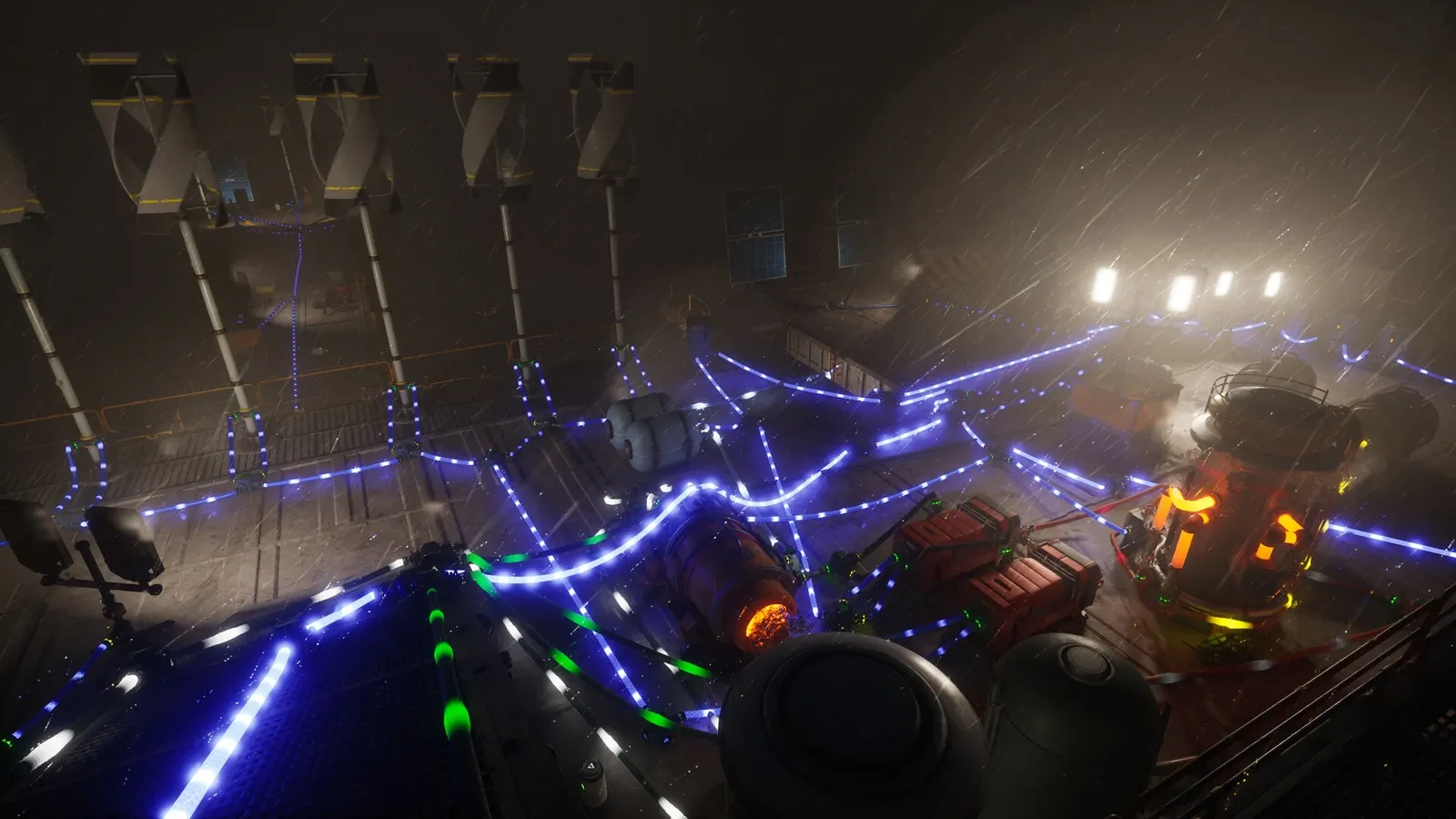
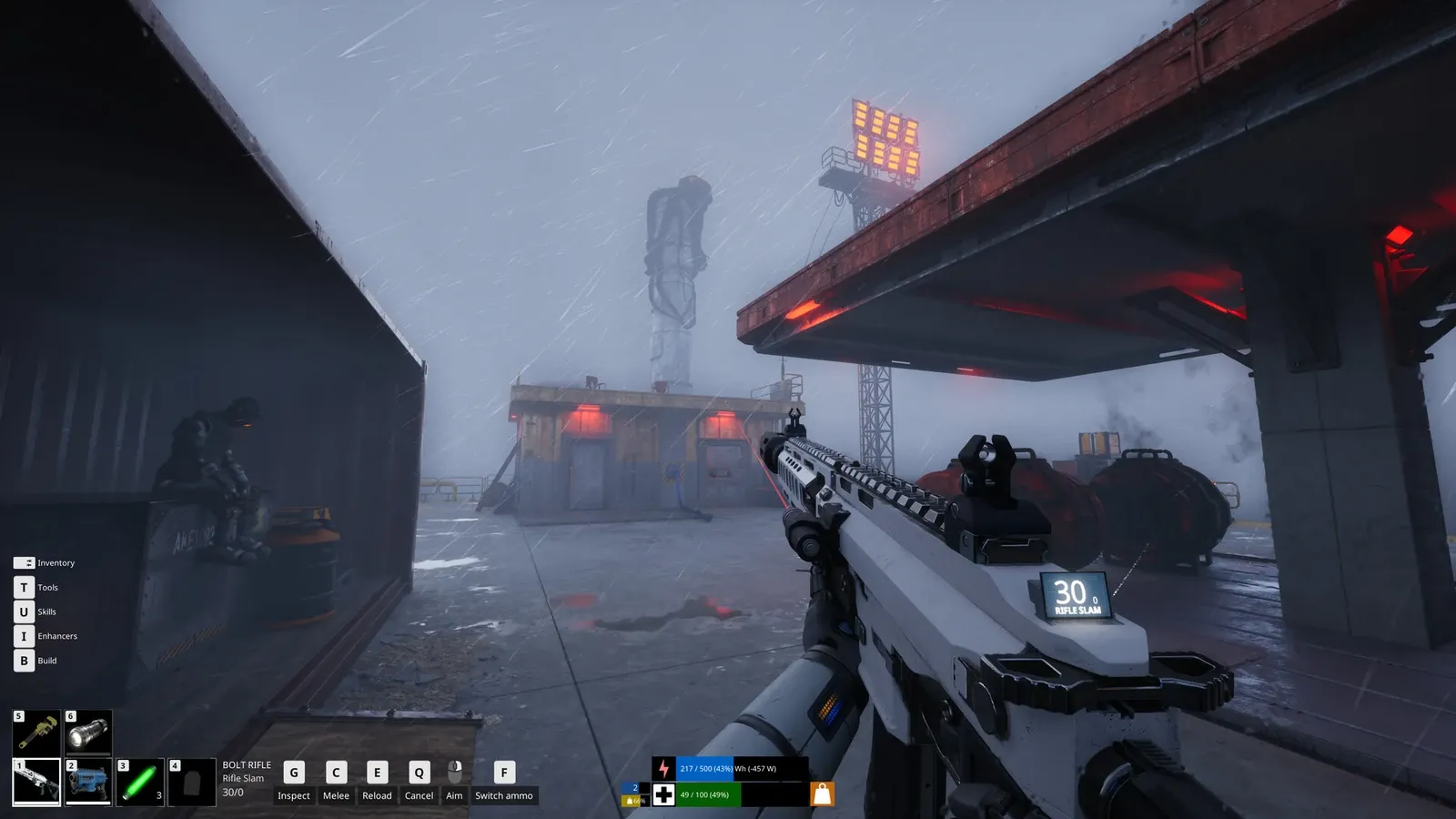
Depending on your expertise level with the genre, The Last Caretaker is either a very challenging experience or an exceptionally chill one. There's an element of combat that includes a robust gun tinkering mechanic, which isn't quite as well thought-out as everything else, but it is there. Early melee fights are tedious, just as with other games of this type.
Collecting resources provides the most fun at first, only to very quickly stockpile way more than you'll actually need, which is usually a warning sign that the endgame turns into an exercise in repetition. At present, sending a human into space requires ludicrous amounts of resources. For me, when I get there, it feels like a challenge I do once and then never think about it again. I'm just not a dedicated enough caretaker, apparently.
Naturally, this is not the game's final form, and this isn't a review. Already, Channel37 has teased expansions into the depths of the ocean and far beyond. There's so much that The Last Caretaker can be that saying what it is now feels almost fruitless. Its state at the time of the writing is almost certainly vastly different from what it will be when you play the game.
But that's part of the excitement in Early Access titles, especially ones like The Last Caretaker, which listens to its fans with great care. Every update adjusts something related to the most recent feedback, and the active community has spent countless hours poring over every fine detail of the intricate world. The Last Caretaker Wiki is a testament to how evocative and engaging Channel37's creation has become. I can only imagine how vast it will grow over time.
That's the potential, though. What is there right now? At present, The Last Caretaker offers at least 40-50 hours of gameplay related to its main story. Those who want to take it easy and explore will take much longer. But that's at the time of writing. Additional updates will add to it, which means The Last Caretaker will continue to expand before its full release later this year.
This comes with some caveats, mainly related to the performance. The Last Caretaker adds content at a constant pace, but it still lags in optimization. On my rig, which isn't top-of-the-line, I had a hard time maintaining a steady 1440p/60fps experience even with medium settings. An RTX 3080 and 32GB of RAM should handle most things of this caliber just fine. But even with frame generation and upscaling, The Last Caretaker dips into the mid-20s at times, especially when my creative endeavours with electricity grew in size.
It bears repeating that this, too, will hopefully change in the future. By the time you read this, it may already be a thing of the past. That's the nature of Early Access; you're evaluating potential.
Luckily, potential is something that The Last Caretaker has in endless supply. It is one of the most fascinating takes on the survival-crafting genre I've played in a long time. The writing is rich, the world feels textured and lived-in, and there's a constant sense of forward momentum in its early hours that escapes other titles of this type.
While the balance between a narrative-driven adventure and an open-world crafting game remains elusive, The Last Caretaker seems to hit the fine line between the two surprisingly well. It remains to be seen how it all wraps up together, but for now, I remain highly optimistic.


