Distributor provided a review copy
I vividly remember the first time I played Rayman. It was on a flight to Toronto in the mid-90s. I was moving to live with family halfway across the globe.
My uncle pulled out his new fancy gear and set it on the tray table in front of my cousin and me. It was a laptop. Huge and chunky by today's standards. He said he had a brand new game installed on it, and the battery lasted a full hour of playtime.
When the software booted up, I was met with a wild-haired creature with a mammoth nose, grape-colored clothes, and floating appendages. His name was Rayman.
I was mesmerized. The controls were fiddly, and the game was hard, but there was nothing quite like it anywhere else. Sure, Mario was an icon even then, but he existed at home, in a living room. Rayman was here, in the sky, with me. It felt like the future had arrived all at once, and nobody warned me.
Thirty years later, I write for and about games as a living. Rayman has had his ups and downs, as has Ubisoft, but somehow the odd little creature endures. As a celebration of his roots, the 30th Anniversary Collection is a delightful bit of nostalgia, but also a mixed bag that's never quite as good as I remember it.
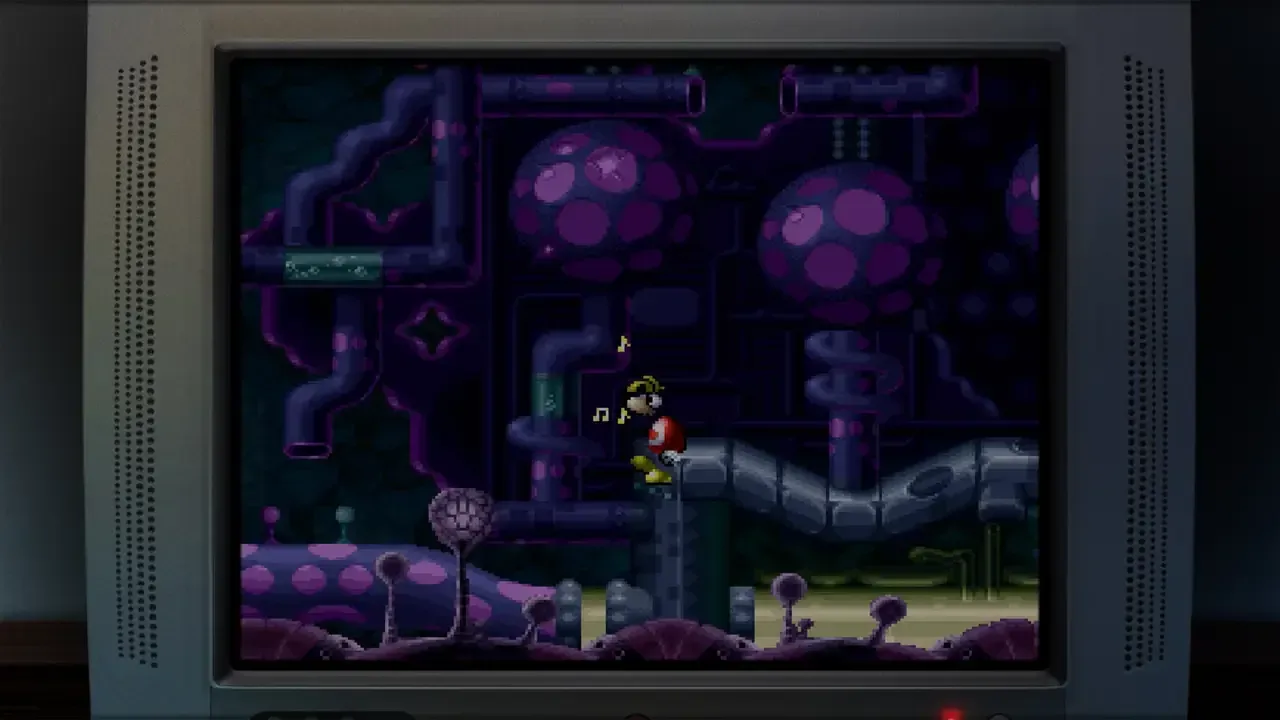
The big problem is that calling this a "collection" of any kind feels like a misnomer. There's only one game here, the first one, in five different variants. So, in theory, if you want to get technical, it does collect them together, but that's the kind of legalese best left to trivia nights.
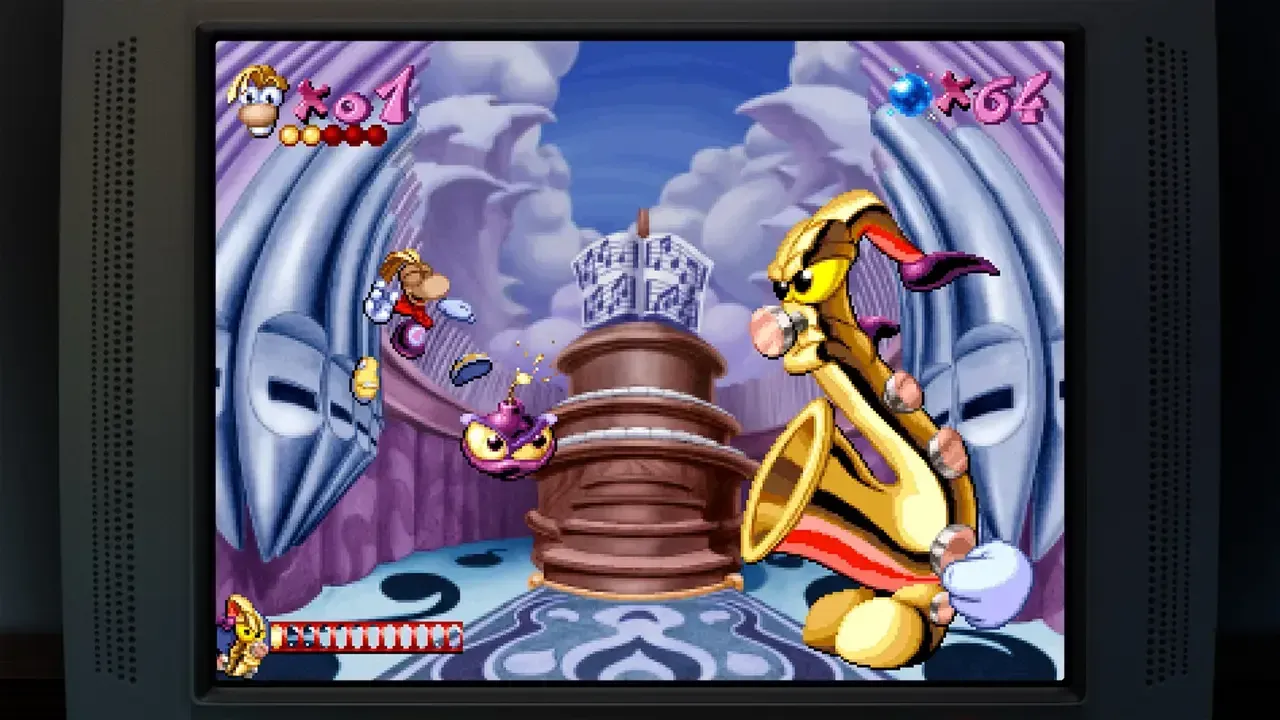
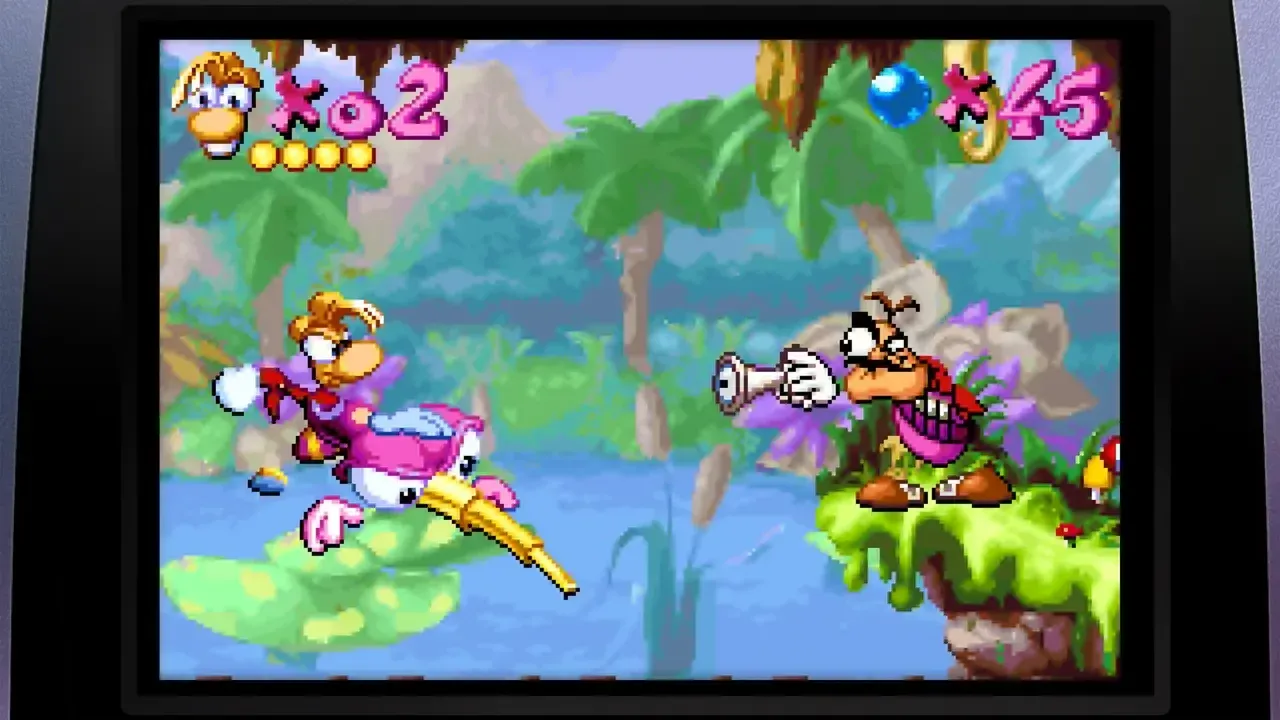
The versions included are an early prototype, which looks and feels nothing like the finished product; the Atari Jaguar version; the MS-DOS classic; the PlayStation 1 port; and the Game Boy Color and Advance variants. For completionists, it is nice to have them all in one place, especially once the physical media release gets here.
But there's very little reason to play each version for more than an hour. In some cases, even that is pushing it. Most variants feel identical, differing only in visual fidelity or responsiveness. The MS-DOS version is my favorite for nostalgic reasons, but when you put it side-by-side with the rest, you can tell it's the most polished and functional edition of the lot.
To Ubisoft's credit, each version has trophy integration, and they're easy to pick up and play at any point. On a purely technical level, Rayman's 30th Anniversary is full of love and care for the source material.
Even the SNES version, which never saw the light of day, gets a moment to shine. But be warned, it is rough and unfinished, barely more than a prototype. For those who care about game history and the process of developing this art, it is a beautiful piece of wonder worth preserving. For others, less so.
As for accessibility, Ubisoft has ensured that modern gamers aren't subjected to the horrors of yesteryear too badly. You can now save at any point, rewind the clock to avoid damage or death, and there is a helpful assortment of cheats to keep you going if you're really stuck.
So how does Rayman hold up after all this time? Pretty well, surprisingly! It's still an imaginative, wild platformer that showcases the high bar Ubisoft once set for the genre. I would even go so far as to say that apart from Rayman Legends, the series never reached the same heights as this first unique flight of fancy.
Sadly, the 30th Anniversary features a colossal misstep that brings the entire experience down. The original soundtrack by Remi Gazel is gone, replaced by a recently made mix that neither fits the theme of the original experience nor is even fully complete. At times, the game is just silent!
It's an immense source of frustration, especially considering how comprehensive the rest of the package is.
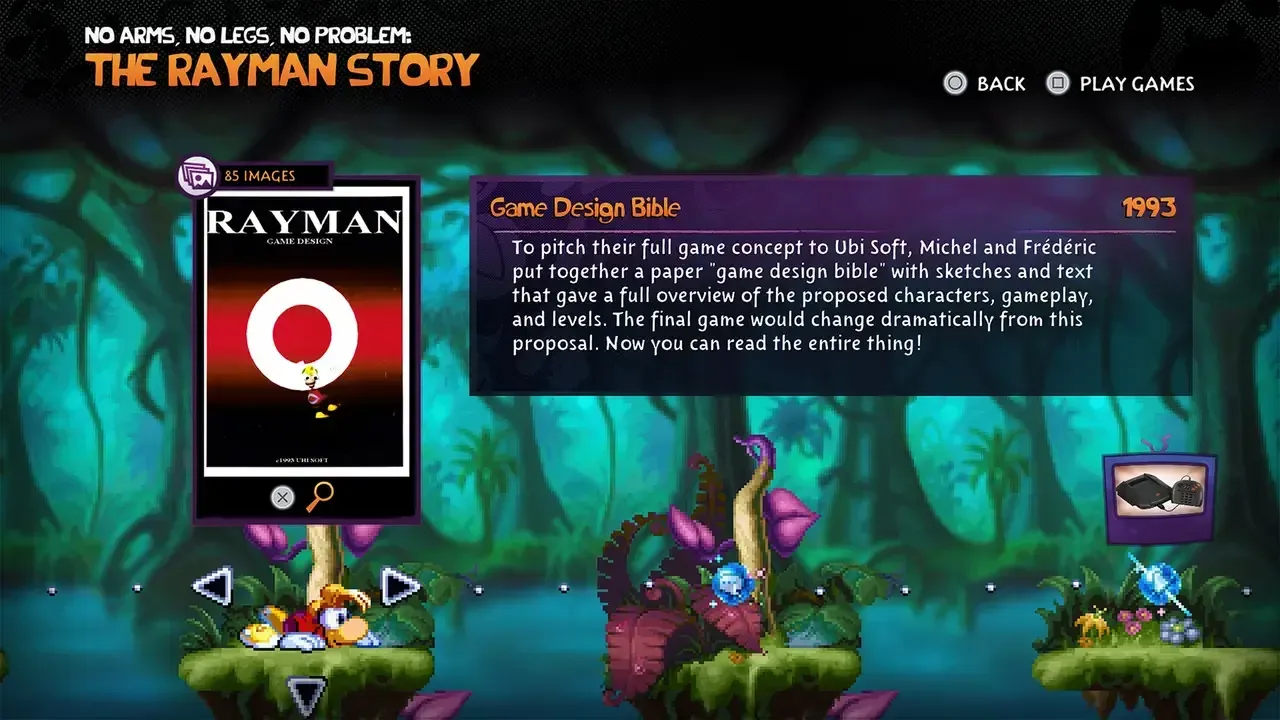
Luckily, there are still things to enjoy past the musical disappointment. The Rayman Story is a terrific, though quite short, documentary on the making of the classic title. The original game design bible, a paper on how the intended project will play, is a tremendous bit of history that's essential for devotees of the art.
Then there's the treasure trove of concept art and interviews, all of which round out the package into a reasonably comprehensive whole. It's not quite the celebration I expected, and bits of it feel like it was put together in a hurry, but there is a lot to love here nonetheless.
I hope that, down the line, Ubisoft will revisit its iconic mascot with more time and effort, especially when it comes to the soundtrack. The game itself is still rock solid, and the accessibility features are more than welcome. But it's hard to recommend this to anyone but those dedicated to learning more about game history. Especially as it's one single game, albeit "collected" from various iterations.
If you like Rayman, you should look into getting a copy, especially the physical media release, when it arrives. Preservation matters, and I'm glad Ubisoft understands that.