
Saros is a challenging, but accessible triumph
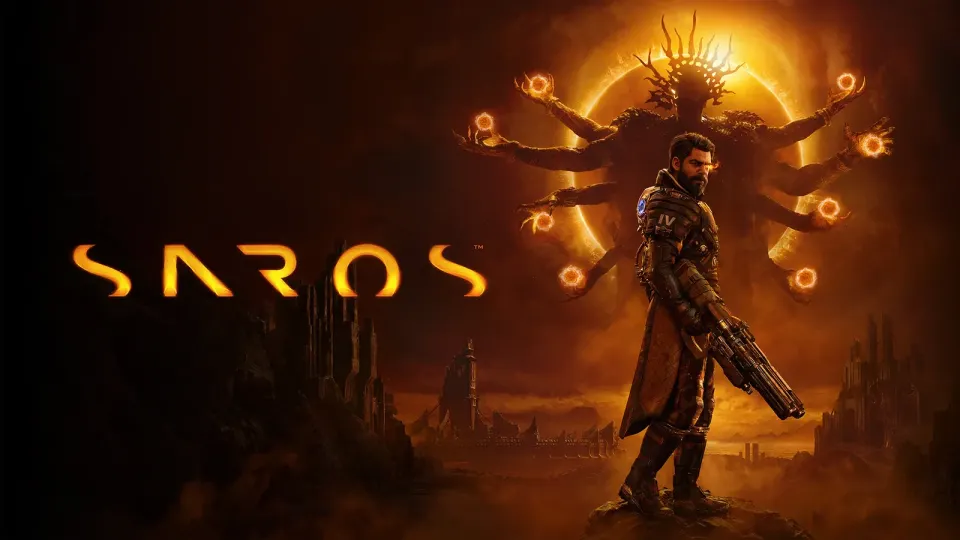
A perfect marriage of difficult and accessible, Saros is a brilliantly designed and majestic sci-fi nightmare that is as compelling as it is challenging.
Region Free rating
Version: Digital retail review code provided by the distributor
Independence & Ethics
Region Free is entirely reader-supported and maintains full editorial independence. For more on my scoring and standards, see the Review Guide.
I'm a huge fan of Housemarque. I consider their 2013 game, Resogun, to be a near-perfect title in the same league as Tetris. I love bullet hell shooters, and there isn't a space dystopia that I haven't liked yet.
In short, I should have been the ideal audience for Returnal, their big PlayStation 5 title from 2021. Sadly, I couldn't get into it. It was too vague and unforgiving to the point that its own inaccessibility felt like a point of pride. At least until Housemarque finally relented and added things like the ability to save your game.
But even then, something about the dark, often difficult-to-parse experience never sat well with me. I admired the ambition, even as I couldn't fall in love with it.
Five years later, Saros is the logical next step and a kind of spiritual sequel to Returnal. It represents every lesson Housemarque has learned from its history with the genre, and stands as a staggering leap in design and accessibility for not just them, but the entire genre.
In essence, Saros is the perfect marriage between challenge and accessibility that should change the way we think about difficulty in the future.
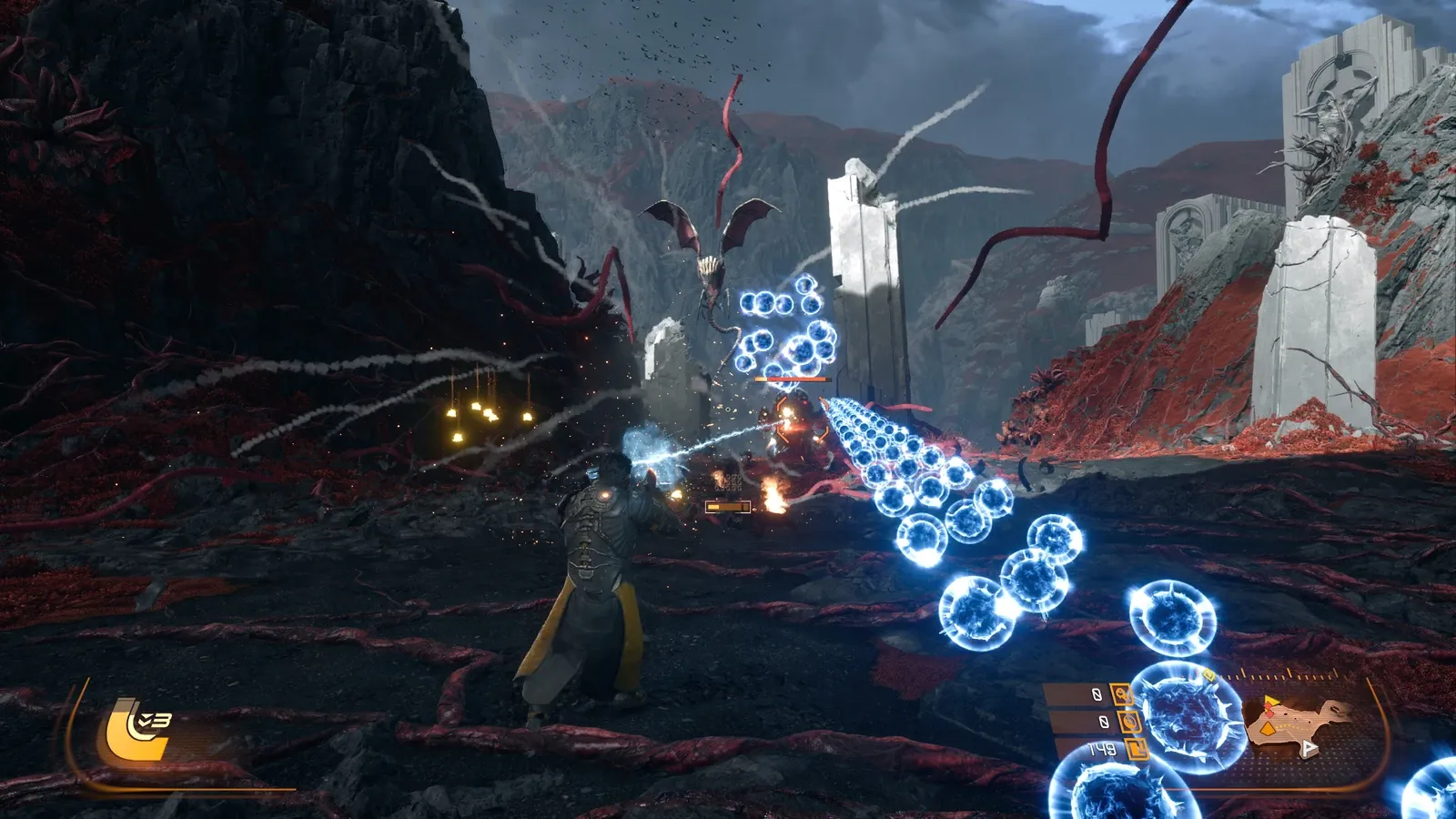
The plot of Saros is easily its most disappointing aspect. The narrative unfolds in fits and starts between runs, where our hero Arjun (Rahul Kohli) uncovers audio tapes and encounters survivors on the inhospitable alien world of Carcosa.
These logs are very much from the Resident Evil school of note-taking, where the messages grow more unhinged the further Arjun progresses in his exploration of the planet.
It's not hard to guess how any of the stories end up, and the ranting and raving start to repeat themselves before the end, yet there's no denying that Housemarque has once again crafted an evocative and often distressing experience. It's just that a lot of the story is so piecemeal that to really get any impact out of it, I had to read every log over again between runs as if it were homework.
The setup is similar to Hades, where Arjun returns to a unifying hub to gear up, upgrade his skills, and check up on any major changes that have occurred while he was away. Unlike Hades, the characters have far less dialogue, and after a banger opening act, Saros settles in for long stretches of frustrating silence and drip-fed story beats that rob the story of its power.
At worst, depending on how much you struggle with certain bosses or runs, the story in Saros hits a wall where everything remains static for hours on end. Characters sit silently in place, and no new codecs show up until you pass a certain boss or level marker.
By the end, which I hit at the 20-hour mark, Saros provides such vague and intentionally opaque answers that it's a good thing the gameplay more than makes up for narrative shortcomings.
It's frustrating because the opening act of Saros is so fantastic. The game kicks off with a bang, as Arjun falls in battle and awakens with no memory of how he survived or how long it's been. His team is slowly falling apart, and everyone seems to have a secret or two that is eating them alive. Time itself feels broken.
Arjun chases after a lost love, while his teammates all harbor resentment and distrust towards him for things he may or may not have done. In a past life, one that unravels throughout the campaign, he made mistakes that now drive him with unrelenting fury.
The tone and style are evocative of films like Event Horizon and Prometheus, and Housemarque does a great job of playing up the anxiety and uncertainty that permeate every aspect of the doomed mission. There's a constant sense that something has shifted off its axis, and the world itself changes form at every eclipse. At one point, I returned from what felt like a brief run, only for my colleagues to berate me for being gone for hours, perhaps days.
It's such a compelling scenario that even when the story took a backseat, I felt compelled to explore the world to see how deranged it could get. Luckily, Kohli delivers such a charismatic performance that makes even the clunkiest bits of exposition feel riveting. His tragic protagonist is riveting, and the elements of Greek tragedy makes the struggles feel grounded and real.
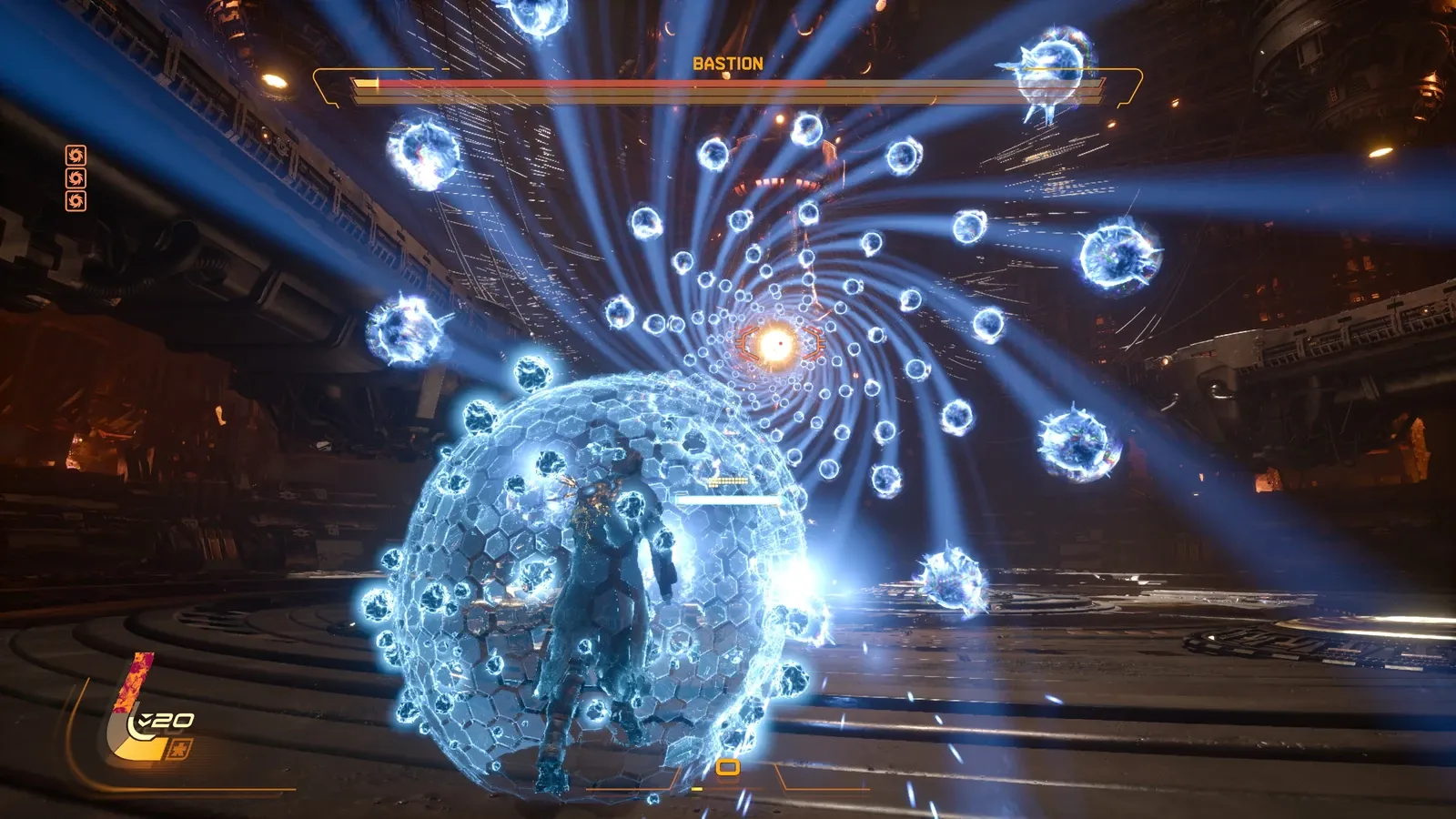
Saros shines in gameplay design. It is one of the most intricately crafted bullet hell shooters I've ever played. Housemarque has taken everything they learned from Returnal and amplified it to a staggering degree. It appears like a natural extension of familiar territory, but it must have been tremendously difficult to accomplish.
The gameplay loop is tradition honed to perfection: Arjun progresses bit by bit towards an ultimate destination, with each level revealing a new biome with new upgrades and enemy types. At the end of a run, which varies between 15 minutes and almost an hour, there is a boss battle with the guardian of that particular environment.
Enemies arrive in groups in arena-style battles, which are randomized based on the landscape and whether or not Arjun has triggered an eclipse. When he does, the world grows more hostile, while loot is more high-value, though with a greater chance of carrying curses.
For those familiar with bullet hells or Housemarque's previous titles, the gameplay concepts will feel like second nature. The game teaches the mechanics quickly through trial and error, and it's not long before you can recognize the patterns in the color-coded attacks.
Weapons unlock with each new level, and each gun comes with variants of its own. There's great joy in discovering which works best for you, and which cursed items you're willing to brave for ludicrous levels of damage. Weapon drops are still random, though you can learn how to reroll drops the further you progress in the story.
In true Metroidvania fashion, Saros reveals hidden paths and treasures every time you unlock new traversal abilities. Every time I hit a wall in progression, I could go back and easily start an earlier biome to farm for experience points or discover audio logs I had missed previously.
It's the sheer scale of things that proves overwhelming at times. Saros is easily the biggest game Housemarque has made, and it is often a breathtaking experience. Whether it's fighting off hordes of enemies with thousands of particles on the screen at once, or simply traversing through impossibly huge ruins in nightmarish surroundings evoking the imagery of Junk World, Saros consistently impresses in scope.
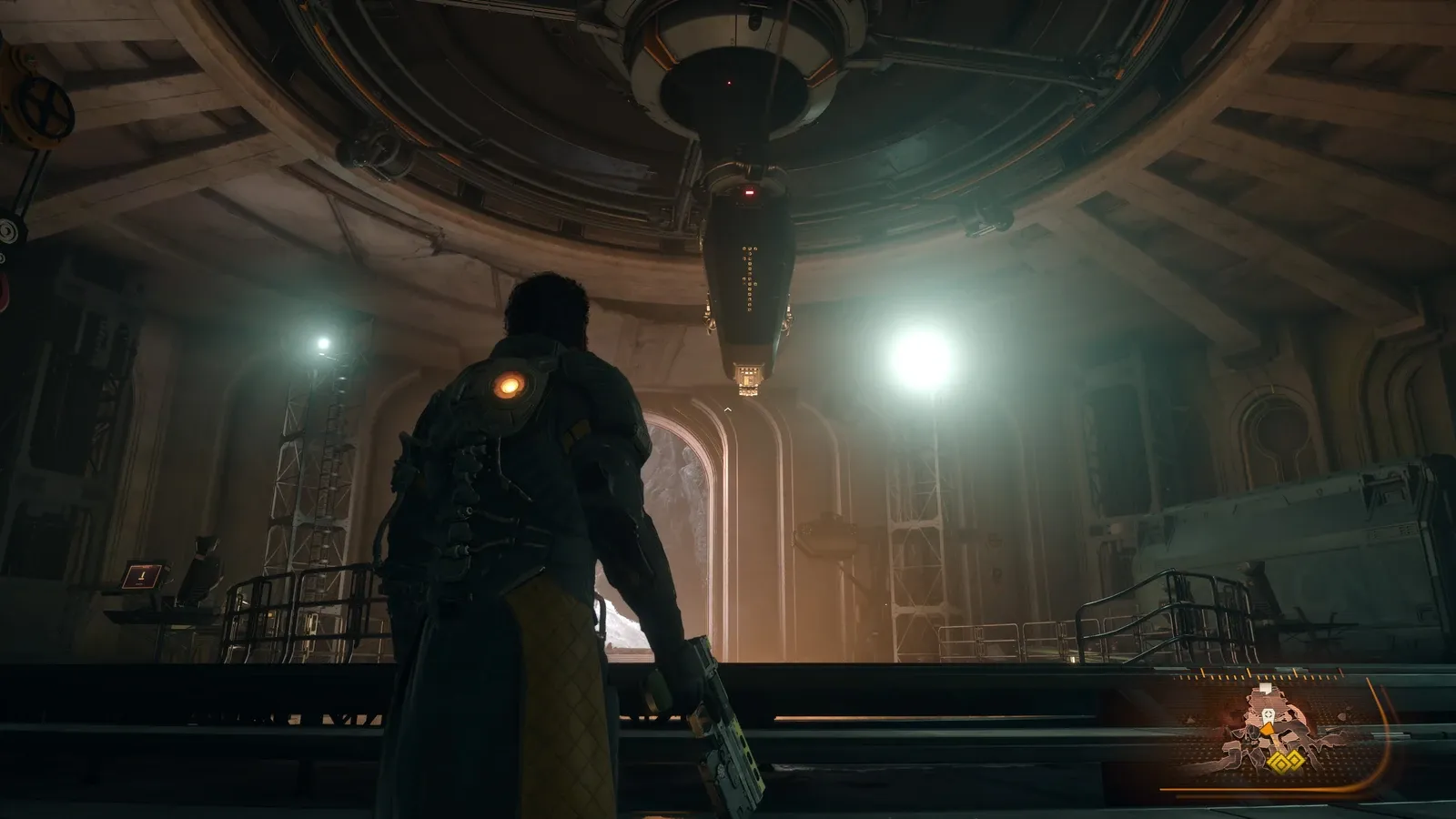
There is some bloat, though. Boss battles are still way too long for their own good, and especially towards the end, where the levels are already very long, grinding down their health bars starts to feel like a chore. They're still spectacles, especially when Saros embraces the wackier elements of the genre. I just wish they were a bit shorter.
It's here that Housemarque has taken its greatest leap forward. Saros is a difficult game, but also a far more forgiving one than their previous titles. While Returnal already showcased their thoughtful approach to audiovisual and controller accessibility, Saros expands on these elements tremendously.
In death, Arjun returns to his base, where he can upgrade permanent skill unlocks through Primary, the robot that may or may not be in charge of the entire mission. These unlocks range from making weapons more powerful to upgrading your stats and health. The more you grind, the more you can unlock – at least until you hit one of the walls, where you have to complete a boss battle to access the next skill tree.
It's a clever method to make every run engaging. Early on, death punishes by subtracting points from your overall pool. As you grow stronger, you can unlock abilities that negate some of this drain. Some runs will end up just as exploratory, where you test out weapons or look for secret drops of Halcyon, the currency for unlocking even stronger abilities.
Even then, if Saros proves too difficult, there is a path forward. Primary allows Arjun to modify mission parameters on the planet, which can change how much damage you do to enemies or how strong your armor is against specific types of attacks. Each modifier needs a counterbalance, so if you make yourself stronger, you have to select something that makes the world deadlier in return.
Alternatively, there's a setting in the accessibility options that lets you turn off the balancing requirement entirely. At this point, Saros can be as easy or as difficult as you want it to be. You can turn on a whole bunch (though not all) modifiers in either direction at once. At no point does the game punish you for this, which is remarkably refreshing.
Visual accessibility settings include options to recolor attacks to fit your visual needs, turn off HUD elements or modifiers, and remap controls. You can also toggle how the perfect reload mechanic works, which is great for people like me, who struggle with motor function in fast-paced games.
Oh, and do play the game with a pair of PlayStation-certified headphones. The 3D audio is incredible, as are the audio accessibility settings. I have a decent sound system at home, and didn't feel the need to try out the headphones for the first half of my review period. When I did, I never went back. It's that good.
Saros is a masterful experience from some of the finest designers in this genre. Every minute with it is a thrill. It features some of the best level design I've ever seen in a bullet hell shooter, and its sense of scope and scale is unmatched. It's a technical marvel that is unapologetically frenetic, yet never incoherent.
On top of that, it's one of the most stunning audiovisual experiences in years. A triumph of art design that made me stop dead in my tracks more than once just to appreciate every bit of detail in the backgrounds. Some sequences are so stunning, they set the bar for all other sci-fi nightmares to come.
But most importantly, Saros is a joy to play. It is one of the purest expressions of gaming ever made; a hypnotic ballet of carnage where the gameplay sparks joy with every fibre of its being.
The fact that it allows everyone to experience it on their own terms makes it all the better. Saros is a masterpiece that welcomes and challenges everyone in equal measure. It is one of the best games of this console generation that everyone should, and can, play.
As the Finns say: Torille!