



Every once in a while, a film comes along that speaks to its intended audience. How that takes form differs each time, but when you experience it, you just know.
At the Toronto International Film Festival of 2025, that film was The Furious, a gargantuan kung fu action epic from Kenji Tanigaki, starring some of the greatest action stars working in the business today.
During its first midnight screening, The Furious caused an absolute bedlam. The entire theater was packed, and every punch, kick, and impossible stunt was met with thunderous applause. At multiple points, I kept thinking that surely this was it. This was the watermark where the film peaks. It will now lose steam.
That moment did not come. Instead, The Furious doubled, tripled, quadrupled down on its promise of incredible action with every passing minute. When the final setpiece began with a shoutout to Sergio Leone, the audience roared so loud that it overpowered the sound mix.
The next morning and well into the afternoon, all anyone could talk about was that screening. Walking around the festival grounds, I spotted bleary-eyed friends and colleagues, all of whom knowingly walked up to ask, “Were you there?”
Out of nowhere, I received an opportunity to interview the cast and crew of The Furious the next day. I hadn’t slept, and I was still processing everything I had just seen, but I knew I couldn’t pass this by.
When I arrived at the hotel, I hung back to wait for my turn. Another journalist was packing his things. Quietly, so as not to disturb the proceedings, he turned to me and said, “That stunt with the ladder?”
I nodded vigorously, “The human pyramid in the ring?”
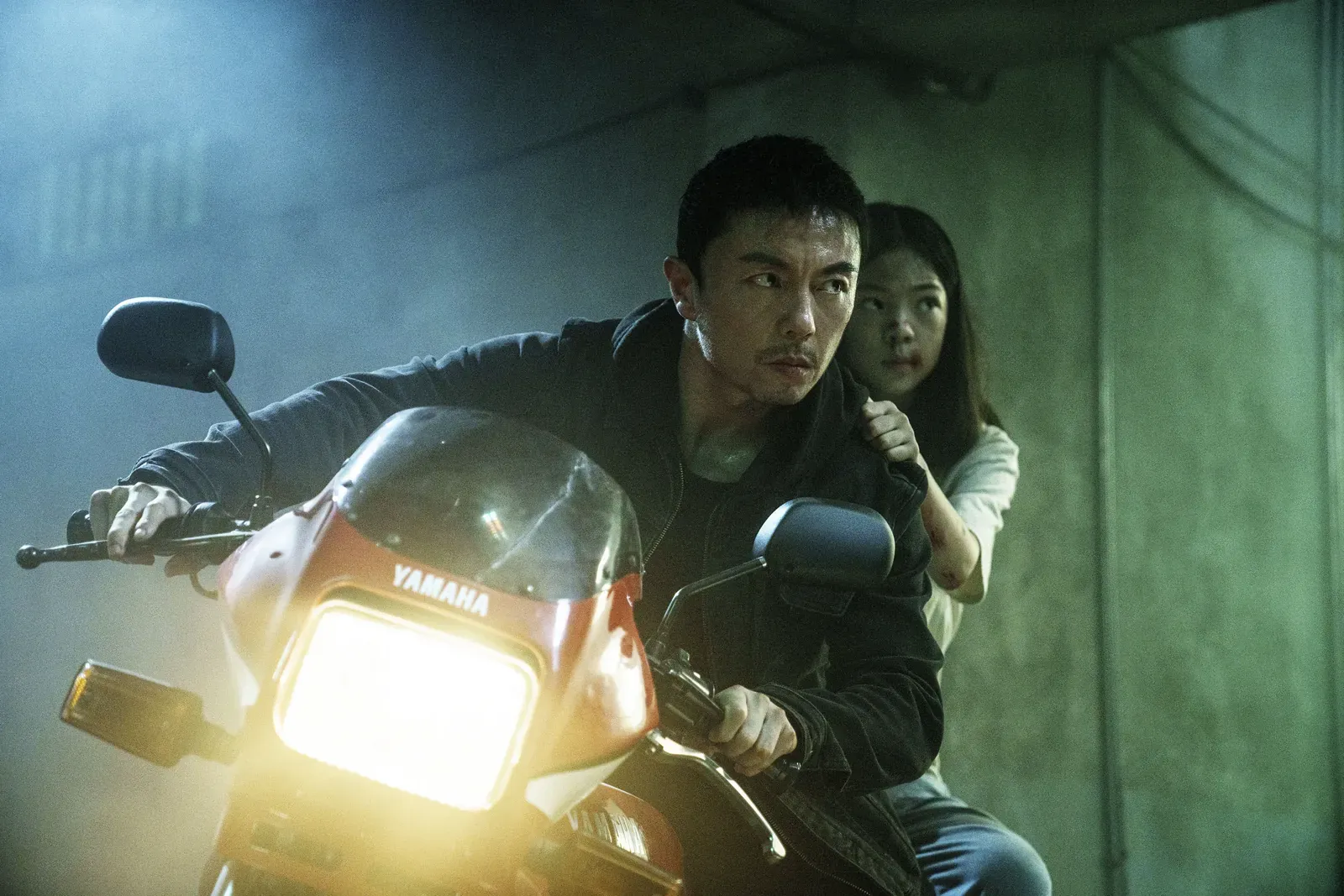
"The motorcycle?"
"Sledgehammer fight?"
He threw his bag over his shoulder, shaking his head as he went, “Fucking insane.”
It’s a remarkable feeling to bond over a film with strangers, especially when you’re neurodivergent. Small talk is impossible for me, and I lock up at events. But put me in a room with others who are as passionate about art as I am? I’ll go on all night.
That’s what makes action cinema so precious to me. It exists in the same realm as horror and musicals as something operating on an instinctual and purely emotional level. When talking isn’t enough, you scream, sing, dance, or punch. As genres, they follow a very similar set of rules, and as such, they help me understand the world a little better.
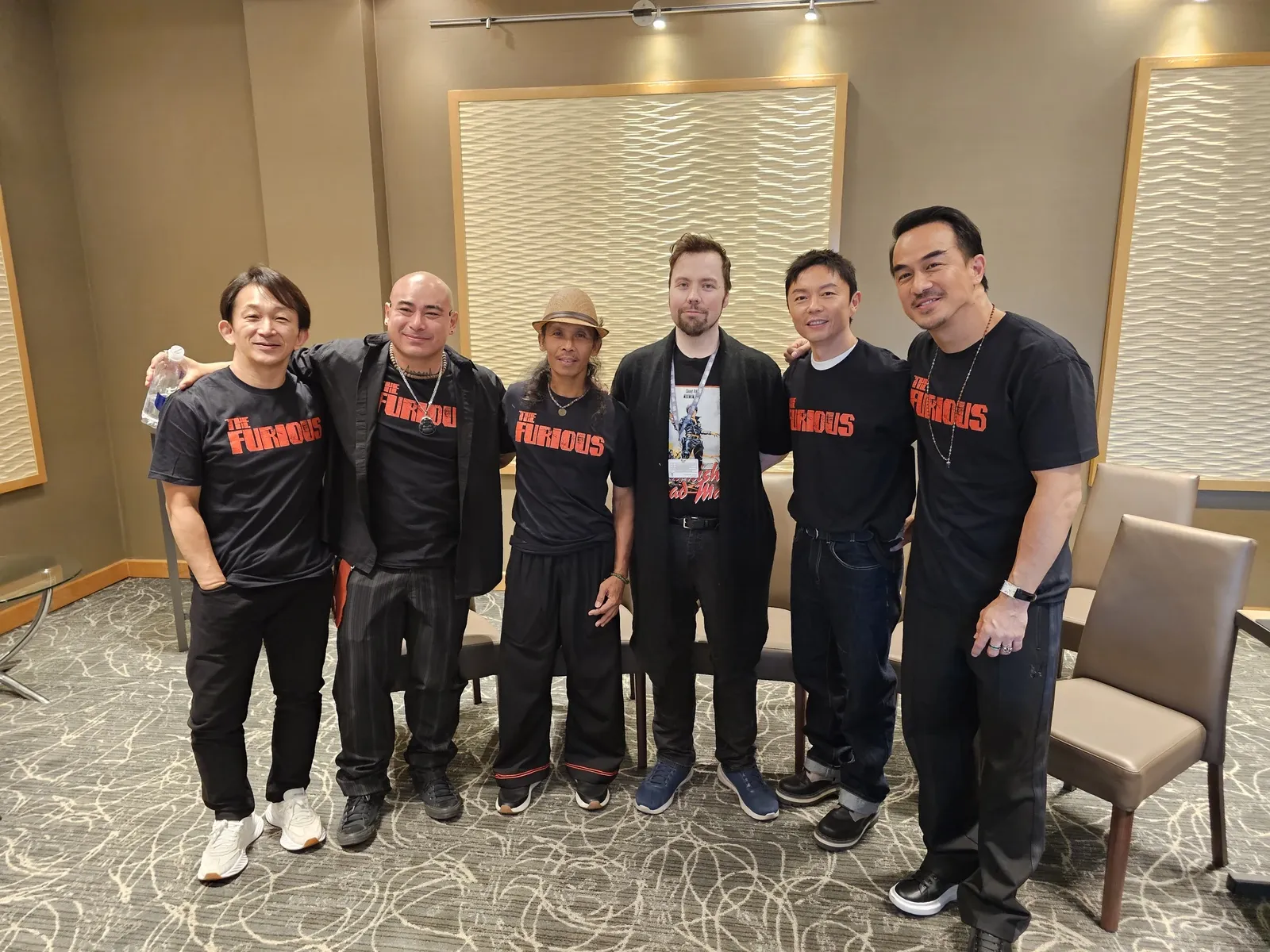
When I sit down to explain this to the filmmakers, Kenji Tanigaki, Joe Taslim, Xie Miao, Yayan Ruhian, and Brian Le, they all lean forward, genuinely happy to hear about our shared connection. On screen, they’re imposing and terrifying. In person, the atmosphere couldn’t be warmer and more welcoming.
Tanigaki, the director, beams proudly as he wrangles his cast into place. Taslim and Miao live up to their cinematic stature as magnetic leading men who make everyone feel included. Brian Le is immediate and charming, while the iconic villain of the screen, Ruhian, is like the chill uncle who everyone loves.
Our talk is chaotic and energetic. It has been edited and condensed for clarity.
Joonatan: It feels like it’s been a while since we've had a big team-up like this, with so many talents and so many things coming together. What was the process like when you started making the movie, seeing that you were going to put all this talent together? Where did that start?
Kenji Tanigaki: Almost two years ago, our producer, Bill Kong, called me. He said, "I want to make a martial arts movie, and I want it to be like 'X-Men'. The ultimate action movie!" That's how we started.
Bill, Frank Hui, and I wrote a story about a kidnapping in Southeast Asia. In the script, our hero, Xie, plays a mute, so we realized we needed a partner for him, and we knew it had to be Joe Taslim. His character, style of fighting, and acting are so different from Xie’s, but they work together so well.
I called Joe and flew to Jakarta to meet him. Frank wrote down a biography of the hero and sent it to Joe, who loved the character. From there, we made the script. Then I called Brian, Yayan, and Joey Iwanaga (who plays the villain). It was like recruiting the Seven Samurai! We are lucky to have such talented and lovely actors.
Joonatan: The story is big and wild, but at its core is this really horrendous trafficking plot. What was the process of writing something with real stakes that doesn't go too far in a realm that would put off audiences?
Tanigaki: Oh, it’s very hard to make that balance. Human trafficking is a very important issue in Southeast Asia. Many people understand immediately what’s at stake. But at the same time, as an entertainment movie, we need to exaggerate a lot of things. If it were anything else, the audience might need more time. But human trafficking is something everyone understands. His daughter is kidnapped, so two men team up and fight back. Because of the pacing in an action movie, we need these kinds of shortcuts.
Joonatan: You also mentioned the different fighting styles, and that’s something that stands out in the film as a huge part of the storytelling. Everyone is so different, yet they work together incredibly well. When you got on set, what was the process like in finding the rhythm with each other?
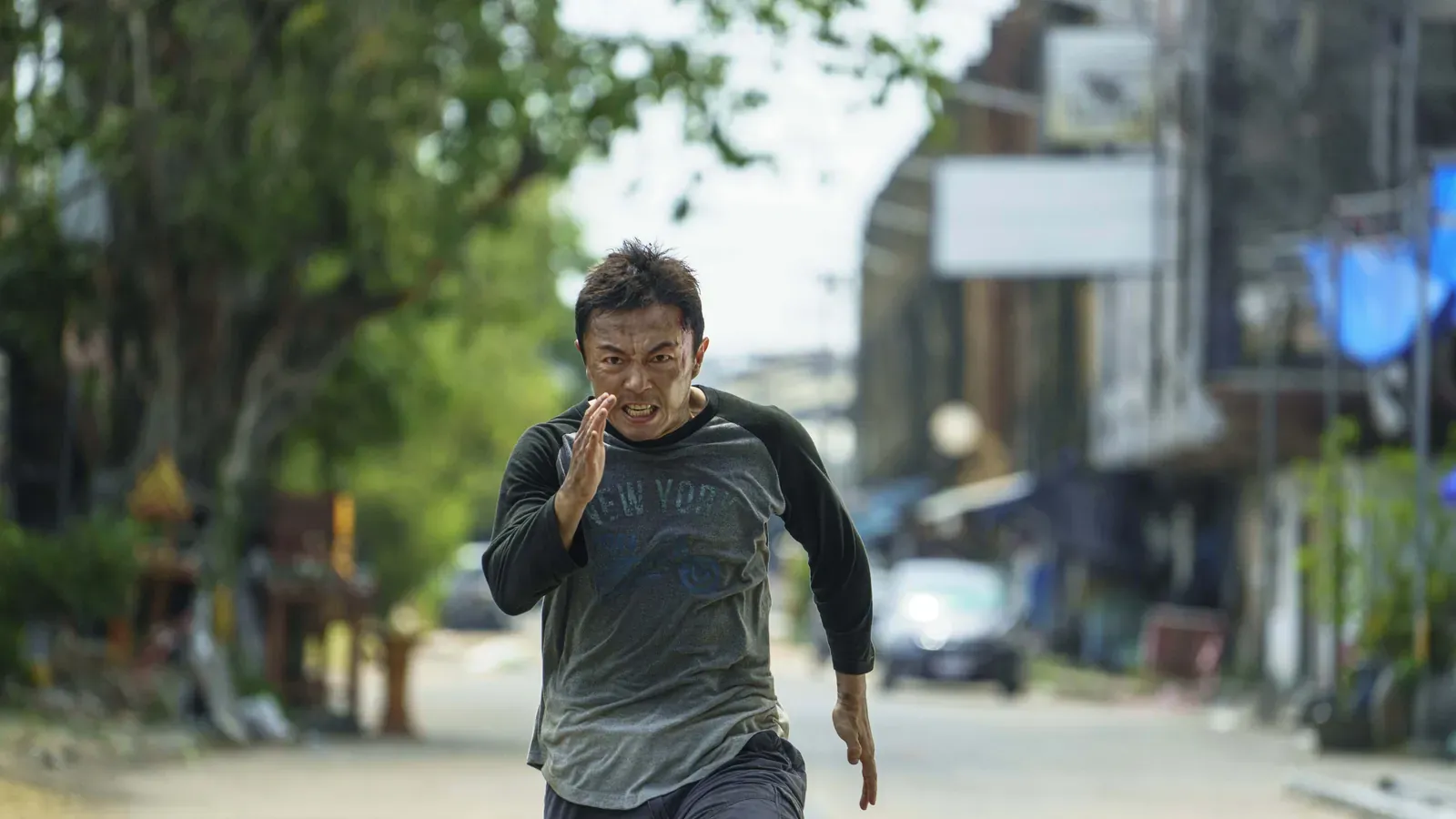
Xie Miao (translated): I think, first of all, we are all professional action actors. Everyone's action style is very clear. For example, Joe’s Judo is based on power, so my character is based on speed. We know what we want to express, and then when we cooperate, we will also incorporate some of our own characteristics into the action design. I think it can make each scene look very different, especially like the last one when the five of us were fighting. When we weren't learning, and the action team was demonstrating the movements to us, we could clearly see who was who because their movements are very characteristic.
Le: In the beginning, when we would be in the rehearsal room training together, I believe that was where we started bonding and building the chemistry. It felt like, as Kenji mentioned before, within the first section of filming, we're trying to find out who each character is. I believe a lot of the fights were shot in chronological order, or at least a lot of the main fights.
At some point, I think midway through production, there was no more rehearsing; it was just existing as the character. Those days towards the end, it was just the trust, chemistry, and energy we had among the cast, the stunt team, and Kenji. That's where I believe the universe took over and the magic happened.
Joe Taslim: I'll just add to what Brian and Xie said. Let's just put it this way: we’re so different in terms of martial arts disciplines. But if, for example, you're musicians, you play different instruments, but the core is music. So to understand the core, you don't have to start from zero. This is music; we just play different instruments.
So, to play in the band together, like jazz, you're kind of attacking each other, but you're also helping each other. That spirit is something I felt during the process of shooting. It was never about "I want to take over"; but instead all about giving. Whose character is most important in this fight scene? Whose character is going to have to dominate in that section? To deliver Kenji Tanigaki’s vision, we had to work together.
That's the only way, and I believe the hardest thing in shooting an action film, in my experience. I've made a lot of action movies; there were times when there was no rhythm or the rhythm was on different frequencies. You know, someone's playing hip-hop, the other is playing jazz, and you cannot collaborate.
But in this movie, somehow, it was very beautiful and magical. Everybody is super talented, and they wanted to make the best action movie of the decade, which is hopefully what we did.
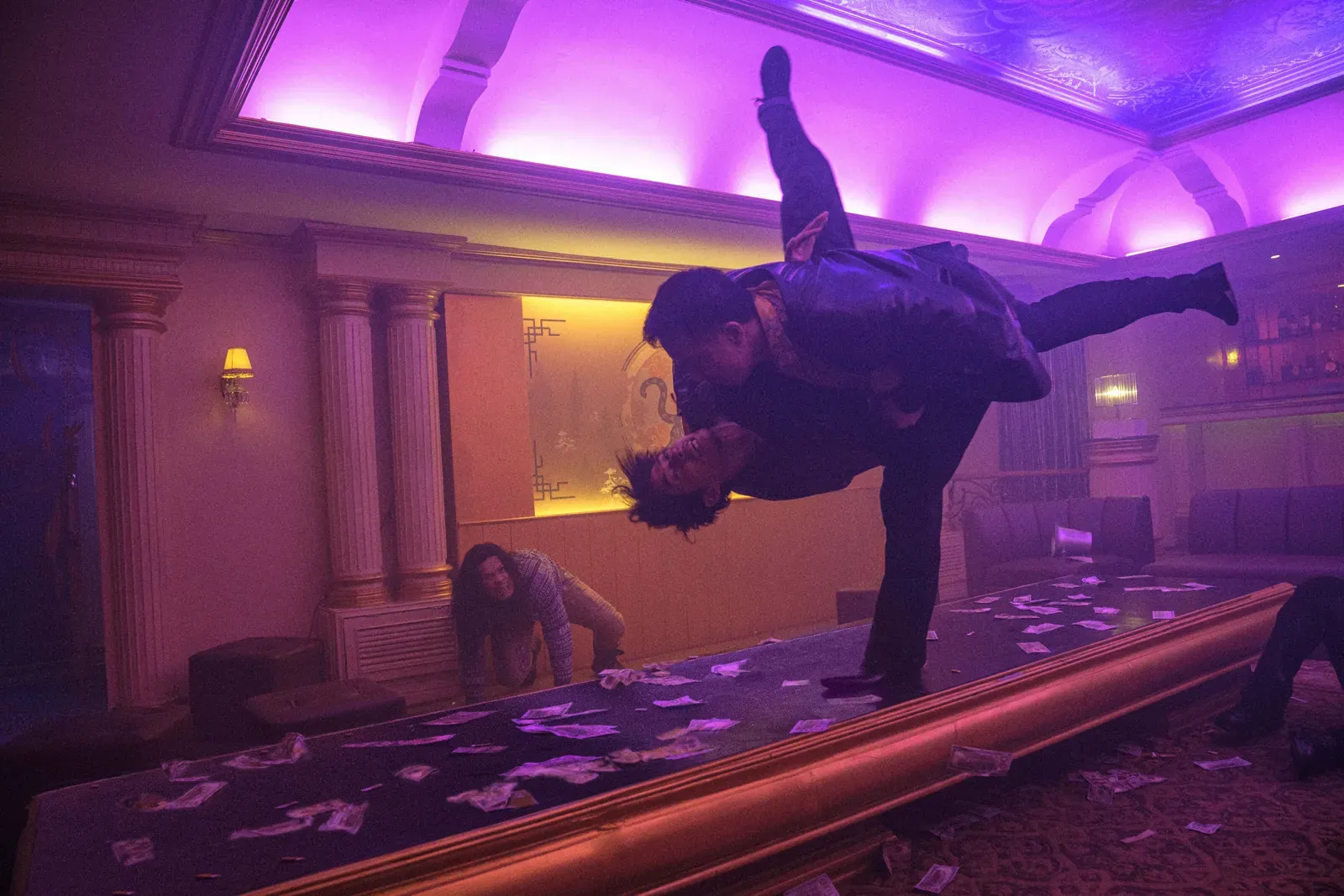
Joonatan: I want to talk about the big five-way fight at the end because it's something else. I haven’t heard a crowd react to something like that in my life. How long did that take to shoot?
Tanigaki: At least 18 days?
Le: 18 days.
[Everyone, almost simultaneously and exhausted, agrees: 18 days.]
Tanigaki: What I wanted to see was something like a Bao Jin Da. Because these five guys are from three different parties, the brawl grew as we went along.
[He waves his hands and points at each of his cast members excitedly.]
“This guy and this guy work together, but this guy doesn't beat him, so this guy beats that guy, and that guy can beat him!”
Not having just five guys from five different teams, but five guys from three different parties makes it interesting. That way, we can circle each actor and see that it’s not a stunt double. We can see their face. So, it's very hard, but nowadays I feel the audience wants to see the actor struggling. That's what I want to watch, and everyone here can deliver on that. It's a very, very memorable moment.
Joonatan: The beginning of that fight feels like a culmination of all these elements of Hong Kong thrillers and action movies, but also things like Italian Westerns. It’s such a euphoric moment to experience in a theater.
Tanigaki: Yes, it’s our Sergio Leone moment.
Joonatan: This is particularly for Yayan, but you have played some of the best villains ever, and you always seem to have such a good time doing it. What is the joy of playing memorable bad guys like?
[Ruhian listens intently, leans forward, and smiles like a Cheshire cat.]
Ruhian: I don't know!
[Everyone bursts out in laughter.]
Every movie, all the directors make me a violent man! But this is the real me!
[He leans back dramatically, almost folding over backwards in his chair, relaxed and without a care in the world.]
But I want to thank Kenji so much. The Furious is, I think, the best movie I’ve done. Thank you.
Tanigaki: He’s such an icon, right? The contrast is so great.
Le: He’s the sweetest person in the world, and on screen, he’s the scariest person imaginable.
Ruhian: Thank you.
Joonatan: Are you already talking about the future? Because I would watch a hundred more of these.
Tanigaki: This is a crazy movie, but at the same time, it’s a beautiful movie. And I hope it has a longer life. Because sometimes, even when the big martial arts movies are very good, nobody remembers them a year later. People like Buster Keaton and Charlie Chaplin, even now, I can enjoy their films. So, I hope ours has a long life, like a classic.
Joonatan: When I was a kid, I remember people passing around first VHS tapes, then DVDs, going, "You have to see Fist of Legend" or “Legend of the Drunken Master, you’re welcome.”
I think that when my nieces and nephews get a little bit older, it’s going to be me showing them all of these classics – including this one.
Tanigaki: What a good education!
The Furious arrives in theaters on Friday, June 12.


