Distributor provided a review copy.
I wish I could love Metroid Prime 4: Beyond more than I do.
There are moments in it that are superb, the kind that Metroid games are made of. They speak of a better and more focused game that somehow got lost in a sea of ideas and iteration.
When Metroid Prime 4: Beyond settles in and allows the player to explore the finely crafted and intricate levels on traditional terms, it encapsulates every promise this next evolution of the series could become. Sadly, those moments are few and far between, and often strung together between empty open world sections that feel thrown in as a desperate attempt to catch a phase that has long since come and gone.

The problems start with the plot which, granted, has never been a strength for the series. Samus is called to help protect the Galactic Federation on an outskirt planet, where a forward base is under attack by space pirates chasing an ancient relic with powers to do... something.
Things go sideways early on and Samus, along with other members of the Federation, end up stranded on an unknown planet in a far-off galaxy with no way home. To survive, and hopefully return to where they came from, Samus and her newfound team must work together on a hostile planet to discover the secrets of an ancient civilization if they want to stop their new enemies for good.
It's very, very, very familiar and often tediously repeats old-school tropes to the point that you can practically finish sentences for characters well before they've even got started. Everything in the third act in particular is a tiresome repeat of plot twists and encounters that we've seen before too many times to count.
What's more is that Samus feels like a guest in her game. She's completely mute throughout the adventure, despite the fact that we know she can talk and has a defined personality through the decades of adventures on different platforms. The new characters, who aren't terrible, just don't measure up to an iconic hero like her.
As for the villains, well, they're total non-starters. When the final encounter began, I was actually surprised the game dared to pretend like it was some massive emotional even we'd been waiting for. I could barely remember the name of the bad guy, let alone why I was supposed to fear or hate them.
And no, there are no Metroids. They're mentioned multiple times and there's a hand-wavy thing about them actually operating things behind the curtain, but it's another weird step away from the elements that make this series so recognizable in the first place.
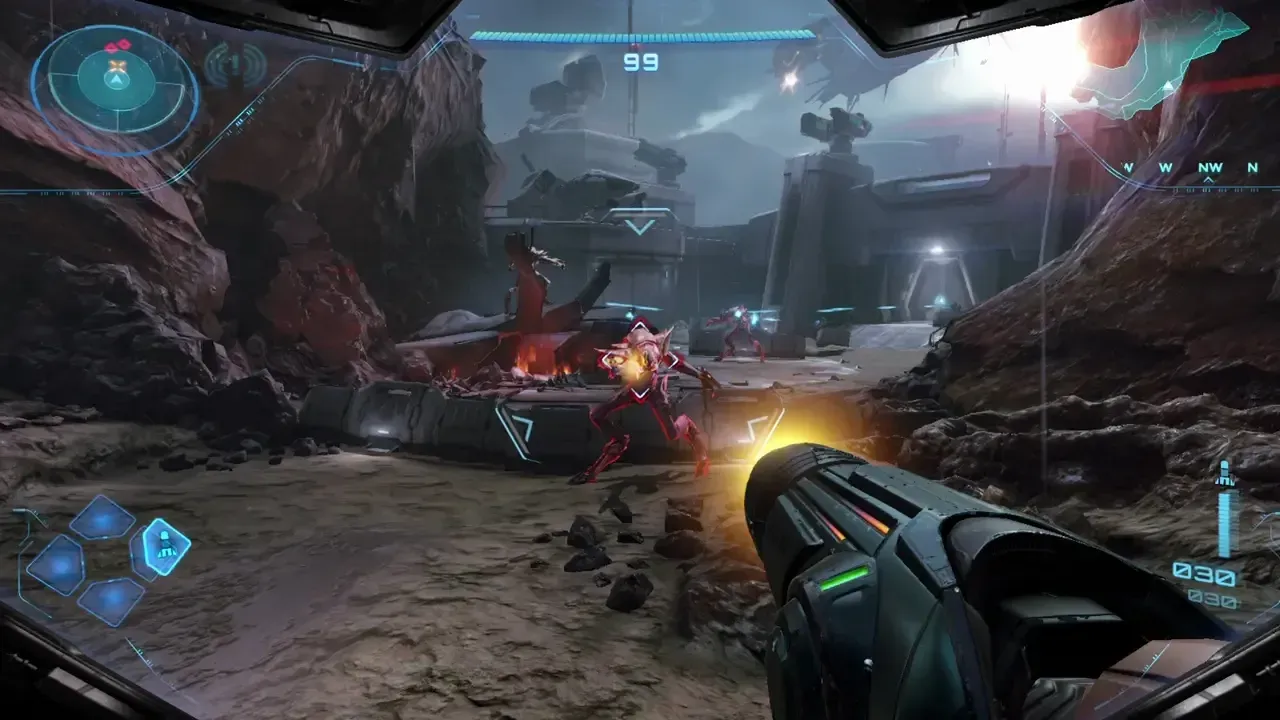
The gameplay is as solid as ever, and it's wild how well-refined it feels despite not making massive strides to redefine itself. Whether played with the Switch 2 Joy-Cons or a Pro controller, Metroid Prime 4: Beyond is heaps of fun to blast through. Combat is engaging, aiming feels fluid, and there's a contant sense that whatever you do the game registers your movements intuitively.
I'm no good at using the motion controls, but a friend who tested the title with me said they're among the best they've tried to date. I stuck with the Pro controller, which as quickly become my go-to for almost everything on the Switch 2. With it, Metroid Prime 4: Beyond felt like coming home to something familiar and fun.
On a technical level, Metroid Prime 4: Beyond is wildly impressive. Every element about it works far better than you could ever expect ouf of the Nintendo Switch 2, even with this new hardware. The game runs at 4K and 60fps without any dips or stutters and looks magnificent. There's also a 120fps mode with 1080p resolution, though I don't see it as necessary when the 4K version is this good.
In handheld mode, the game is just as impressive, constantly running smoothly at 1080p/60fps without any stuttering or slowdowns. This is the perfect showcase for what you can get out of the Switch 2 without sacrificing quality at any point.
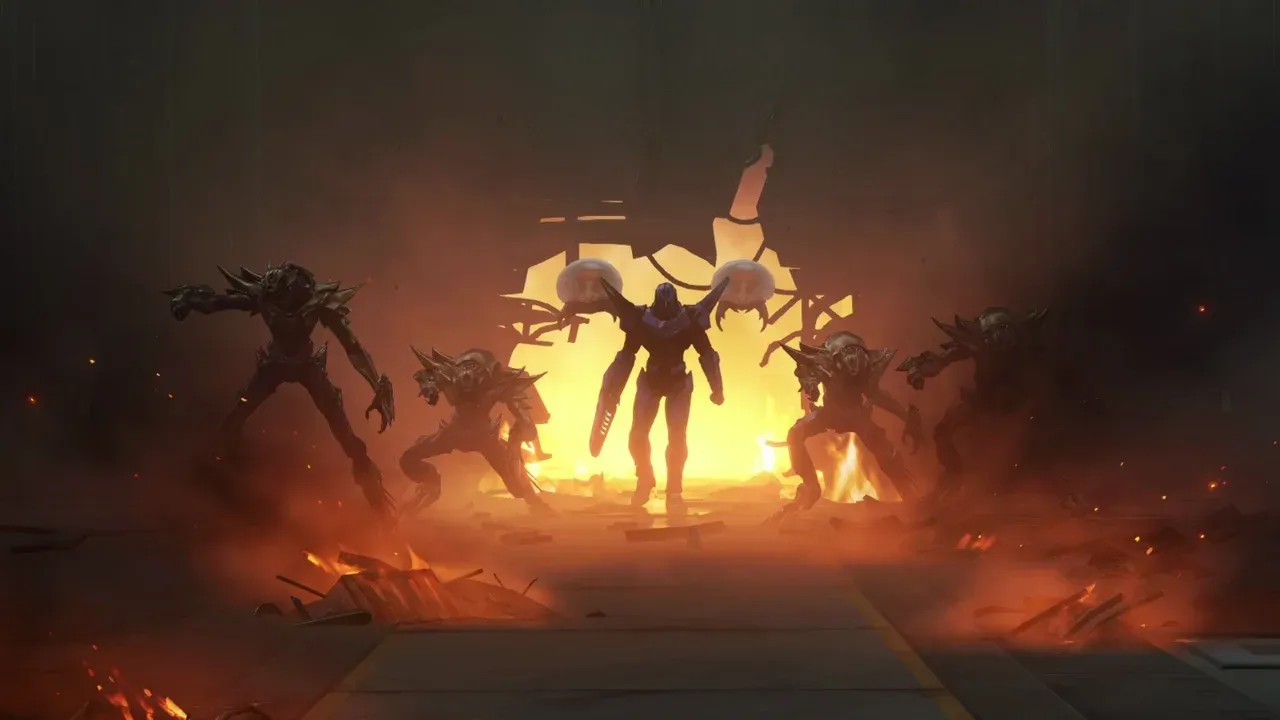
Sadly, it's the level design and the overall feel that is lacking. Metroid Prime 4: Beyond has an odd patchwork sensibility to it; as if multiple elements were designed in silos and only put together at the last minute before shipping the final product.
For example, the game begins with a traditionally linear action sequence where Samus goes over her skills and fights an invading alien horde. The combat is fun, balancing bullet hell -styled elements with strategic gunplay and maneuvering, while the exploration promises multiple pathways and secrets in the levels to come.
As the first region opens up, Samus picks up new skills that reveal fascinating flavor texts and worldbuilding of an ancient species that has been lost to time. Areas open up to reveal pathways that will require further visits down the line. So far, so Metroid.
Until you discover the bike and the desert that connects the biomes together, and you realize that Metroid Prime 4: Beyond is a semi-open world title, complete with every downside that comes with the genre.
Those biomes still have the traditional sense of Metroid-esque dungeons and levels, especially as you delve deeper into the late-stage gameplay. But to get there is a chore, especially as the game forces you to trudge through an empty desert without anything to do or fight. It feels like a placeholder for something else that never got finished.
Yes, the levels are still good, but none of them are as memorable as the series has been at its finest. When combined with the lulls in between, Metroid Prime 4: Beyond only highlights the necessity for this series to retain a tigher and more controlled experience; one that isn't hampered by the aimlessness of an open world.
I still enjoyed most of Metroid Prime 4: Beyond, especially when it dipped into the mechanics we already know and love. I'm also not opposed to a series reinventing itself, but that requires more drastic and braver measures than what we get here.
Now, Metroid Prime 4: Beyond feels like a timid test of something the franchise wants to be, but won't commit to. It is halfway between a brave new world and a classic retread of the past without ever fully becoming either one. It leaves the big picture a frustrating experience. Something that is capable of so much more, yet insistant that it won't try it out just yet.
Maybe in the future.