



Version: Digital retail review code provided by the distributor
Independence & Ethics
Region Free is entirely reader-supported and maintains full editorial independence. For more on my scoring and standards, see the Review Guide.
Multiple times during my review period with Zero Parades, I've found myself both saying and writing down a simple mantra: It's not Disco Elysium.
You will see it repeat here, too. It can't be helped. No matter how one tries, the comparison hangs heavy in the air, and the current iteration of ZA/UM does itself no favors by reminding us of it in its marketing.
Yet Zero Parades is neither a disaster nor another Disco Elysium. Instead, it succeeds in the impossible by being its own rough, unpolished, and fascinating thing. Not all the ideas are fully formed yet, but for fans of smart and challenging thrillers, Zero Parades is an essential experience.
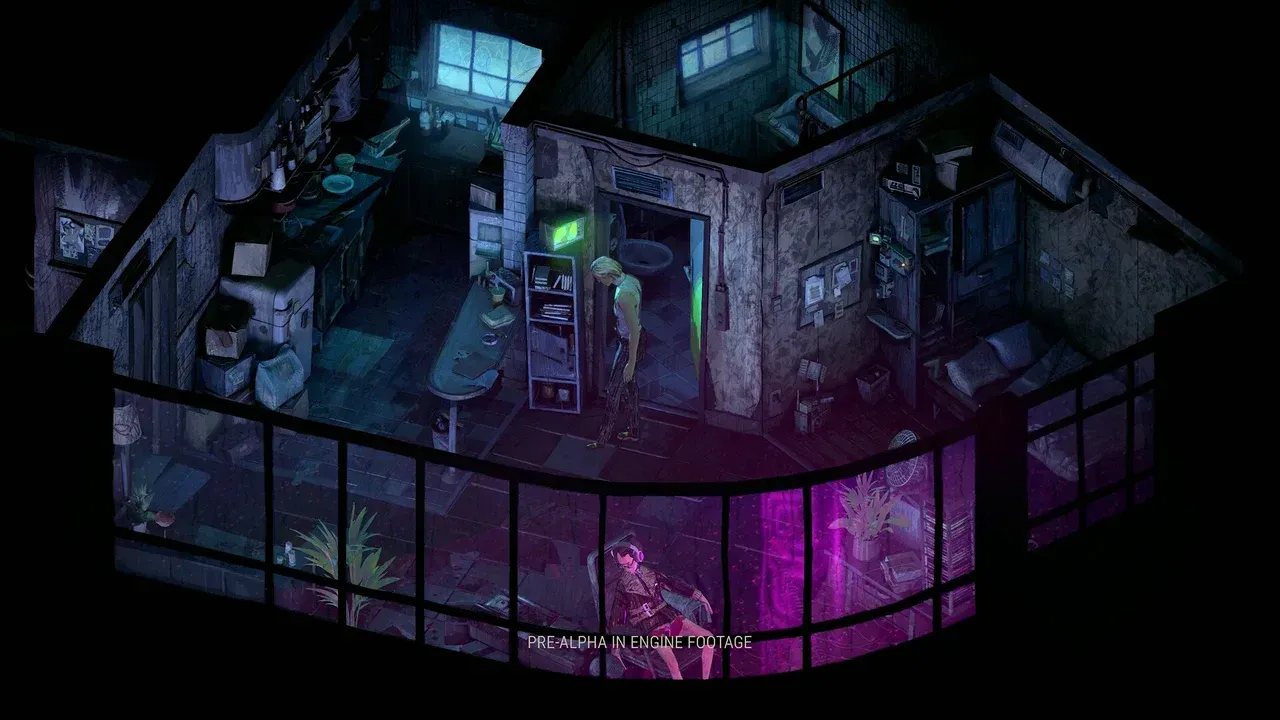
The protagonist is Hershel, codename Cascade, who was once a spy of sorts. They were even good at this thing until a job went south, and they had to abandon their friends. For that, Hershel's operators at The Opera put them in the cooler, out of business, and kept them there for years.
Then, one day, Hershel is brought back. Their double, Pseudopod, is catatonic. Someone got to them first. There's a record in the tape deck; it might be a clue. A vague note reads both like a promise and an omen. Whatever happened seven years ago did not go into stasis with Cascade; it simply waited, festering, for Hershel to return.
From there, Zero Parades unfolds more freely, yet with a similar strict linear story to Disco Elysium. In practise, this means there are far more routes to take, more people to talk to, and less of a sense of a direct, grounding purpose than in its predecessor. There is no singular body to focus your search on; corpses begin to pile up sooner rather than later for you.
The city of Portofiro is also much more alive than Revachol. It's also a harbor town, which means trafficked goods and political power that never flow into the hands of the working class. Around the city are the forces of the EMTERR, the World Bank, and the La Luz, fascist thugs. Some in the city cling to their traditions, others devour imported goods and television like it's their lifeblood. Everything is becoming digitized, and some hoard physical goods and media to protect their cultural identity and statehood. A single, hardwired phone line connects to a sex worker who operates around the clock. People are so detached that they call her for connection.
Zero Parades is an astute, smartly observed, and wholly realized rendition of the spy genre. It captures the very essence of its core tenets, and as such, paints a vivid portrait of our world as it is now. For those seeking rich and textured narratives in their gaming, Zero Parades is a feast. It is the clearest indication that whatever ZA/UM is today, Disco wasn't a one-hit wonder.
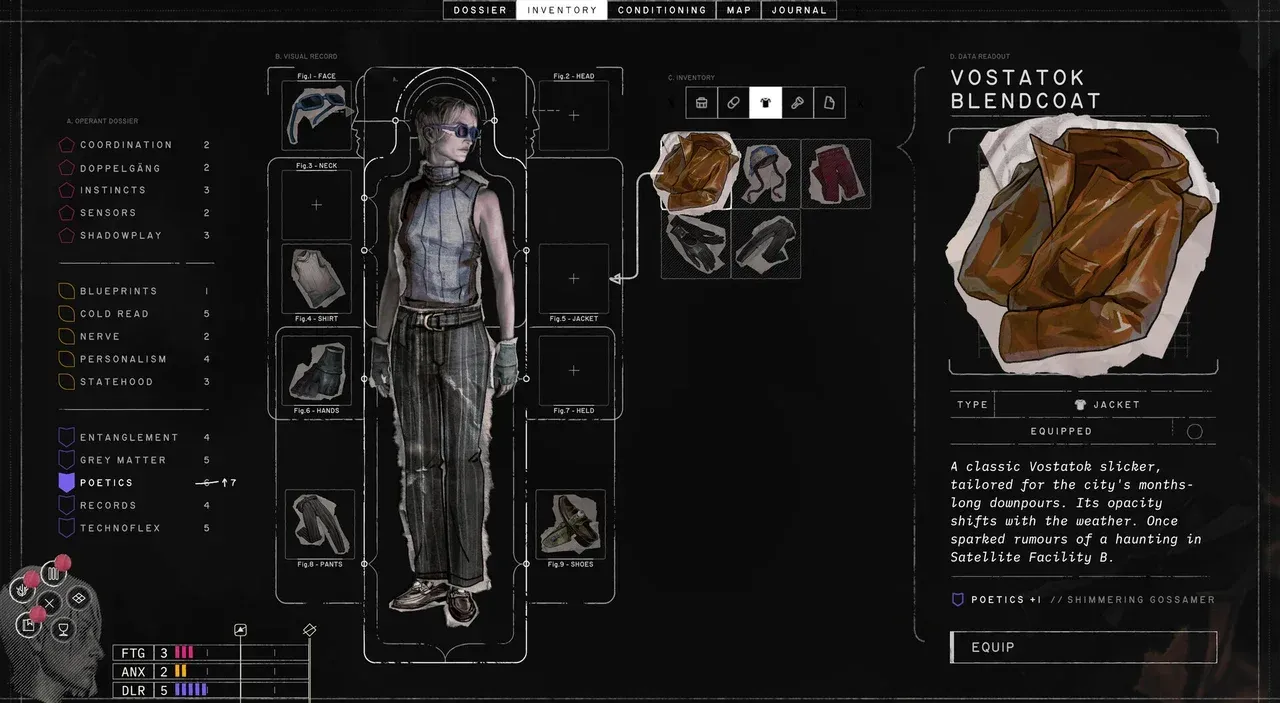
As a game, Zero Parades expands on the mechanics introduced in Disco dramatically. Gear and clothing make an even bigger impact, stats require more handling, and there's a greater dynamism between the world and the player. At times, it all feels like too much, and there are moments where I wish Zero Parades would step back and allow the story to breathe more freely.
It's probably a case of completionist folly, where I feel I have to experience everything to get the big picture. But part of the spy genre is that you never do. In the end, there's always something bigger pulling the strings. It takes a while to get used to the sense that no matter what you do, something or someone will get left behind. There's a brutality and an impressive dedication to genre in such definitiveness.
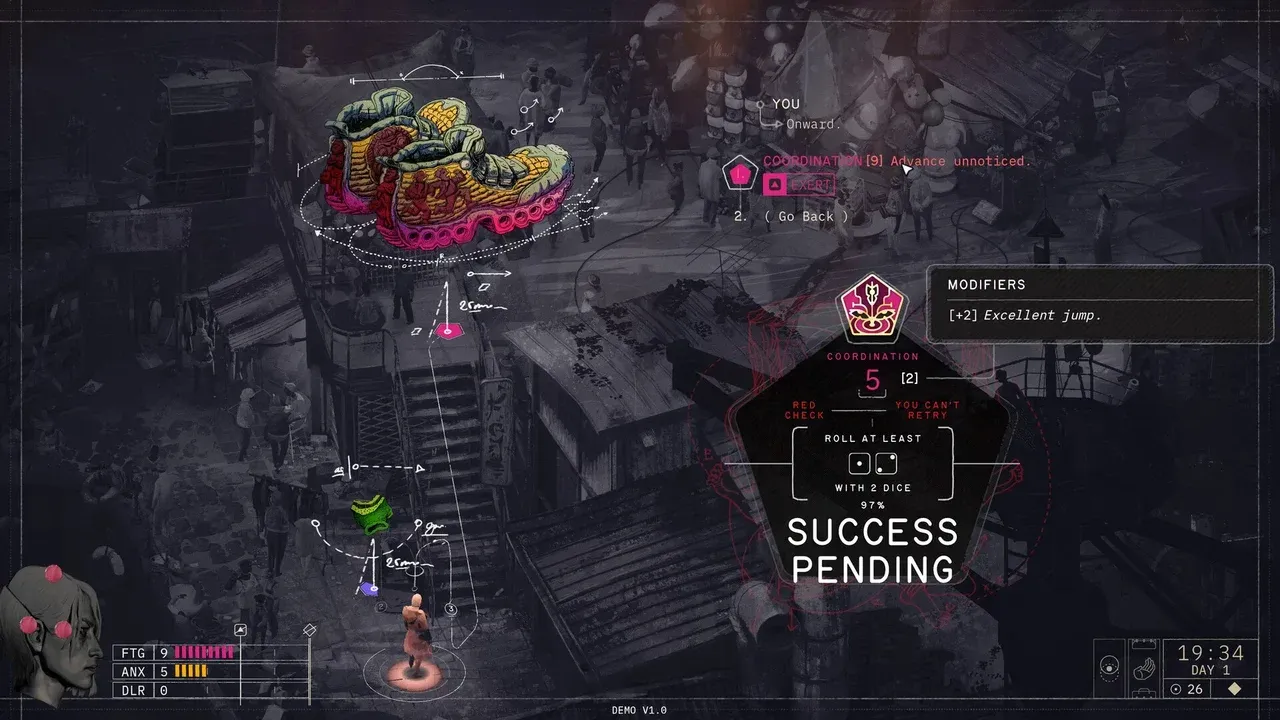
The skill system relies on three faculties: Action, Relation, and Intellect. They control subsets of your personality, which all live in a precarious state due to past trauma and the years out of the game. At any point, should your stress, paranoia, or fatigue rise high enough, you will lose a point from your base skill. It can be bought back, but at the cost of not honing your other senses.
Clothing and accessories raise points in specific skills, but it's not always clear why they impact a specific one. Similarly, a certain type of beer might raise your paranoia, or it might calm it. Apparently, Hershel has a favorite taste. I found these additions interesting, but often unwieldy. At one point, I was lugging around a massive amount of alcohol, smokes, clothing, and novelty cups, and it felt more like a JRPG than anything else. A clearer, more direct approach would have sufficed.
Skill checks work much like they do in Disco Elysium, although I felt the hand of God at play a bit more than I'd like. This means some of the throws and actions felt more dictated by what the game wanted me to do at that particular moment, rather than a game of chance, as it often is with dice. Sometimes, Zero Parades would not allow me to progress to a place I knew had more story in it, simply because it wasn't the right time. It's a limitation of the entire genre, not just this game, but it is frustrating nonetheless.
Luckily, dialog options still feel natural and fluid, and even failures make for interesting progression points. There is never a sense that any of this is unfair, or at least any more unfair than is intentional. As a spy under duress, it's meant to be difficult, but in a cinematic way, where drama dictates what works.
Key sequences require a multiple-choice progression path, where Hershel must use their skills and items to escape tricky situations or fight off pursuers across larger areas. These are some of the best moments in the game, and one of the most exciting new additions I'd love to see more of.
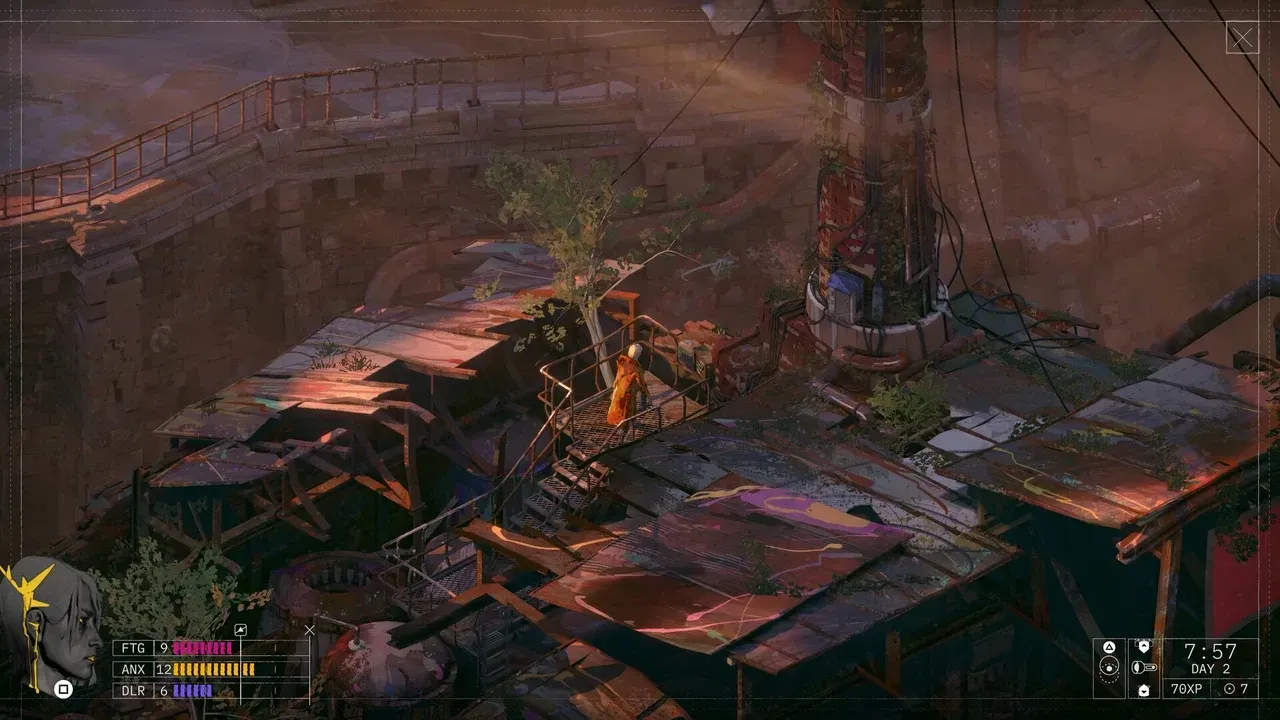
Sadly, on a more technical level, Zero Parades still feels undercooked. This happened with Disco Elysium as well, where the initial release still took a few years to perfect itself. The Final Cut is the version we all love, but I remember the long road there.
In that sense, I can forgive errors in dialogue, where the text doesn't match the audio, and it's hard to tell which is the final format the game uses. I can even work with odd item descriptions and the occasional moments where there simply isn't any voice work for whatever reason. Some of the voice acting is still rough, too. Hershel goes from great to awful often within a single scene, while others, who deliver incredible performances, have only certain lines narrated.
I'm willing to overlook these issues because the foundation is solid as a rock. Zero Parades had an uphill battle just leading up to the release. Many will write it off entirely because of everything that happened around the production. If they do, they will miss out on a tremendous, if still rough, spy thriller that treats its audience like adults.
It is a fantastic new start for ZA/UM. Almost a meta-level narrative of an operative coming back after abandoning their friends to make amends and figure out what kind of person they want to be in the future. At best, it took my breath away and made me shed a tear. Any game that can achieve that is something special.
Zero Parades is that game.


