

Version: Digital retail review code provided by the distributor
Independence & Ethics
Region Free is entirely reader-supported and maintains full editorial independence. For more on my scoring and standards, see the Review Guide.
Understanding your inspirations can make all the difference. If you know and love what you're emulating, parodying, or even flat-out copying, you're likely to make something interesting, even when it's not original.
Heavy Metal Death Can, the debut game from indie studio Krufs Productions, understands, embraces, and even, in certain key areas, improves upon its love for dated mechanics and the nostalgic vibes of early-2000s survival horror. Mechanically, it is a revival of the tank-control survival horror genre that saw its last hurrah with the hotly contested Resident Evil 0, and the sense of humor and urgency from games like Code Veronica and Cold Fear.
But look past the surface, and Heavy Metal Death Can doesn't just stand on its own feet; it is a smartly-designed, very well-written, and often terrifically scary horror game that triumphs on its own merits. You don't need nostalgia to enjoy what it does well in the present. For a modern audience, it is a throwback experience that smartly engages with old-school mechanics and structure and updates them just enough where necessary to create an illusion of the past for the demands of today.
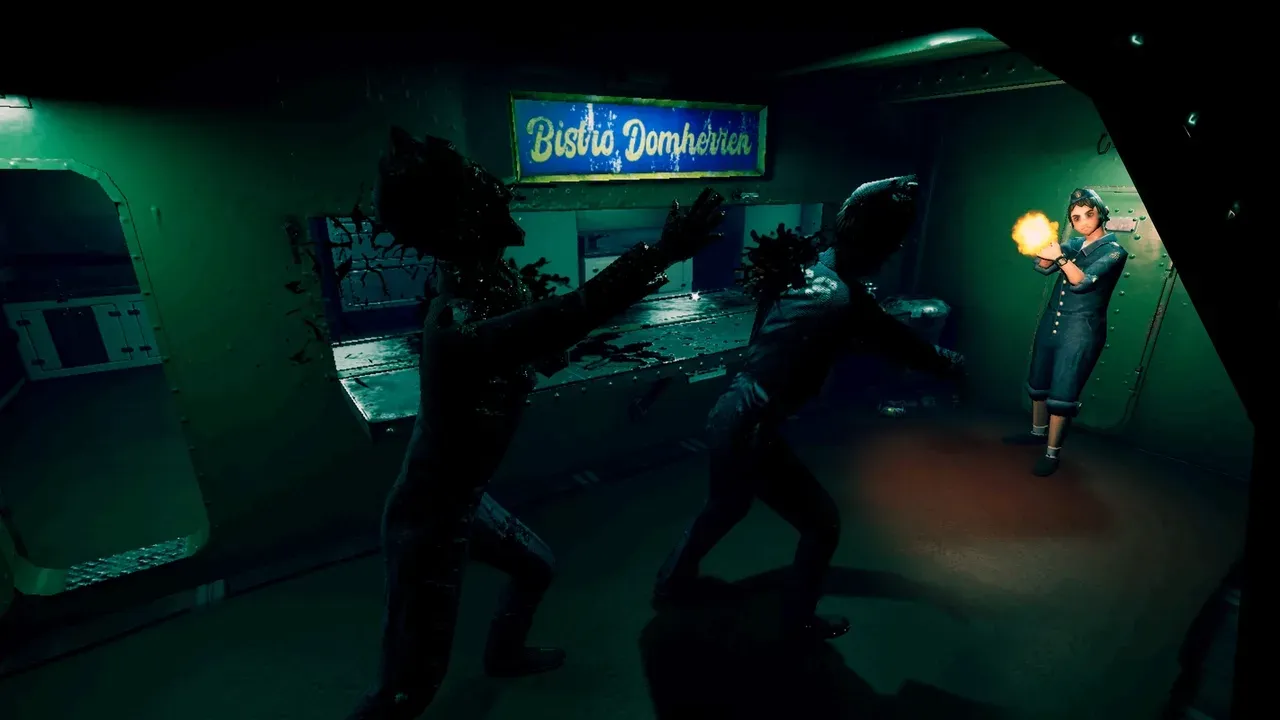
The setting is simple and brutally effective. The player wakes up in a Swedish submarine sometime in the 1970s on a routine mission at sea. The titular Heavy Metal Death Can has submerged in the murky waters of the Baltic Ocean, and communications have been cut to maintain secrecy. At some point, the crew came in contact with a strange organism, one that began to spread faster and faster the moment it was brought on board. By the time the player, a rookie seaman, wakes up, it is already too late.
There's a brilliant sense of helplessness and claustrophobia from the very beginning of Heavy Metal Death Can, and the sense of despair never lets up during the 5-hours-plus it takes to complete the campaign. Everything bad that can happen has happened, and there's a hopeless finality that permeates through the game.
Like in Resident Evil, you can discover notes and research papers left behind by crewmates, and they paint a bleak recent history of curiosity gone wrong. Unlike Capcom's horror saga, Heavy Metal Death Can isn't the story of malicious corporate overlords playing god, but working-class stiffs dealt the shortest end of the stick imaginable. Even in the bleakest moments, there's a sense of playful Nordic gallows humor, where death is met with a knowing smile, as if greeting an old friend.
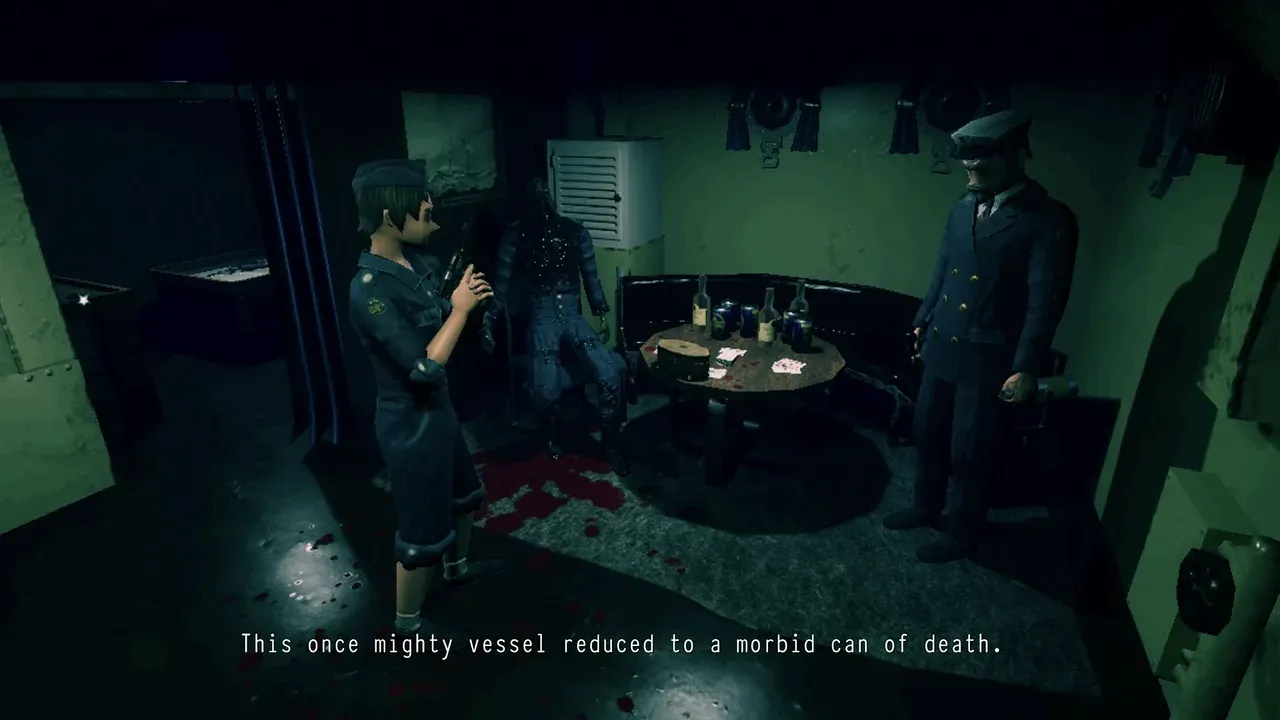
It's here that the writing truly shines, and Heavy Metal Can delights and terrifies in equal measure. Everywhere you look, there's a tremendous sense of time and place, one that evokes the bygone era of the Nordics emerging from the shadow of the Soviet Union, where bureaucracy was the lifeblood of the society. The mix of laconic statements, dry humour, and even poetic longing to see home bleed together into a unique mix that sets Heavy Metal Death Can apart from all other games in this genre.
The gameplay loop is familiar and exacting. You barely have anything to protect yourself, and the pistol that you do find amounts to a peashooter most of the time. Instead, Heavy Metal Death Can relies on wits, strategy, and the smart utilization of the tremendously cool flare gun, which will save your life more than once.
Developer Krufs Productions smartly leverages the submarine's strictly linear nature to brilliant effect. There's a constant sense of progression, even when you have to double back to open previously locked doors, and the fixed-perspective camera guides the player in the right direction at all times.
Yes, certain points can evoke the traditional dance of not knowing where you're pointed, as the camera suddenly shifts between screens. But for the most part, Krufs Productions has solved these issues with continuity in the control mechanism. As long as you're pressing the direction button while moving, the character will continue moving in that direction even as the camera switches to a new position. It takes a little bit of getting used to, but soon becomes like second nature.
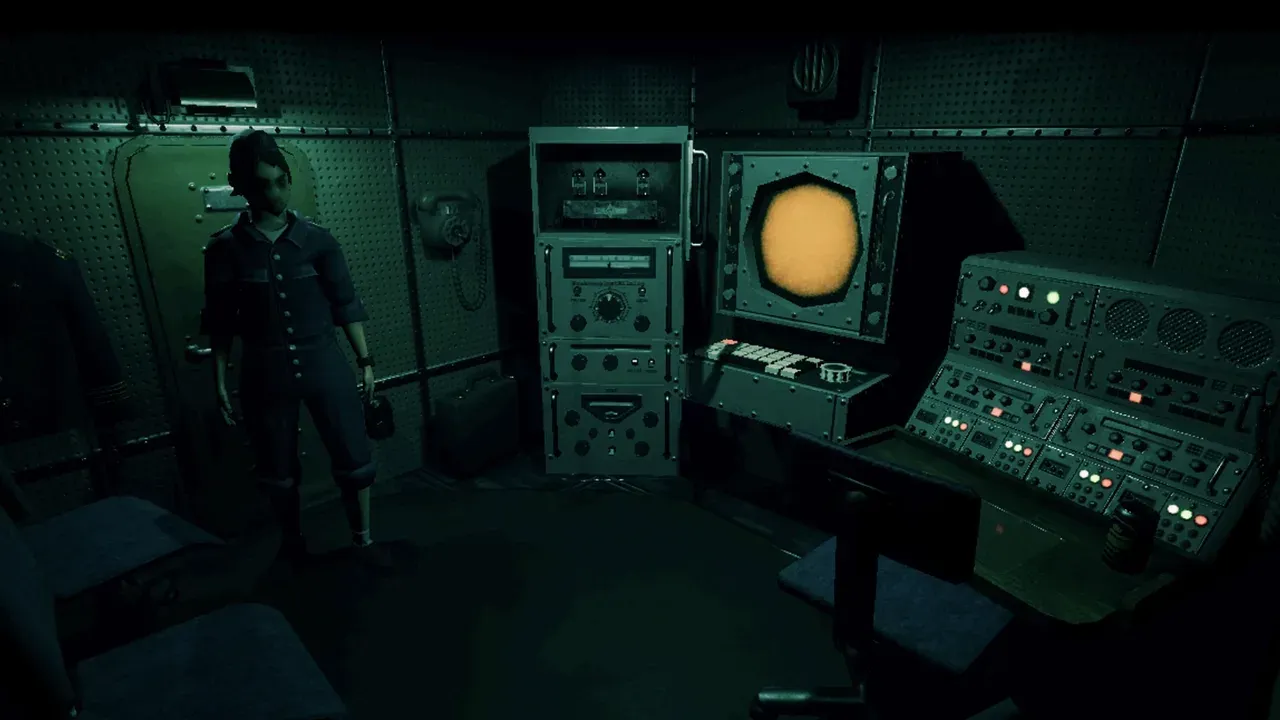
If there are gripes, it's that Heavy Metal Death Can emulates the save mechanisms and difficulty with such ferocity that during my first playthrough, I lost a huge chunk of progression simply because I forgot that there aren't quicksaves or checkpoints. You need cassette tapes to record your progress, and to do that, you need to find save rooms that are peppered throughout the ship. In my haste to move forward, I forgot to do that, and immediately faced punishment for my stupidity. It's not a bug, but a feature, and it takes a moment to adjust expectations.
Similarly, the early test version featured classic issues with collision detection and some frustratingly bullet-spongey enemies, though quickly implemented hot fixes have addressed some of these concerns. I still think enemies do a little bit more damage than they should, and there's a little bit of frustration in how much you have to carry Snus (chewing tobacco) to keep your health up. It is part of the genre's origins, though, so it's a clear artistic intention. How much you enjoy it depends entirely on which era of this genre you like best.
Boss battles, though few in number, initially frustrate, as Heavy Metal Death Can leans a little too heavily on old-school deductions for how to defeat them. An early example is a horrifying pile of sludge composed of rotting corpses that requires the player to use explosive barrels behind locked doors to first stun, then shoot at its exposed areas. But the arena is also filled with zombies, which often causes the strict auto-aim to waste precious ammo as you try to navigate the hectic battle.
It takes some trial and error, but even these scenarios are entirely manageable. Eventually, Heavy Metal Death Can turns into an exercise of how fast you can run through the game, and some players have already completed the entire thing under 90 minutes. But to get there, you first have to deal with a certain amount of frustration, which I'm not entirely convinced is a bad thing. To emulate the past, Krufs Productions has brought everything to the table, including certain aspects that will seem unsightly for modern audiences. Handholding is at a minimum, and that's both a gift and a curse.
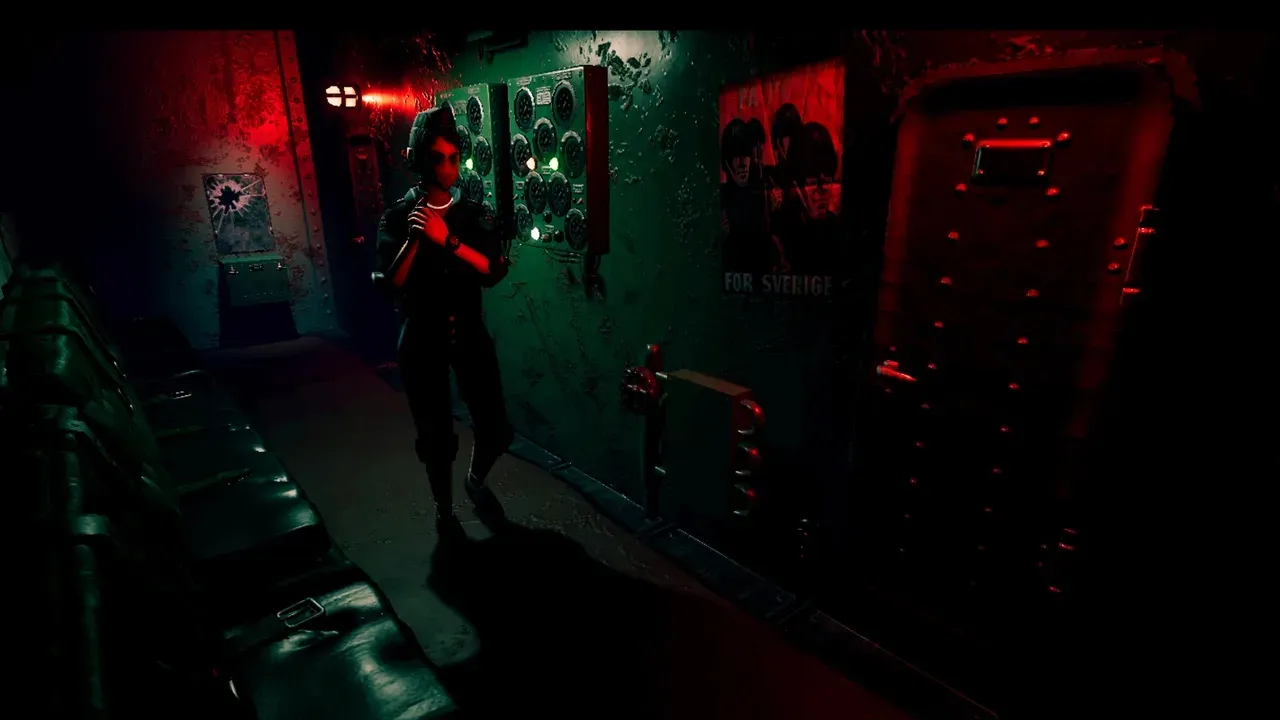
Even with certain faults, Heavy Metal Death Can is a triumph. It is one of the best survival horror games in years, one that understands what makes this genre tick. It brilliantly engages with both the material and the mechanics to deliver one of the smartest, scariest, and most rewarding games of this type not made by Capcom.
Yes, some of it is an acquired taste, and the retro aesthetic isn't immediately accessible for all. But if you're willing to engage with the deliberate choices and adjust your playstyle to a rhythm from 20 years ago, Heavy Metal Death Can rewards you with an impeccable horror experience that reminds us how great and malleable this genre can be.


