



Version: Digital retail review code provided by the distributor
Independence & Ethics
Region Free is entirely reader-supported and maintains full editorial independence. For more on my scoring and standards, see the Review Guide.
I'm a huge fan of narrative-driven adventure games, especially the Uncharted series. Over the years, there's been no shortage of competition in the space of cinematic third-person action fare.
But it's not an easy gig, and chasing after Uncharted usually turns out to be a fool's errand. Even the games I've enjoyed, like Banishers: Ghosts of New Eden, have often faced the ugly truth that Naughty Dog has endless amounts of money to spend on their projects; most competitors do not. So they end up cutting from one area or another, and more often than not, those connections can't be severed without affecting the rest. Without combat, the exploration feels less thrilling, and lord help us if you end up taking out from the cinematics or writing.
So imagine my surprise when Asobo Studio, the creators of the wonderful but stylistically very different Plague Tale series, sent over their latest title with a heavier emphasis on Uncharted-style thrills and big tentpole setpieces than before. Naturally, I was curious, but also a little worried. As much as I love the Plague Tale games, I've always enjoyed them despite their clumsy mechanics, which often get in the way of a good story. Could the ambitious French studio really translate all they've learned into a mechanically alien field on this scale?
Turns out, they can. In fact, much to my immense delight, Resonance: A Plague Tale Legacy isn't just a surprisingly good game; it's one of the best adventure games since Uncharted 4.
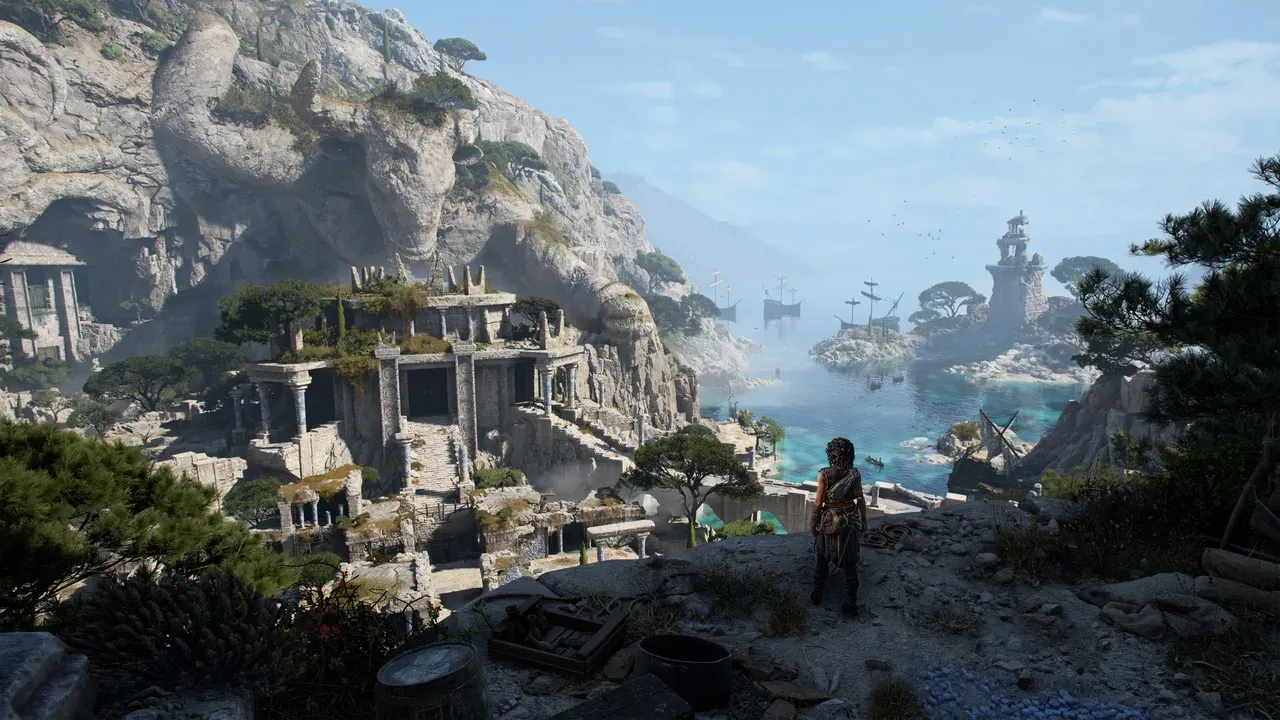
Resonance: A Plague Tale Legacy is, despite its name, a prequel to the two previous games. It expands upon the story of Sophia (Anna Demetriou), the jaded smuggler who helped our heroes in Plague Tale 2. Set 15 years before the events of the first game, Resonance spans decades as we grow up with Sophia in a pirate utopia, learn of an ancient treasure hunted by both her father and surrogate family, and the tragic events that made her the person we've come to know.
It's a big, sprawling story, yet never feels unwieldy or out of focus. Sophia is a wonderful lead character, and every step of her journey is rewarding. Here is a complex hero who spends much of the adventure driven by ghosts of the past, both recent and hundreds of years earlier, who experiences almost a reverse hero's journey. By the time she realizes the cost of her ambition, Resonance turns into an escape thriller.
As a game mechanic, this juxtaposition works beautifully. As players, we're driven by the expectation of reward. Every level is another opportunity to find a new trinket or prize, and our natural inclination is to push forward to see the next obstacle. Sophia spends her youth in a perpetual holding pattern. She is part of the community, yet never allowed to charge the frontlines because of her gift, which her foster father needs for his continued hunt of the mythical treasure that cost Sophia her real parents.
Then, as Resonance builds in momentum, the story twists itself across two time periods, encompassing history, myth, and grand romantic tragedy, and it forces us to ask why the promise of vague glory entices us so. Like Uncharted 4, Resonance is fascinated by the inherent paradoxes of discovery and adventure, both invasive acts that often lead to violence.
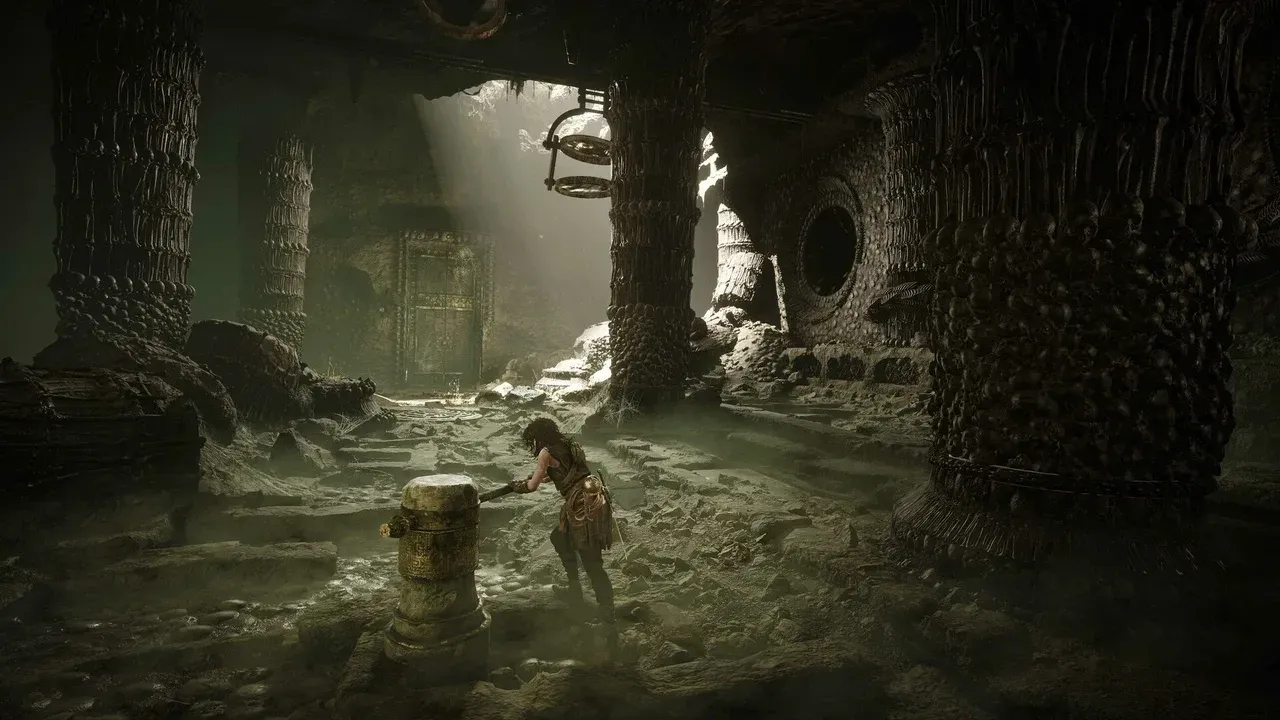
The fact that it pulls off such a meditative, complex narrative while still delivering big set pieces and combat mechanics is a majestic feat. Yet unlike Uncharted, Resonance never pretends that Sophia's hands are clean. She's a pirate, and when we first meet her, she's picking the bones of the dead in hopes of loot for the outlaw community she calls home.
When a military hunting her kind descends upon them, it's not hard to accept that Sophia has no choice but to fight – even if it is to keep us as players engaged.
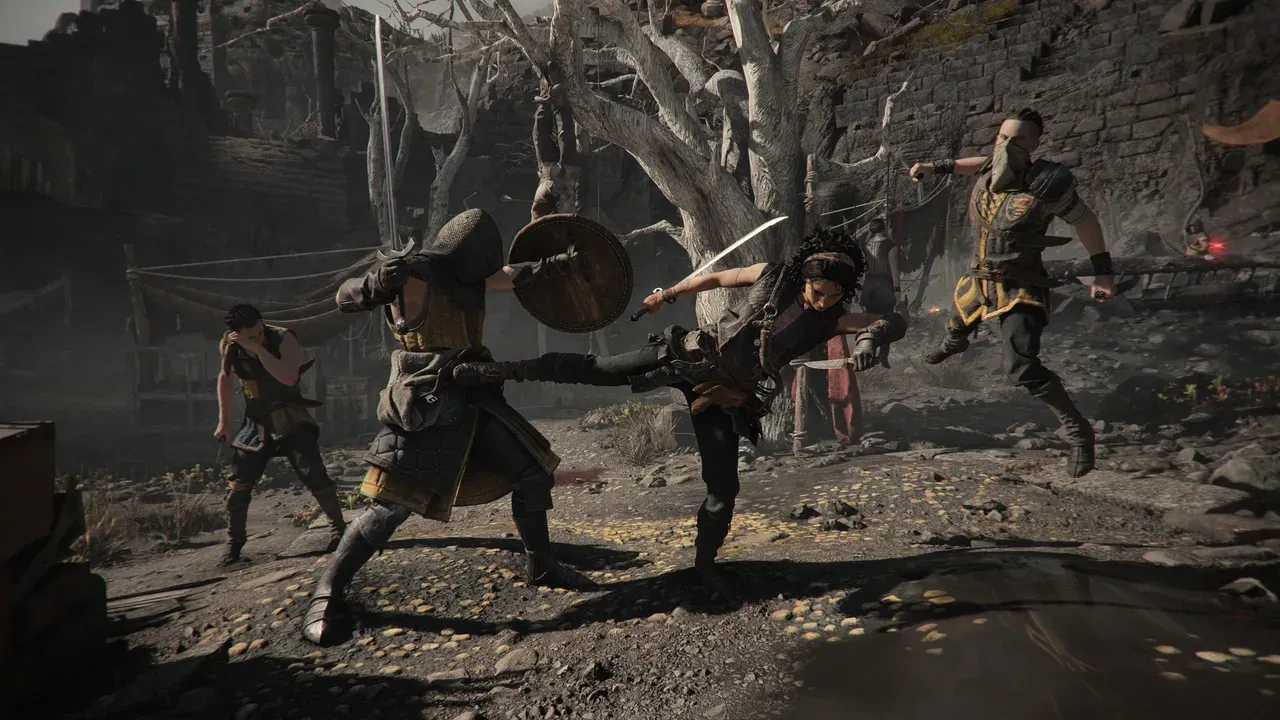
Luckily, the combat mechanics are superlative, and it's relatively easy to ignore most quibbles when everything is this much fun. Resonance borrows and learns tricks from other action brawlers, most notably the fast-paced Arkham series, but keeps everything simple enough that it finds elegance in the pared-down mechanics.
Sophia can attack, parry, charge up a heavier blow, kick, and pull off devastating special moves, some of which are best left for players to discover for themselves. Regular favorites, like dodges and parries, are also there, and enemy types are reasonably standard fare. You'll recognize a heavy when you see one, and most scenarios differ only in the amount of goons you take out.
But that's not a bad thing, and the way Resonance paces itself between combat, exploration, and puzzle-solving is so elegantly put together that I rarely found myself bored by any set piece. Just as one ends, Resonance skillfully tees up another, and the tightly designed levels are just big enough to encourage exploration, yet never so large to frustrate.
Granted, some puzzles leaned a little too heavily on the obtuse side, but even then Resonance offers handy assists through talkative companions. Only certain combat sequences, especially a couple bigger brawls toward the end, frustrated me, as enemies easily can gang up on our hero, and do so quite happily on harder difficulty levels.
Resonance is also one of the most gorgeous games in recent memory, and it's incredible to remember it doesn't have a gargantuan budget behind it. The art design is immaculate, with breathtaking vistas, an immense sense of scale, and numerous achingly beautiful moments peppered throughout the 10-15 hour playtime.
At some moments, I ended up wandering around the landscape, enjoying the virtual tourism and majestic soundtrack. Resonance is a game that's a pleasure to simply spend time with, even beyond the Hollywood spectacle that it delivers elsewhere.
On top of that, Resonance features a compelling cast of misfits, each fantastically performed, who have depth and grit. In the grand tradition of Treasure Island and Greek myths, with a sampling of the recontextualized Black Sails series, Resonance is a rich tapestry that rewards those who already have an affinity for this kind of material. But this isn't some inaccessible art project, either. It's a grand epic that's thoughtfully curated for a wide audience.
Just look at the well-balanced difficulty selection, which starts at a narrative-focused mode and goes all the way into nightmarish difficulty. At no point does the game punish you for playing your way, either. This is an adventure that's meant to be experienced at your own pace, and Resonance takes great care in how every element works regardless of how you approach it.
The result is an unexpected triumph and a sneaky contender as one of the best games in 2026. For fans of the genre, Resonance: A Plague Tale Legacy stands proudly alongside its inspirations and makes a strong case for Asobo Studios as a premier destination for narrative adventure titles in the future.


