
TIFF 2026: Day one – Tender Loving Care, The Only Living Pickpocket in New York, Being Heumann
The first day of my TIFF 2026 coverage, including capsule reviews and musings.
This year, I'm going to try something different. During the festival, which runs for the next ten days, I will post daily recaps and capsule reviews of the films I've seen. After that, once all this madness has subsided, I will return for full-length texts closer to the theatrical releases.
Having said that, it's only the morning of the second day as I type this (around 6 AM), and I've already seen eight films. Some are still under embargo, so reviews won't appear in linear order. I know, it's a hassle, but we do what we must.
Without further ado, day one:

Tender Loving Care
The festival kicked off with this emotionally devastating and effectively minimalist British drama from the master of kitchen-sink tragedy, Mike Leigh. According to him, it's his final film, as age prevents him from working as effectively as he once did. If that's the case, what a beautiful note to go out on.
Tender Loving Care is the story of two social workers, Amy (Kate O'Flynn) and Rosie (Alice Bailey Johnson), who move back in together in their late thirties. One is perpetually single, the other recently dumped by their shitty boyfriend, who has returned to his ex-wife. They dedicate themselves to work, which is taking care of others, even those who don't want it, and their family; in this case, Amy's elderly parents, Birdie (Marion Bailey) and Geoff (Paul Jesson).
When Geoff's health starts to fail, Amy's world shifts, but doesn't fall off its axis. Instead, it's another hurdle in the life of someone dedicated to making sure everyone else is OK – as if the entire system would crumble if there wasn't someone to hold the social contract together.
Leigh's direction is as unhurried and unceremonious as ever. Once more, we're invited to glimpses, almost vignettes, of small lives that play out in unremarkable, but painfully true fashion. Things don't necessarily connect, but they're not meant to. We make meaning of life in phases, and one of those is saying goodbye.
This is a mature, heartfelt, and often devastating picture that moved me deeply. It takes a moment to let you in, and at times you may wonder where it's all going. But that's life, isn't it? You don't know the destination until you get there.
4/5 stars.

The Only Living Pickpocket in New York
I've admired Noah Segan as an actor for years, so I was very excited to see what he's capable of as a director and writer. Sadly, I didn't see his feature debut, Blood Relatives, but if The Only Living Pickpocket is any indication, I have to seek it out, pronto.
Because make no mistake, The Only Living Pickpocket in New York heralds the arrival of a major filmmaking talent. It's a living, breathing testament to the power of old-school directing and writing, the kind most thought to have died out with Hal Ashby and William Friedkin.
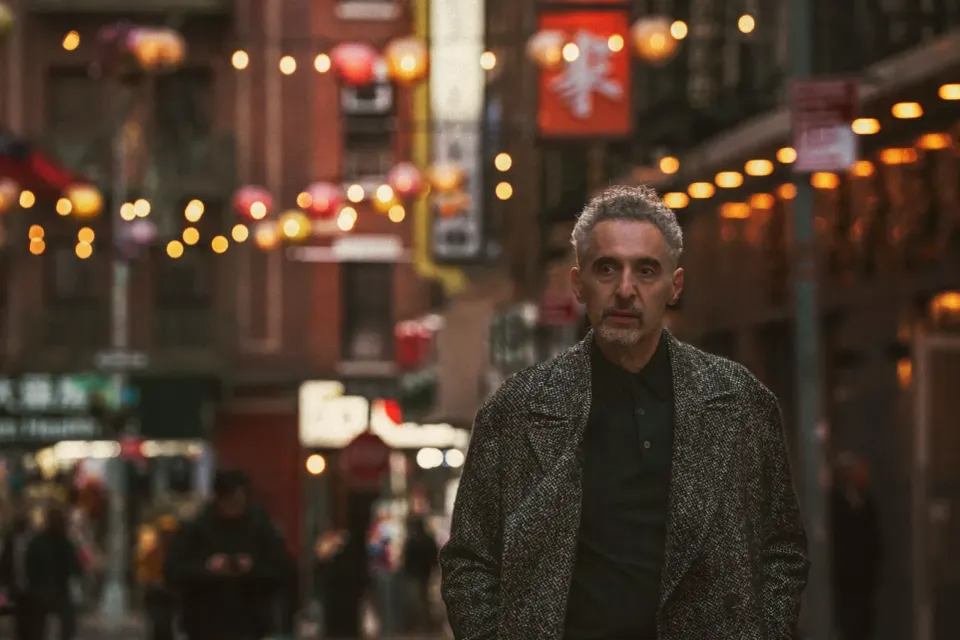
As the name would tell you, we're in New York. It is present day, though our hero, Harry (John Turturro), wishes it wasn't. He's a thief, a pickpocket, and time has left his kind of folk well in the past. Few use cash anymore, and cards and phones and electronics are all traceable. Even when Harry picks up a score, chances are there's not much to get out of it.
His fence, Ben (Steve Buscemi), tries to adjust with the times. Only his idea of using a computer is banging on an ancient CRT monitor in hopes it delivers email. Even Harry's old nemesis, Detective Warren (Giancarlo Esposito), is on his way out. They have no more interest in chasing one another. That ship has sailed, and it's far easier to occasionally reminisce in the subway when their paths inevitably cross.
Then, one day, Harry robs a shitty little punk, Dylan (Will Price), without realizing he's connected to one of the numerous major crime families in the city. Frank finds a USB device in Dylan's bag, but has no clue what it is or if it's even worth a thing, and tosses the thing. Naturally, it's a crypto wallet worth hundreds of thousands of dollars, and the family wants it back.
There's a beautiful certainty to everything that happens in this film. From the very first scene, we know the kind of story we're about to hear. But that's only a good thing. It means we're in the hands of a seasoned storyteller who understands their material exquisitely. Segan isn't interested in just emulating the visual style of the 70s for the hell of it. Every aspect of his film serves a greater purpose, and every stylistic choice has character behind it.
For Harry, New York never moved on from the 70s, when things weren't good, but they were better. Everyone else knows this is sad, and they've made their peace with it. But not Harry; he keeps running. He pulls out a wad of cash when something is an inconvenience, with a muttered mantra, "Let me do something for you." Money buys freedom, and for him that comes a dollar at a time.
Turturro is tremendous in the lead role. He's always a reliable actor, but he rarely gets the kind of parts that allow him to flex his natural charm and offbeat good looks and juxtapose them with an inherent sadness he carries. Here, look at the way his practiced posturing and movements chip when someone truly confronts him. Watch how beautifully Turturro disrobes his armor, in this case a long overcoat, and seems to age a decade when he's with his catatonic wife, whom he cares for.
Similarly, the brilliant Steve Buscemi brings gentle gravitas to Turturro's potentially only friend and fence, and you can read decades of adventures into their easy camaraderie. Ben knows they're both at the end of the road, but unlike Harry, he's not going to flail and fight it. These things happen.
Esposito is equally moving as the aged-out detective, who probably once raised hell up and down Manhattan. Now, he takes the subway and wonders what he'll do with the spare time he has before the lights go out. There's a scene early in the film, as Turturro and Esposito share a subway ride, where you can feel this strange yearning these two have for connection. Except, of course, they both know that time has come and gone, if it ever was there to begin with. All they've got now are memories of the families they let slip away, and each other.
This is a great film. One of the very best I've seen all year. It's gentle and tense all at once, beautifully written and directed, and with some of the most compelling performances I've seen in ages. In a just world, it would be a major hit, and everyone would be talking about it for the Oscars. Don't miss it.
5/5 stars.

Being Heumann
I was thirty when I received my autism diagnosis. It came around the same time I finally had the courage to come out of the closet. Before that, my entire childhood was one of hiding. For decades, Finland refused to acknowledge that autism existed, only to claim it was never found in adults. As if children just grew out of it, if they ever "had it" at all.
I spent my formative years being told I was stupid, maladjusted, and a problem. I couldn't form friendships, and work was hard to find. I didn't get to grow up on my own terms or find out who I was until I got into a support group for other autistic adults. In a way, I'm still eighteen, even if my body doesn't agree with that assessment.
I was luckier than most. I can mask well, and I have full control of my body.
Being Heumann is a part-biopic of Judy Heumann, who was a major part of the movement to secure rights for disabled people in America. That fight is still ongoing, as the land of the free believes in equality in fits and starts, and mostly when it's convenient for the majority.
Directed by Siân Heder and with a towering performance from Ruth Madeley, Being Heumann fictionalizes, but doesn't sensationalize, the stand-in protest that pushed for complacent congress members to move their asses on a landmark bill, which would secure basic equality for the millions of disabled people in America.
Refreshingly, Heder refuses to take any and every easy route that films like this usually do. There are no easy wins, no magical moments where everything becomes OK. That's not how the world works. Things are scary, difficult, and often insurmountable, but we push forward because the only other option is to keel over and die.
Beautifully acted by disabled actors, each of whom lights up the screen with immense charm and immediacy, Being Heumann is one of the most emotionally rewarding cinematic experiences of my life. It crackles with energy and warmth and shows, with deep compassion, how easily cinema has ostracized and othered an entire part of the population.
There is no gawking, no fetishizing, and no sugarcoating. Everyone is allowed to be who they are, which is real people. They curse, they fuck, they fight and disagree on what equality looks and feels like, and every inch of this film feels like we've stepped into actual conversations without artifice or distance. It is a remarkable feat of compassion, a breathtaking celebration of the power we have as a community, and how, even today, the work never stops.
This is a joyous film – one of the best of the year. I cried endlessly watching it. I look forward to doing so again and again as I return to it over the years.
5/5 stars.