
Bloody Tennis is a fun and gory sports horror
Anchored by a superb Sandra Guldberg Kampp, Bloody Tennis is a wild mix of Giallo, anime, and splatter films that mostly delivers on its grand ambitions.
Region Free rating
Written and directed by Nikias Chryssos, Bloody Tennis is a thematically and stylistically ambitious sports-driven thriller with elements of psychosexual tension, body horror, and a hefty dose of anime. The result is as messy as it sounds, but thanks to superb performances from Sandra Guldberg Kampp, Elina Löwensohn, and Zlatko Burić, Bloody Tennis remains just engaging enough to withstand the heavy-handed borrowing and sudden tonal shifts.
Set in an isolated sports academy for elite athletes, Bloody Tennis kicks off with an extended Suspiria riff, including mutilations of young flesh and almost satiric levels of excess from a relatively mundane sport. Here, the camp leader, Mary Tyrone (Löwensohn), pits the girls against one another to uncover their animalistic inner lives, while boorish coach Stavkos (Burić) almost acts like a wildebeest himself. Whoever comes out on top gets the prize: access to greater tournaments.
Chryssos builds the battle of egos with a great sense of fun. At times, Bloody Tennis is hugely reminiscent of goofball anime like Blue Lock, with a helping of Koushun Takami's original Battle Royale novel, where the system is so rigged that the bloodsport is the most civilized part of it. These sports montages, where Chryssos first toys with the objectification of women athletes and then amps up the violence to a gloriously demented degree, are some of the strongest parts of the film.
Sadly, only some of them work as intended, while other sporting sequences fall flat with inert staging and actors who clearly aren't at home on the tennis court. Naturally, it's not reasonable to expect world-class athleticism here, but Bloody Tennis doesn't go far enough in either realism or absurdism to pad shortcomings in other areas. Towards the end, with one deliciously violent serve in particular, Chryssos teases a bolder and more vicious film that we simply don't get.
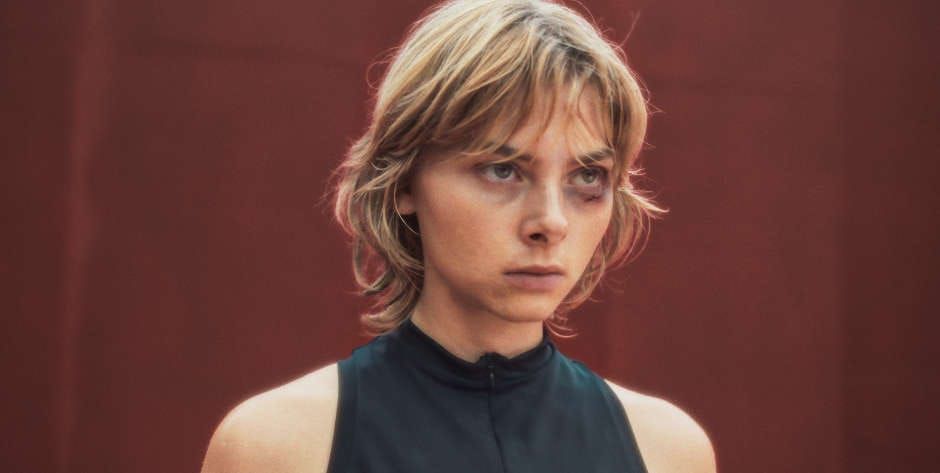
It's thanks to Kampp that Bloody Tennis remains so compelling. Her performance as the inquisitive, almost feral Sophie is a highlight, and Chryssos makes the most of her expressive features. Every time the action slows to catch a glimpse of Sophie's cold calculations or internalized anger, Bloody Tennis gets the pulse pounding once more. Kampp has great chemistry with Löwensohn and Burić, and their three-way bickering is a terrific showcase for each generational talent. Chryssos keeps us just at arm's length so that we're never quite sure whether to laugh or recoil, which gives the film a tantalizing air of malice, similar to Italian Giallo, where nightmare logic permeates every frame.
At a hint over 90 minutes, Bloody Tennis outstays its welcome by a tad, and the tension can't quite keep up all the way through. But thanks to a killer final stinger and the consistently engaging Kampp, there's still a lot to like here, and it's yet another terrific showcase for Chryssos, who remains one of the most surprising and out-there genre filmmakers working today.