
CRCL9 is a chilling paranoia thriller worth experiencing
Messy and confounding, but also thrilling and challenging, CRCL9 is a classic Eurothriller in the style of Brian De Palma for the tech age.
Region Free rating
CRCL9, pronounced Circle 9, is a film about all the methods we use to spy on each other, and how easily curiosity turns to obsession, obsession to possession, and worse. It grows from the same soil as Brian De Palma's lustful thrills, sharing in the unexpected turns, baffling plot twists, and confusing eroticism.
Like De Palma's works, CRCL9 is potentially more fun on a thematic level than it is in its finished form, but it's also so ambitious and takes such wild swings that it's hard to remain unimpressed.
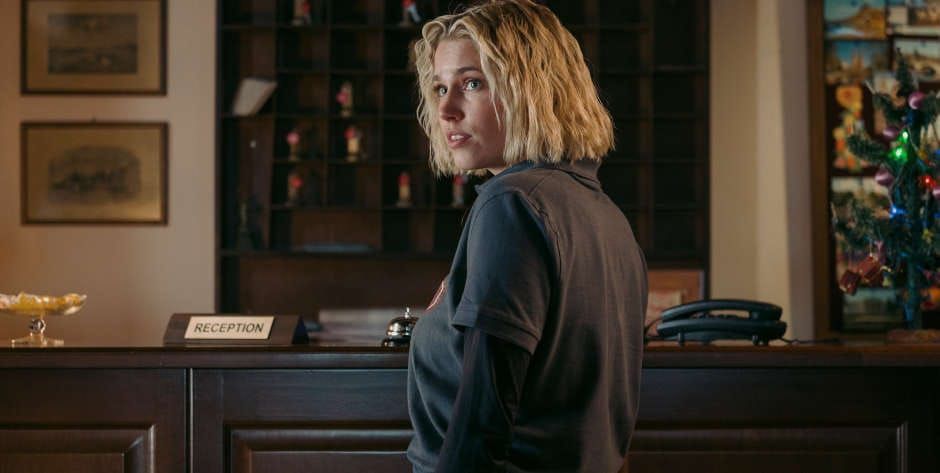
Here's what's easy to explain: Thea Sofie Loch Næss plays Hallie, a young woman studying abroad who discovers she's the subject – and victim – of an online stalking game, the rules of which are as elusive as the players themselves. Each filmed video and each stalked victim unlocks a higher level, which in turn demands more from the participants and their prey.
It's here that CRCL9 leans further into the world of De Palma: Hallie turns to the authorities, only for them to brush her off with the kind of ineffectual misogyny one would expect. But Hallie doesn't roll over easily, and instead of following the more common path of stalker cinema, CRCL9 flips the script as Hallie bluffs her way into the game and starts to decipher the labyrinthine rules for herself.
That's just the start, and already CRCL9 teeters under the weight of moving pieces and Damoclean swords. To his credit, co-writer and director, M Axilleas (a pseudonym, naturally), keeps things moving at such a brisk clip that it takes well into the second act before there's time to question how little sense any of this makes. By then, we're so far into the nightmare logic that CRCL9 achieves a status quo where normality would actually feel out of place. Up is down, right is wrong, and Hallie is so deep into the forest that any semblance of morality has long since left the equation.
Loch Næss, who was fantastic in the superlative The Ugly Step Sister, continues to impress as the victim-turned-hunter. At first, Axilleas smartly uses our expectations and Loch Næss's looks to drive the narrative down one path, just so he can pull us careening off the road before the end of the first act. The further CRCL9 goes, the harder it is to condone Hallie's choices, even if we understand them.
I won't argue that CRCL9 sticks the landing or that all its questions have satisfying answers; the last third is a mess no matter how you look at it. But in the weeks since viewing it, I haven't been able to stop thinking about it one way or another. It upholds the European tradition of cynical, almost quasi-exploitative cinema wonderfully, and the power duo of Axilleas and Loch Næss craft a fascinating dynamic on-screen that brings to mind the better days of Luc Besson's underground French cinema.
There's no guarantee you'll walk out satisfied, but you won't be bored, either. CRCL9 leaves behind an itch that's hard to scratch, and like the films it so dearly emulates, it creates a wholly believable new nightmare for us to fear. That's not nothing.