

TIFF continues to surprise. On the fifth day of the festival, and the official halfway point, I saw misses where I expected home runs and heart-pounding thrills from completely unexpected places. Here's what I saw today.
The Life and Deaths of Wilson Shedd
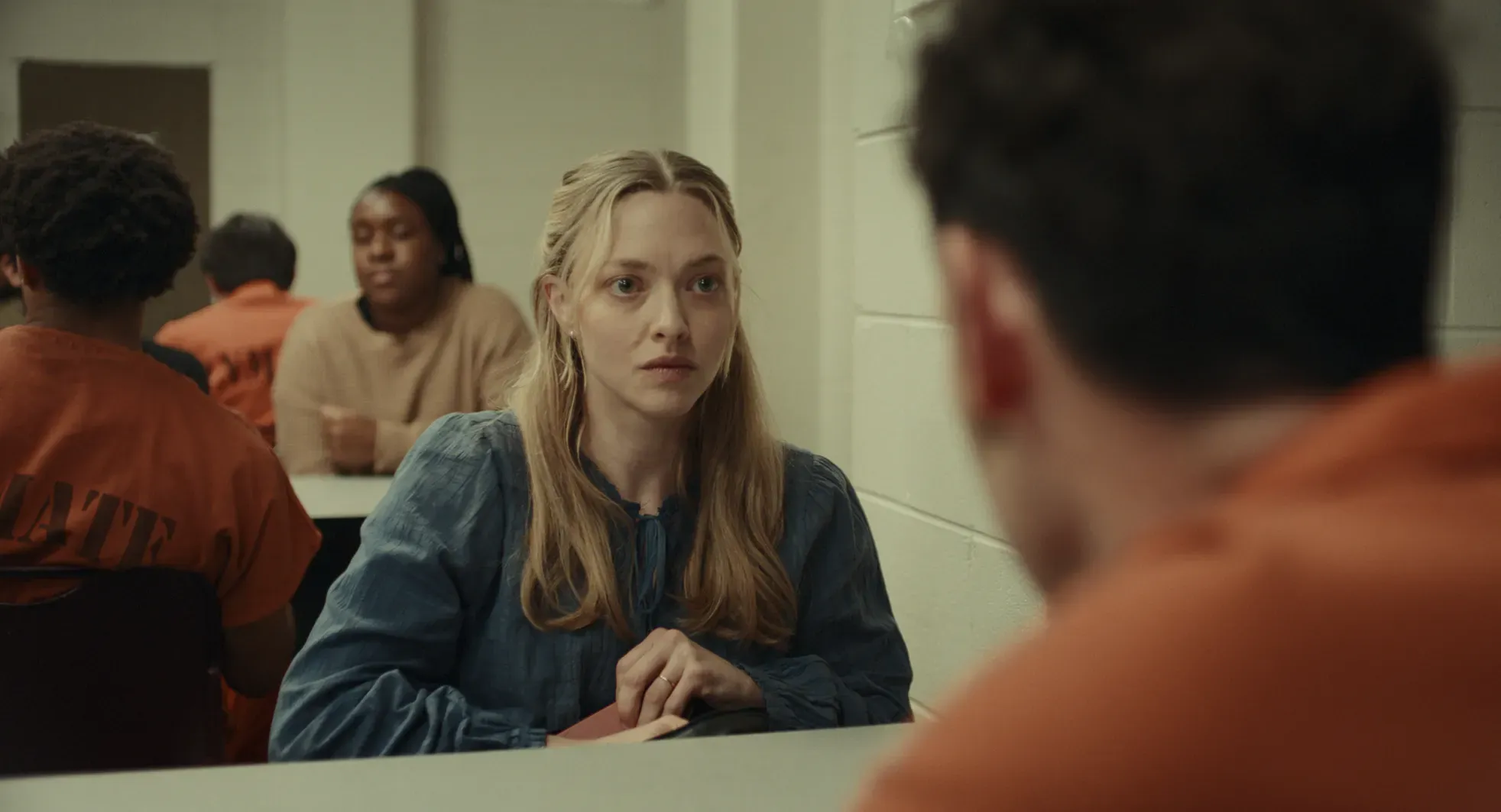
Written and directed by Tim Blake Nelson, The Life and Deaths of Wilson Shedd is an uncompromising, philosophical conundrum presented as a traditional prison drama. It crafts a beautifully complex cyclical narrative that introduces three crimes, each set in a different time but connected one way or another, and forces us to examine our own relationship with forgiveness. If it were a newspaper article, it would fit on a single page. But that would be missing the point. This is a story of everything between the lines; the human tissue that complicates everything.
Scoot McNairy plays the titular Wilson Shedd, while Amanda Seyfried is mesmerizing as Karen, the abused social worker who falls for Shedd's lies and promises of care and love. At first, I worried this would be yet another sensationalist tale with a strong whiff of misogyny (looking at you, Mr. Eastwood), but my fears were unfounded. The Life and Deaths of Wilson Shedd is remarkably balanced, giving each person enough room to breathe that we understand at least some of the whys and hows that led them to this dead end. Like Hemingway, whom the film mentions more than once, Blake Nelson appreciates the power of simplicity. There's no need to complicate that which is already a mess to begin with.
Again, the film doesn't ask us to condone or accept anything. But by giving us every angle, every moment of connection and humanity out of order, it forces us to confront the reality that we're still dealing with other souls. At one point, a character ponders the nature of forgiveness; the acts of kindness and grace we owe each other. Their faith and morality, and ours, are immediately tested. By the end, The Life and Deaths of Wilson Shedd provides no clear answers either way. Lives are ruined, yet it's just another day in America.
Some will find The Life and Deaths of Wilson Shedd too brutal and bleak to be palatable. I can understand that. But I don't agree that this is just miserabilism for nothing. I have a strong aversion to tragedy films (they're the easiest and often laziest kind of film you can make), and I found Blake Nelson's search for answers far more compelling and soulful than mere provocation. It's an inquisitive picture, one that tries desperately to understand the mystery of the human condition. It doesn't have answers; how could it? Yet there is remarkable grace in asking us to walk alongside it and see where we stand.
It is one of the most demanding and rewarding films I've seen this decade. I doubt I'll ever stop thinking about it one way or another.
5/5 stars.
Wild Horse Nine
There's an Anthony Bourdain quote I'd like to repeat: "Once you’ve been to Cambodia, you’ll never stop wanting to beat Henry Kissinger to death with your bare hands. You will never again be able to open a newspaper and read about that treacherous, prevaricating, murderous scumbag sitting down for a nice chat with Charlie Rose or attending some black-tie affair for a new glossy magazine without choking. Witness what Henry did in Cambodia – the fruits of his genius for statesmanship – and you will never understand why he’s not sitting in the dock at The Hague next to Milošević."
I thought about that quote often at the screening of Wild Horse Nine, the latest from Martin McDonagh, who has made a career of telling deeply Catholic stories about evil men trapped in purgatory.
His first film, In Bruges, took place in a dreamlike town, where Colin Farrell's doomed hitman begged for salvation. In Three Billboards Outside Ebbing, Missouri, a mother succumbs to evil in her quest for vengeance. The Banshees of Inisherin, my favorite of the lot, features two men who chip away at each other in a fable about our inability to say what's in our hearts.
They are all great films. Wild Horse Nine is fine, but it doesn't belong in the same group.
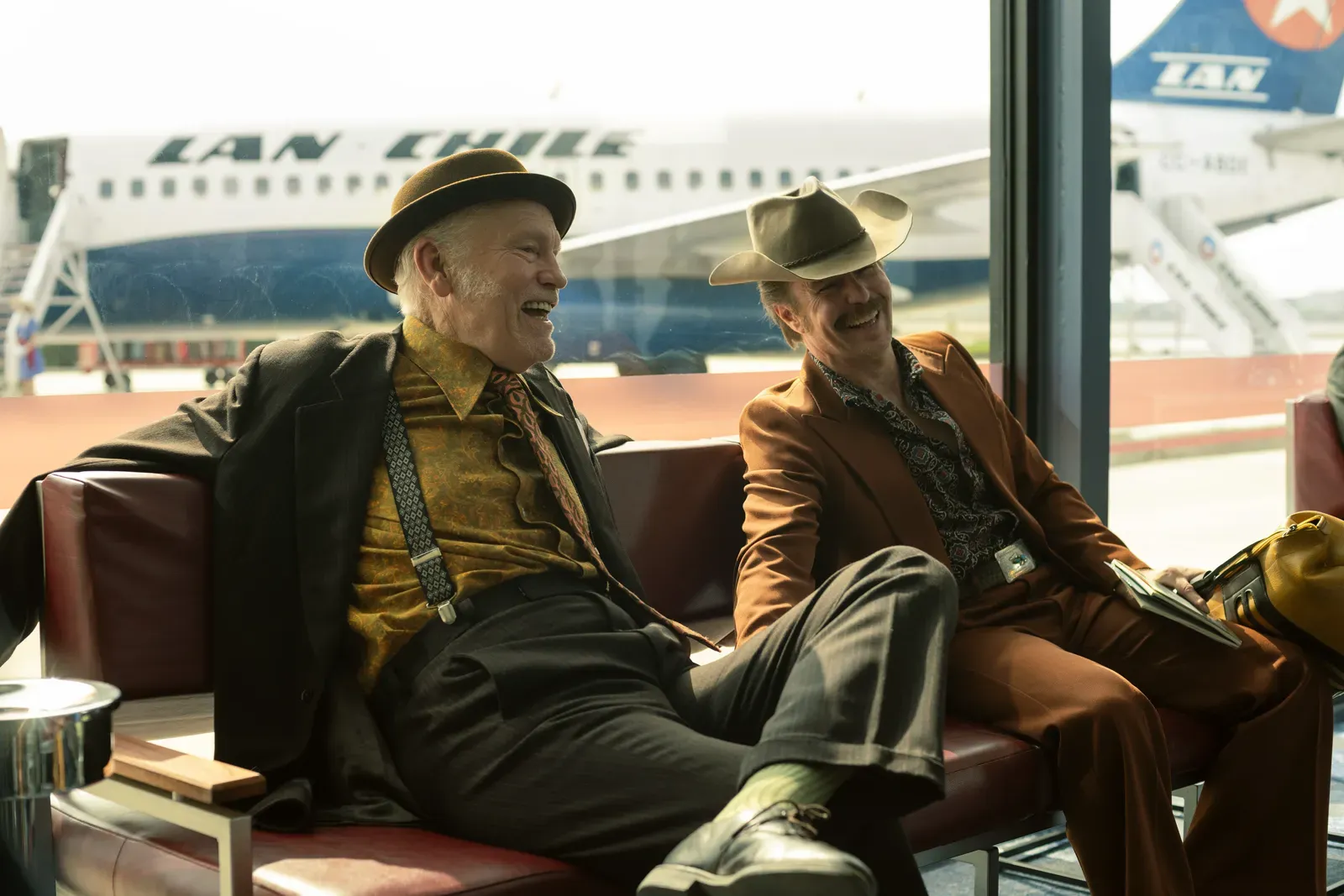
That's because Wild Horse Nine is about CIA agents, whom McDonagh paints in quirky, broad strokes as ultimately good souls who fear death. Much of the humor comes from John Malkovich's grouchy, terminally ill Chris, who has no more time left for pleasantries. He arrives on Easter Island with his partner and only friend, Lee (Sam Rockwell), on one final mission. There, he insults the locals and other tourists, picks fights, and generally makes a mess of things on his way out of this world.
As a setup, it's very similar to In Bruges. Except it's about the CIA.
So why is that an issue? Take, for example, the scene where Malkovich properly introduces himself. He meets a couple of college girls on their way to Easter Island for a holiday. He asks them if they like their leftist president, a reference to the real-life democratically elected Marxist leader of Chile, who the CIA overthrew later that same year in a violent, horrifying coup. It is only one of many equally inhumane acts of violence against other countries they took part in.
The girls happily respond that they're pleased. It's a sign of progress; a new start for the country. Malkovich cackles and happily declares their country is fucked. He lays out the plans and mocks the women for their ideals and their marches for a better tomorrow. The joke isn't on him, but on them. This repeats multiple times throughout the film.
Later, after we've softened up to Malkovich, he tells one of the girls how they will be kidnapped, tortured, and most likely killed – all according to plan. He instructs her to never get into a car with anyone. Fight and die on the street; at least you'll have that. Shoot anyone and everyone in a uniform, and even then you'll lose.
It's meant to make us like him. To think there's still humanity within, because he wants to save this one attractive girl. Maybe even repent a bit for his part in making the world a worse place. But this is still a man who has made a living of equally vicious and horrifying attacks on other nations. The humor lands only if you choose to ignore every rotten implication or real event surrounding it.
The problem is that Malkovich hasn't been this good in years. Rockwell, an equally skilled actor, rises to the challenge and delivers a heartfelt and subtle performance. Their chemistry fills the screen, and it's a joy to watch. The dialog, true to McDonagh's skill, crackles with energy and wit. But it's all in the service of ugly politics it either doesn't care to acknowledge or, worse, doesn't understand.
Once more, McDonagh paints a picture of two men on the road to hell, looking back on their lives, and asking for redemption. Once again, he suggests there's a chance of something better, just as long as you do one good thing with your life. His characters are arguably the worst people he's ever put on screen, and they're meant to challenge our notions of morality. But in casting two likable leading men and giving them another, even more hateable villain to fight, McDonagh's satire loses its bite and becomes something else entirely.
It's an expertly made and acted film thoroughly confused with itself.
3/5 stars.
God Bless You, Mr. Kopu
One of the biggest surprises of the festival, God Bless You, Mr. Kopu is the feature debut of writer/director Alex Liu and one of the best first films in recent memory.
Set in 1990s New Zealand, the titular Mr. Kopu (Dimitrius Schuster-Koloamatangi) is a downtrodden, bullied Tongan man trying to make ends meet. He's come from the island to seek a better tomorrow in New Zealand, only to realize the country is a racist pit with no place for people who look and sound like him.
Then, he spots an ad in the paper, promising easy money and a pathway to another life. It's snake oil and cheap words, but those are a siren call for anyone desperate enough. Kopu signs up to become a salesman for an American detergent called Forget, which, like America, is an overpriced lie that promises more than it delivers.
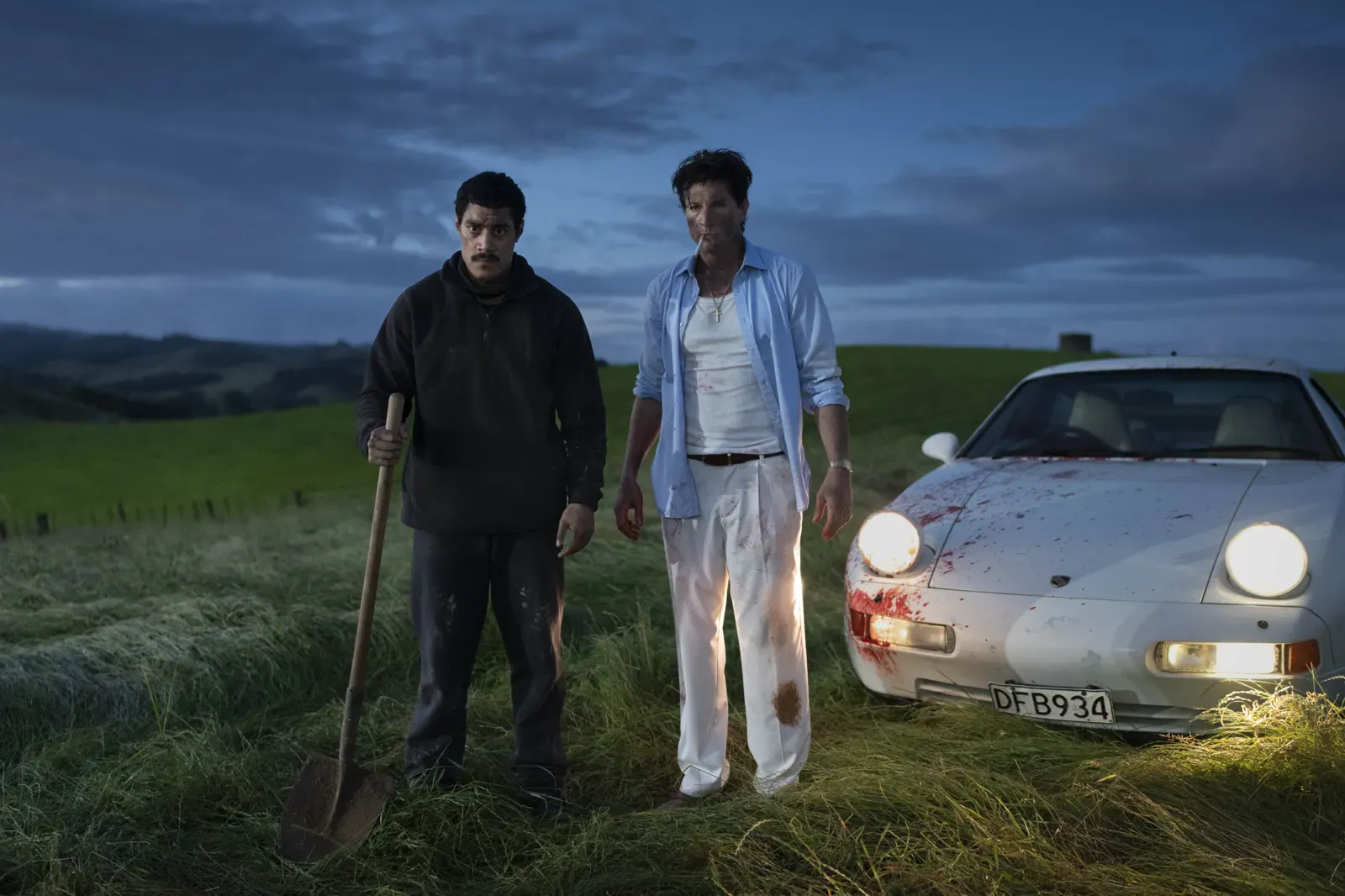
He meets Mr. Katz (Simon Rex), a smooth-talking, sports-car-driving huckster, who should make warning bells go crazy the moment he crosses state lines. But he's also tremendously charming, and he promises Kopu exactly what he needs right now: A new start as a new person.
What follows is best left a mystery, as part of the great fun in Mr. Kopu is not knowing where Liu's strange and sharply observed satire takes us. It is equal parts Glengarry Glenn Ross and Get Out, yet even that doesn't do it justice. This is an endlessly inventive and quietly brilliant film that is so breezy and effortlessly fun you could almost miss the subtext entirely. But it's right there, bubbling under the surface like Kopu's resentment and anger.
Schuster-Koloamatangi and Rex light up the screen with tremendous energy, easily selling the weird friendship and unbalanced power dynamic that crackles with intensity. Katz is always selling something, even, or especially when, Kopu isn't buying. Their relationship is a mixture of distrust, fascination, and disgust. Kopu can't get enough of the idea Katz represents, while Katz sees Kopu as his ticket into places colonialists aren't usually welcome.
The satire is brutally effective, and Liu mines the deeper implications of capitalism consuming the cultures it encounters with grace. It has the pure simplicity of a Twilight Zone story, which is only a strength. That simplicity brings a purity of vision, and God Bless You, Mr. Kopu knows precisely the kind of story it wants to tell from the very first frame. That's a rarity in any film, let alone a debut.
This is the kind of small indie darling that will fly under the radar for now. But just watch, in six months, it'll be The Next Big Thing everyone swears they saw first. It's a superlative calling card for a shining new talent: a provocative, smart satire that uses familiar tropes to explore new territory with immense skill.
5/5 stars.
The Debut
In theory, I should be the perfect audience for The Debut, writer/director Jesse Eisenberg's follow-up to this critically acclaimed A Real Pain.
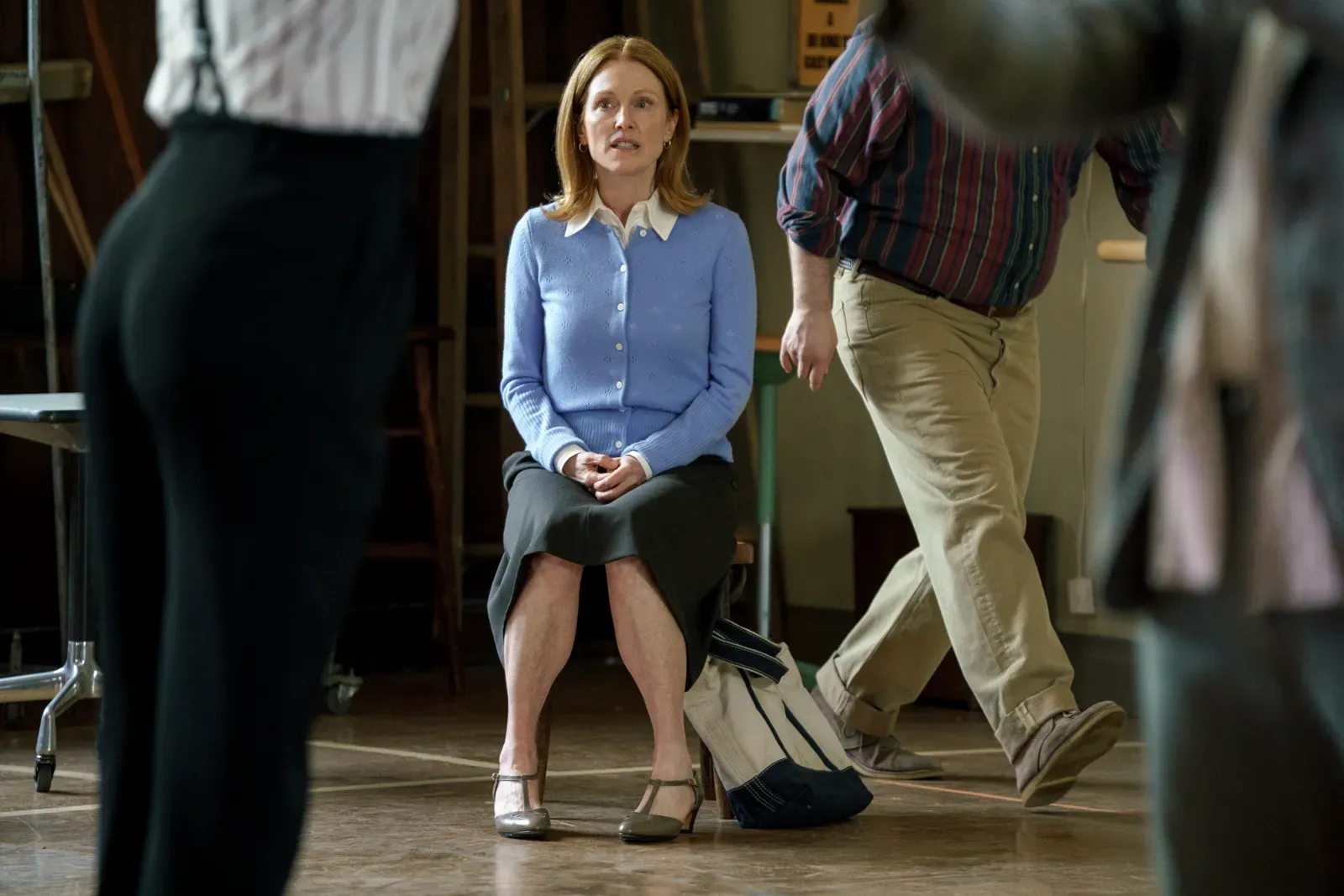
As a socially outcast theater kid who got a very late second start in life, I can connect with Julianne Moore's bravura performance as Mona, the timid housewife who never got a chance to be herself. So when she discovers an audition for a local theater group, she leaps into the unknown and soon finds herself spiraling as the strands of her life begin to unravel.
Eisenberg's talent for directing actors is front and center, and there isn't a single false note anywhere. Moore is particularly brilliant, effortlessly balancing the mousey and restrained Mona with the beast inside her. There's a spectacular moment early in the film where Paul Giamatti's Jerry tries to coax a real response out of Mona. She weaves around it, recoiling at every question as if someone was poking at an open wound. Then, something shifts, and we see decades of pain and anger and sorrow pour out. Only it never stops. There's simply too much bottled in.
If the first act is superlative, it's the second half that gives me pause. I've been iffy on Eisenberg's writing for years because I can't tell if he's laughing with or at his characters. If it's the latter, I have no time for it. That's simply mean for the sake of being mean, and it's the easiest, tackiest kind of humor to make. At times, especially in the beginning, when Mona travels through the earnest and clumsy world of hyper-local theater, it genuinely feels like Eisenberg adores this life. How could you not? Everyone wears their heart on their sleeve, and even if the material is clunky, it is performed with conviction.
But as the comedy spins further, Eisenberg steps up the absurdity and, as a result, everyone turns into caricatures. The laughs come harder, but also at the expense of the character. It could be Eisenberg's way of saying not to take any of this too seriously, but that doesn't vibe with the coda of his own story. I wrestle with this contradiction, even as I admire how effortlessly he can bring out the best in everyone in his cast, and how delicately he brings to life that precious feeling of finding kinship in equally messed-up individuals.
I love parts of The Debut; I genuinely do. I wish I loved all of it without reservations, but we're not there yet.
3/5 stars.
Bad Lieutenant: Tokyo
The most energetic and refined Takeshi Miike production in years, Bad Lieutenant: Tokyo is a stylish and brutal neon-soaked nightmare that engulfs viewers in the seedy underbelly of Japan's largest city, and delivers a thrilling, unexpected knockout that is one of the best genre films of the year.
Anchored by an immensely charming leading performance from Shun Oguri as the titular bad cop, Miike's version of this oddball story, which originated with Abel Ferrara and transitioned to Werner Herzog, is a morality play about evil deeds, forgiveness, and how we enter and exit the world. It is a fascinating look at the cultural and spiritual divides each filmmaker brings to the material, complete with the stylized, impishly funny violence Miike is known for.
It's also a surprisingly tender film for Miike, who remains one of the most malleable and surprising filmmakers around. With a career spanning over thirty years, Miike's usual output of at least one film a year (conservatively) puts his filmography in the hundreds. For anyone else, Bad Lieutenant might mark an unexpected high point. For Miike, it's more like a reminder that he's always been this good, and will be again in the future.
Contrasting Oguri is the unexpected addition of Lily James, who delivers a sultry, dangerous, and immensely fun performance that is completely tuned in to the frequency Miike operates on. At first, the wild swing feels weird, especially as Oguri effortlessly switches between English and Japanese, and suddenly I couldn't imagine a world where James wasn't always part of Miike's cinematic universe.
Sure, the film sags a bit midway through, and there's more than one loose end that doesn't get wrapped up at all. But those are minor complaints when the rest of the picture is this much fun. Oguri's fierce leading performance is one of the best we've seen in Miike's productions in some time, perhaps ever. He's a husk of a man; the ruins of a person and a cop who, perhaps once, could have been good. A repellent degenerate who, despite everything, we want to succeed in some way or another. Perhaps it's because the alternatives are worse.
5/5 stars.


