

With just fifteen screenings to go, I'm on my way to victory with TIFF 2026. After a busy day at the festival and six screenings scheduled for today, here is a brief recap of everything I saw on September 15th.

Inherit
Directed by horror maestro Banjong Pisanthanakun, Inherit is a nice change of pace from the intense thrills of Pisanthanakun's previous films. Still deliciously scary and packed with his trademark impish humor, Inherit is a surprisingly deliberately paced thriller brimming with psychosexual tension and a magnetic lead performance from the luminous Davika Hoorne.
Hoorne plays Woranart, an 85-year-old grandmother who doesn't look a day over 20, who arrives uninvited at the family estate of Oui (Baipor Thitiya Jirapornsilp), and declares herself a guest. Oui's mother suspects something, not least because she's in her sixties, and remembers Woranart quite differently from her youth. In fact, nobody seems to know where Woranart has been all this time, and why she has decided to return.
It's not long until Pisanthanakun lays the cards on the table: Woranart is an ancient, undying centipede demon who lives on in host bodies of the young and beautiful. She has selected Oui as her next host, and is here to take control of her new home on her 18th birthday.
Traditionally, this is the turn where films like The Exorcist and The Last Exorcism go on the defensive, as everyone fights to protect the young from an unspeakable faith. So imagine my surprise when Inherit goes the other way and proposes something far more daring and interesting: What if Oui wasn't a straightforward victim?
What if, considering the times, the alternatives are worse? In a world where the rich and powerful are already abusive and can commit vile acts without ever facing justice, would it really be that bad to become an all-powerful demon? Especially if it meant giving in to someone as alluring as Woranart?
From here, Pisanthanakun's narrative sprawls into a wildly inventive cocktail of genres that toys not just with our allegiance to the characters, but every expectation we have of the genre. Granted, it goes a little overboard with some turns, and there's at least one too many reveals by the end, to the point that a final coda doesn't hit as hard as it could simply because the narrative already feels over.
But getting there is part of the fun, and Pisanthanakun and Hoorne make every step worthwhile. The pair worked together previously in the uneven but fun Pee Mak, but it's here their partnership soars to new heights. Hoorne has grown into a more confident, striking performer who commands attention in every scene. Her balancing act of comedy, horror, sensuality, and even odd tenderness is a sight to behold.
Pisanthanakun makes the most of his wonderful lead and builds some of the most fun setpieces of his career around her. The scares come hand-in-hand with the laughs, and there's a level of Death Becomes Her, the Robert Zemeckis cult classic, to some of the most brutal gags. A fantastic sequence, where Woranart has to contend with aggressively annoying lifestyle bloggers, is a particular highlight, as Hoorne slowly grows more impatient with the simpering.
Inherit is a tad too long and doesn't quite stick the landing, but it's a joyously dark and humorous experience otherwise. It's a surprisingly feminist and sex-positive addition to a genre that still struggles with patriarchal and conservative values. It's the rare horror film that captures the seductiveness of temptation and rewards with well-earned screams and gasps that left me begging for more.
4/5 stars.
Ink
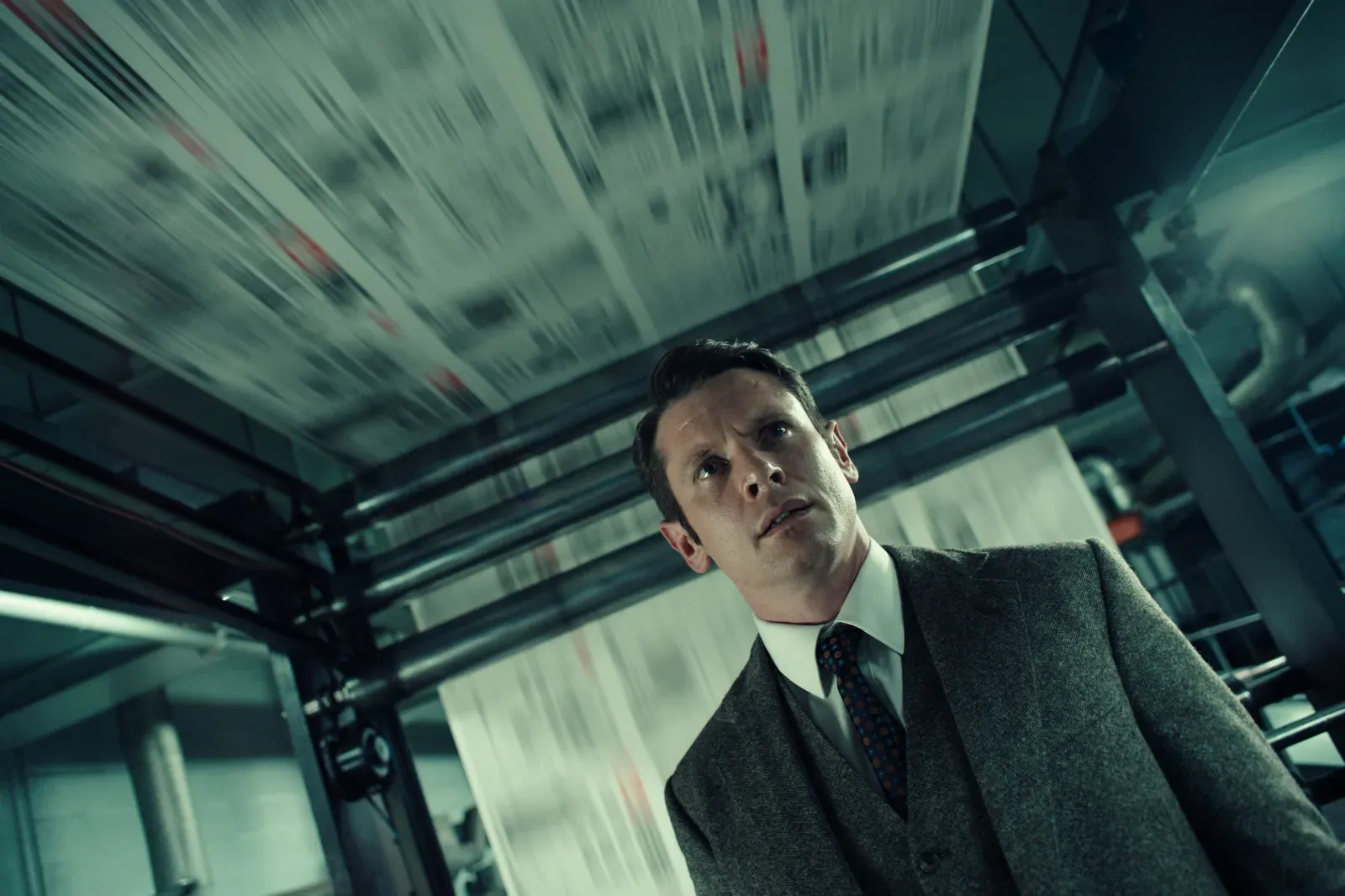
Ink uses generative AI, and no matter how much Danny Boyle wants to downplay it, the act seeps into every aspect of the film itself.
After all, there's no reason to use AI. The shots themselves are meaningless in the big picture. One of them is a repeated image of rats skittering beneath tables and floorboards. Another is a fake stock image of the notorious Kray Twins. A third is a historic image of a restaurant, where the staff suddenly break into a jig. Surely each one could have been done practically?
Some might argue it's a matter of cost. But that doesn't stop Ink from using expensive needle drops like Edwin Starr's iconic WAR. Others will say it's to save time, but how much time does it save not to use stock footage? Every answer raises a new question.
Ink is a film about awful people who helped make our cultural landscape the hellish nightmare it is today through similar compromises to their craft. If all you knew about them came from this movie, you'd think they were just underdogs who got caught up in the current. At the TIFF premiere, Boyle described Murdoch and Lamb as exactly that. It's a vision of these men as anything but dangerous and destructive individuals that drives the film. It excuses, downplays, and mitigates their part in all this.
Especially Rupert Murdoch, as played by Guy Pearce, is shown in an almost sane, positive light. Easily angered and petty, yes, but also level-headed and consistently worried about the direction their newspaper is headed. Read any article about Murdoch, and you'll see it's fabrication of the highest order. Yet even Lamb, played by Jack O'Connell, comes across as a driven, if unscrupulous savant, whose traumatic past excuses his present. Every action he takes comes paired with Boyle's trademark rapid editing to prior bullying and ostracism. Lamb became Lamb, and thus The Sun, because of the establishment, Ink says.
In one climactic scene, Boyle even has the young starlet, who would become the first nude model for the tabloid, make the first move. She seductively slides onto Lamb's desk, and lights his cigarette. Boyle suggests we asked for this, and we are complicit. After all, every sensationalist act sells more magazines, and if the people didn't want this, they wouldn't buy it.
Using AI is the same weaselly behavior the leads use to justify breaking down everything that holds the social contract together. After all, it's only for a few shots, and only harms someone very low in the hierarchy. At the Q&A, Boyle once again declared how they used AI "as ethically as they could," and never to replace actors. Just graphical artists, animal handlers, extras, cinematographers, archivists, and anyone associated with the unseen parts of production.
Ink explores just how much one can get away with, and Boyle is happy to follow a rotten example. In the process, he crafts an intoxicating, loud fantasy that dangerously rewrites history. True to its subject, his film is sensationalist and gaudy, and does more harm than good.
1/5 stars.
Atonement
Atonement packs a wealth of incredible talent in its production, but I'm not entirely convinced part of it isn't misplaced.
Superficially, this is a mature and thoughtfully crafted exploration of grief and forgiveness. It features excellent performances by everyone involved. It even avoids some, though not all, tropes usually associated with this genre.
And by genre I don't mean drama or war film, but the highly specific "Americans making movies about their feelings over wars they started." An entire subset of cinema that places its focus on soldiers as victims of the battlefield, which is an immensely selfish proposition to begin with.
There's a Frankie Boyle joke that applies here: "Not only will America come to your country and kill all your people, but what's worse, I think, is that they'll come back 20 years later and make a movie about how killing your people made their soldiers feel sad."
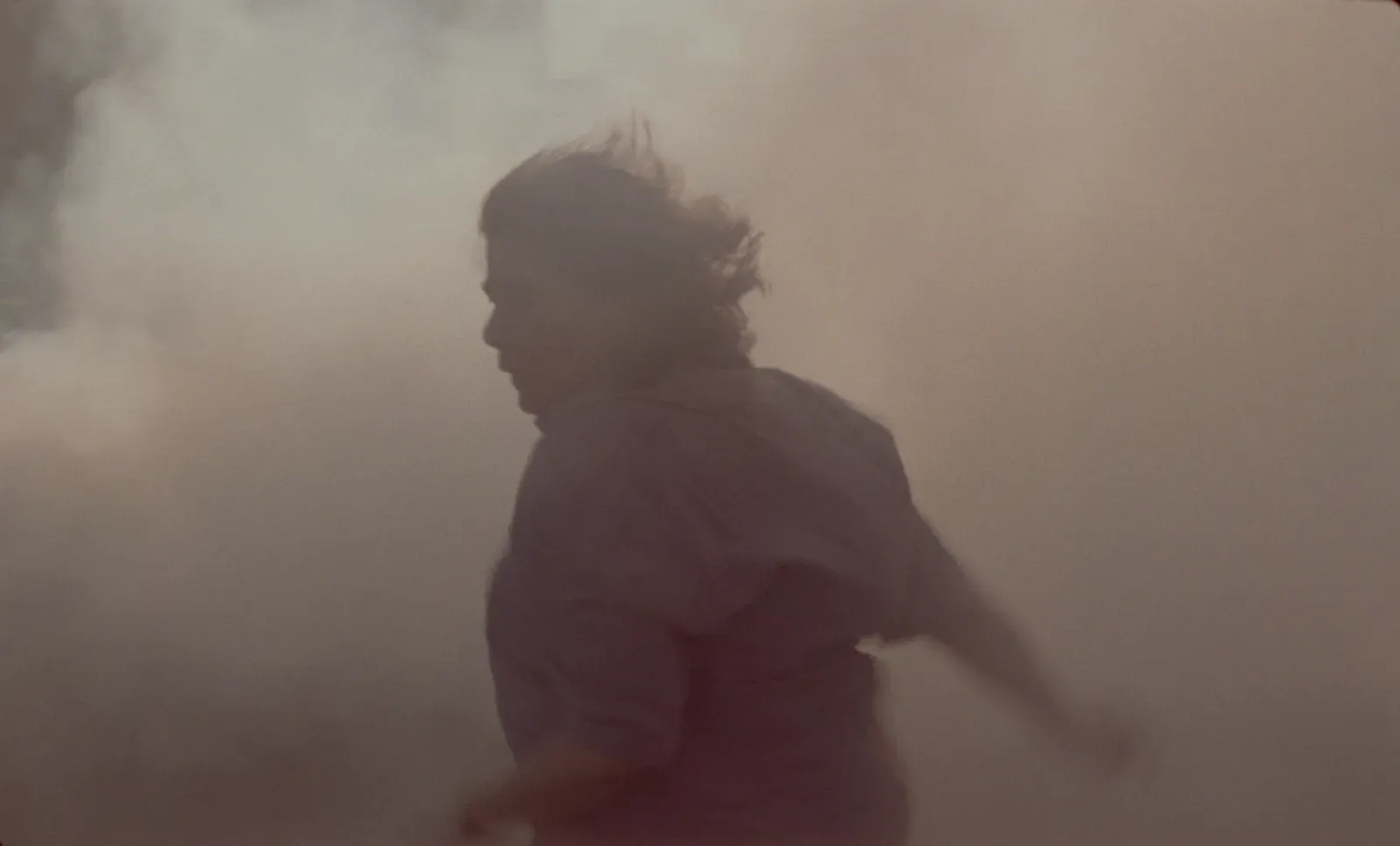
Atonement tells the story of an Iraqi family who are viciously gunned down by American forces during the 2003 invasion. Three die, and two survive with lifelong wounds and trauma. A decade later, one of the American soldiers reaches out in hopes of forgiveness. In the middle is a reporter (Branagh), who brokers the meeting and serves as a kind of Greek chorus. At least to a point.
Luckily, Atonement does a lot to question the inherent selfishness of those involved, even if it refuses to interrogate it further. For example, Kenneth Branagh's reporter is disturbingly opportunistic, yet he's presented as almost entirely altruistic. But this is for his benefit. After all, the film is based on the real-life article his character got out of it.
Similarly, we spend more time with the soldier, Lou (Boy Holbrook), than we do with the grieving mother, Mariam (Hiam Abbass). Such an imbalance destabilizes the film, especially if you do not agree with its statement that soldiers and civilians are equal victims in war. In one particularly clunky metaphor, Atonement suggests a bullet always fires two ways, but I'm fairly certain those looking down the barrel would disagree.
But, to its credit, Atonement does its very best to investigate this contradiction. Writer/director Reed Van Dyk remarkably avoids melodrama and sensationalism, for which I give him tremendous credit. A moment of silence between two hurt people features some of the best acting in film this year. It's an understated acceptance of things that doesn't forgive or explain, but instead fills the room and our hearts with some deeper level of yearning and regret. That scene alone makes the film worth seeing.
Atonement ends on a note that is a little too on the nose for my taste, but I would be lying if I said the road there wasn't worth taking. It has plenty of ambition and admirable goals, even if it doesn't reach all of them. I'm just glad it tries.
3/5 stars.

Smudge the Blades
I love the idea of sports movies, but generally dislike how most turn out.
In these stories, it's not the act itself that's interesting, but the people playing. Yet most films focus on the games as if they're the big draw, and there's a massive emphasis on how "real" any of it looks. For me, that's intensely boring. If I wanted to see a real game, I'd go and see a real game.
Luckily, Smudge the Blades understands this beautifully, and focuses on the world outside the ring as much as it does on the game itself. They're intertwined realities, and writer/director Cody Lightning gets the intricacies of how everything we experience can be channeled into a single swing of a hockey stick.
This is a small but lovely film full of sharp edges and uncompromising turns. It's like the anti-Mighty Ducks in that nobody walks away a better person. They might take steps towards something less hopeful, but in the end it's still a contained slice of life about Native American kids looking for an out in miserable circumstances. If it's bitter, it hides it within affable humor and genuine camaraderie, both of which feel natural and real thanks to a winning cast of talented young actors.
The hockey sequences themselves are fine, too, and even if the film runs a little long at the end, Lightning saves a few wonderful highs for the finale, including a delightfully uninspiring final speech, that make Smudge the Blades an unexpected treat in this genre.
3/5 stars.

Toy Gun Bandit
The hardest thing for any film to do is to make us care about the characters. It doesn't matter if they're heroes or villains; we have to understand, if not empathise with them. Toy Gun Bandit, the second feature from Quebecois director Rémi St-Michel, fails in this regard.
Featuring one of the least likable anti-heroes in recent memory, Toy Gun Bandit is a propulsive and sometimes engaging crime thriller about hapless criminals making worse decisions with each passing minute. Yet despite the hectic storytelling and incessant, fast-paced whining of its protagonist, it still feels far longer than its 100-minute runtime. Toy Gun Bandit has a stronger 80-minute picture buried somewhere, one that St-Michel loses midway through as he lets his insufferable lead run the show.
Said lead is Felix (Félix Munger), a teenager seemingly incapable of even one good act in his life. When we first meet him, he's showboating around a party, picking fights and acting like an idiot. It only gets worse from there. He comes from a loving family in a relatively middle-class setting, yet the film gives us no indication why he behaves as he does. At first, he acts like it's all a prank, but within moments he's robbing a gas station, then banks.
Naturally, it all goes south very quickly, and Felix winds up in debt to real gangsters. The structure is remarkably conventional, even as St-Michel sidesteps traditional cliches by refusing to explain his characters. It's a bold choice, one that I don't think works as well as it should.
Munger is undeniably talented and carries the film with grace. It's not his fault Felix is unlikable. Everyone around him is just as bad, and by the time St-Michel asks us to empathize with them or hope for the best, it's so late in the game that I just didn't care anymore. By then, I just wanted this to be over.
2/5 stars.


